Coonawarra is a narrow strip of red soil in the far south-east of South Australia, about 380 kilometres from Adelaide, that makes the best Cabernet Sauvignon in the country. The strip is roughly 15 kilometres long and 2 kilometres wide, and almost every serious Australian Cabernet you have heard of comes from somewhere along it. If Barossa is Australia’s Shiraz capital, Coonawarra is its Cabernet capital, and the two are as different as the grapes.
Table of Contents
The red dirt everyone talks about
The soil is called terra rossa, Italian for red earth. It is a thin layer of red, iron-rich topsoil, often less than half a metre deep, sitting on a ridge of soft white limestone. Underneath the limestone is a shallow water table. Vines love it: the topsoil drains fast so the roots do not sit wet, the limestone below holds just enough moisture to get through summer, and the red colour is literally iron oxide, the same thing as rust.
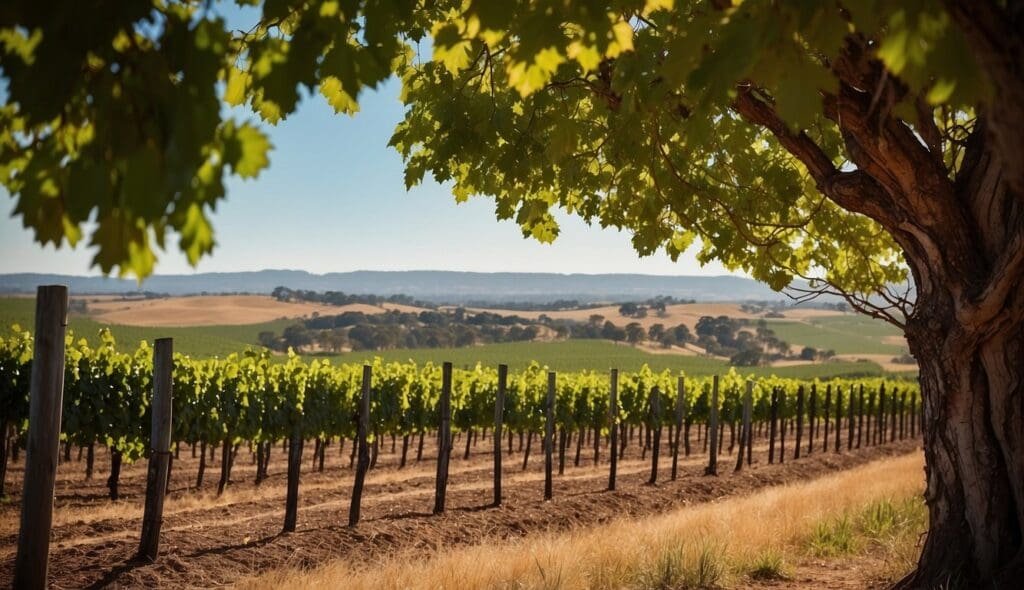
The strip is so narrow that you can stand in a Cabernet vineyard on terra rossa and see the black soil on the other side of the road, which is heavier, wetter and grows much plainer wine. That is why land on the strip costs several times what land off it does, and why the region fought a long legal battle in the early 2000s over exactly where the boundary should be drawn. The official Coonawarra boundary was settled in 2003.
Why the climate matters as much as the soil
Coonawarra is flat, low (51 to 127 metres above sea level) and only about 60 kilometres from the Southern Ocean. Cold water from the Bonney Upwelling sits off the coast through summer and keeps the region cooler than its latitude suggests. The average January temperature is about 20°C, which is Bordeaux weather rather than Barossa weather, and the growing season is long and slow. Cabernet in Coonawarra often comes in during April, a few weeks after the Barossa has finished.
That slow ripening is the whole point. Cabernet picked too warm tastes of jam; picked too cool it tastes of green capsicum. Coonawarra sits in the narrow band where the grape ripens fully but keeps its acid and its structure, so the wines can age for twenty years. The trade-offs are spring frost, which is a real risk on such flat ground, and about 260 millimetres of rain during the growing season, which is enough that a wet autumn can spoil a vintage.
What Coonawarra Cabernet tastes like
Blackcurrant first, always. Then mint or eucalyptus, which is the region’s signature and the thing that either makes you a fan or does not. Then cedar, dried herbs, a bit of dark chocolate in the riper years, and a fine, dusty tannin that grips the sides of your mouth without being harsh. The wines are medium to full bodied rather than huge, with a line of acid that keeps them fresh.
Young, they are tight and a little stern. Give a good one five years and the mint softens into something more like cigar box and the fruit turns to cassis and plum. This is one of the few Australian reds that rewards being left alone, which is why people keep buying the Wynns Black Label a case at a time and hiding it.
| Grape | Share of the region | Style in Coonawarra |
|---|---|---|
| Cabernet Sauvignon | The majority of the 5,784 hectares | The reason the region exists. Blackcurrant, mint, cedar, fine tannin |
| Shiraz | Second, and the original grape here | Cooler and peppery next to Barossa, with red fruit and spice |
| Merlot | Small | Mostly a blending partner for Cabernet, a few good varietals |
| Riesling and Chardonnay | Small | Crisp, limey Riesling that deserves more attention than it gets |
The short history that matters
The name comes from the local Bindjali language and is usually translated as wild honeysuckle. A Scottish pastoralist named John Riddoch planted the first vines at Penola in 1890 and built the three-gabled stone winery that is still on the Wynns label. Then almost nothing happened for sixty years. The region was too remote, the wines were sold in bulk or turned into brandy, and by the 1940s only the Redman family was still bothering with table wine.
The turning point was 1951, when David and Samuel Wynn bought the old Riddoch cellars and put Coonawarra on the label. Wynns Black Label Cabernet followed in the 1950s and has been made in almost every vintage since, which makes it one of the longest-running labels in Australian wine. Penfolds, Lindeman’s, Mildara and the rest followed through the 1960s, and from the 1950s onward the region gradually switched from Shiraz to Cabernet as its main grape. Wynns is now owned by Treasury Wine Estates and is still the biggest vineyard holder in the region.
What to buy
The good news is that Coonawarra has a proper ladder, from a weeknight bottle to a cellar wine, and the bottom rung is not a compromise. These are the ones you will find in the big chains; prices are Dan Murphy’s shelf prices on 9 September 2026 and will move about; BWS stocks many of the same names.
| Wine | Price band | Why |
|---|---|---|
| Wynns The Siding Cabernet Sauvignon | About $14 to $21 | The cheapest honest taste of the region. Blackcurrant and mint, drink now |
| Brand’s Laira Blockers Cabernet Sauvignon | About $17 to $23 | One of the old names of the strip at a weeknight price |
| Parker Coonawarra Estate Scarlett Block Cabernet Sauvignon | About $18 to $25 | Riper and rounder than Wynns, good with a barbecue |
| Wynns Black Label Cabernet Sauvignon | About $27 to $49, depending on vintage and specials | The benchmark. Buy two, drink one, hide one for five years |
| Katnook Estate, Leconfield, Parker Terra Rossa | About $30 to $38 | The classic mint-and-cassis style from the established family estates |
| Bowen Estate Cabernet Sauvignon | About $40 | Small family producer, firm and long-lived; the insider’s Black Label |
| Wynns John Riddoch Cabernet Sauvignon | About $150 to $164 | The top wine, only made in good years. A twenty-year bottle |
If you want the region in one glass and do not want to think about it, the Black Label is the answer. If you want to know what the fuss is about for the price of a takeaway, The Siding or the Brand’s Laira will tell you. Majella, Balnaves and Zema are the family producers worth hunting down at independents and cellar doors. Our Cabernet Sauvignon guide covers the grape itself and how it differs from Margaret River and Bordeaux, and our Cabernet snack pairings sort out what to eat with it.
Heads up: the boxes below link to Just Wines, our partner shop. If you buy through them we earn a small commission at no extra cost to you. Prices were checked when this was written and move about.
What the partner shop has from Coonawarra right now:

St Hugo Coonawarra Cabernet Sauvignon 2022
- Coonawarra Cabernet from the terra rossa, made by the Penfolds group under the St Hugo label
- Blackcurrant, cedar and firm tannin; a five-year bottle
- About forty dollars at the time of writing, well under its full price
- Young; give it an hour in a decanter or a few years in the rack

Wynns The Siding Coonawarra Chardonnay 2025
- The Coonawarra white you never hear about, from the region's most famous name
- Cool-climate Chardonnay: fresh, textured, not buttery
- Under twenty dollars
- It is a Chardonnay, not the Cabernet this post is about

Virtue Coonawarra Merlot 2021
- Coonawarra Merlot from a small South Australian producer at about ten dollars
- Soft, plummy, a weeknight red
- Shows what the red soil does with a gentler grape
- A 2021; drink it now rather than keeping it
For the Wynns range itself, BWS and Dan Murphy’s both carry it.
What to eat with it
Lamb. The mint in the wine and the mint in the sauce were made for each other, and a roast leg or a rack with a herb crust is the classic. After that: a steak off the grill, a slow-cooked beef cheek, a hard cheddar or aged gouda, or anything with rosemary. Skip it with fish, with very spicy food, and with tomato-heavy pasta, where the acid and tannin start arguing. Serve it a little below room temperature, around 16 to 18°C, and open a young Black Label an hour before dinner.
Visiting
Coonawarra is a strip, so visiting is easy: one road, the Riddoch Highway, with more than 20 cellar doors along it, most within a few minutes of each other and several within walking distance in the village itself. Penola, ten minutes south, is where the pubs and beds are. Mount Gambier, about 50 kilometres further south, has the nearest airport. From Adelaide or Melbourne it is a four to five hour drive, which is why most people make it a weekend and combine it with the Limestone Coast caves and the beaches at Robe.
The cellar doors that most people build a day around are Wynns (the stone winery, and a museum of old vintages), Majella, Balnaves, Bowen Estate, Katnook, Penley and Zema. Book the bigger ones on weekends. Autumn, from March to May, is vintage and the prettiest time to go; winter is cold, quiet and cheap.
Coonawarra is one of the regions in our guide to the world’s wine regions, where you can see how it compares with Bordeaux and Napa, the other two places that built their name on Cabernet.
Tours, tastings and stays in Coonawarra
Coonawarra is a long way from anywhere, which is part of its charm. Base yourself in Penola and book ahead; tours here run small.
Coonawarra Half Day Wine Tour With Lunch
Four and a half hours on the terra rossa strip with lunch included. The easy way to do the Cabernet houses.
See dates and prices →Katnook Estate: Icon Wine Tasting and Regional Platter for Two
A sit-down tasting of the top wines with a local platter, for two. A good first afternoon in the region.
See dates and prices →Wine Tasting at Rymill Coonawarra
A pre-booked tasting at one of the region's best-known cellar doors. Cheap, quick, and worth it.
See dates and prices →Stay in Penola: the town at the southern end of the strip, ten minutes from most cellar doors.
Compare stays on Expedia →Partner links: if you book through them we earn a small commission at no extra cost to you. Prices and availability checked 29 September 2026; the booking page always has the current price.
Frequently asked questions
What is Coonawarra famous for?
Cabernet Sauvignon grown on a narrow strip of red terra rossa soil over limestone. It is widely considered the best Cabernet region in Australia, and Wynns Black Label is its most famous wine.
Where is Coonawarra?
In the far south-east of South Australia, on the Limestone Coast, about 380 kilometres from Adelaide and a similar distance from Melbourne. The village sits just north of Penola on the Riddoch Highway.
What does Coonawarra Cabernet taste like?
Blackcurrant, mint or eucalyptus, cedar and dried herbs, with fine dusty tannin and fresh acid. Medium to full bodied, and built to age for ten to twenty years.
Why is the soil red?
It is rich in iron oxide, the same compound as rust, sitting as a thin layer over white limestone. The combination drains quickly on top and holds water below, which is close to perfect for vines.
Is Coonawarra better than the Barossa?
Different, not better. The Barossa is warmer and makes big, rich Shiraz. Coonawarra is cooler and makes structured, minty Cabernet. If you like Shiraz, start with the Barossa; if you like Cabernet, start here.
What is a good first Coonawarra wine to try?
Wynns The Siding or Brand’s Laira Blockers for around $20, or Wynns Black Label for about $30 to $45 if you want the benchmark.