Everyone knows Bordeaux, Barossa and Napa. This is the other list: eleven regions that make wine you would happily drink every week, that most people have never heard of, and that turn up in Australian bottle shops more often than you would think. For each one you get the grapes, the style, one bottle worth hunting, and the Australian wine that comes closest if you cannot find it.
Use the jump links if you are after something specific.
- Galicia, Spain
- Ribera del Duero, Spain
- Puglia, Italy
- Mount Etna, Sicily
- Santorini, Greece
- Sopron, Hungary
- Moldova
- Swartland, South Africa
- Serra Gaúcha, Brazil
- Valle de Guadalupe, Mexico
- Virginia, USA
Table of Contents
Galicia, Spain
The green, rainy north-west corner of Spain, right above Portugal. It gets more than a metre of rain a year and still manages 2,000 hours of sunshine, which is why the whites are so fresh.
Grapes: Albariño is the star, with Godello, Treixadura and Loureiro for whites and Mencía for reds.
Style: Crisp, dry whites with peach and apricot fruit and a salty edge from the Atlantic. Rías Baixas is the famous Albariño zone, on granite sand. Valdeorras, further inland on slate, makes richer Godello. Ribeira Sacra grows Mencía on terrifying river terraces and makes a light, peppery red.
Drink it with: Anything from the sea. Albariño and grilled prawns is the classic.
Closest Australian match: Albariño itself, which is now grown in the Adelaide Hills and Riverland, or a Hunter Valley Semillon for the same lean acidity.
Ribera del Duero, Spain
A high plateau along the Duero River in central Spain, up to 900 metres. Cold winters, hot summers and a huge swing between day and night temperatures, which keeps the acid in the grapes.
Grapes: Tempranillo, called Tinto Fino here.
Style: Full-bodied reds. Blackberry, plum and cassis, then vanilla, leather and tobacco from oak. They age for decades; Vega Sicilia is Spain’s most famous wine and comes from here, and Alejandro Fernández’s Pesquera put the region on the map in the 1980s. Look for Crianza (a year in oak, drinks young) or Reserva (three years, needs time) on the label.
Drink it with: Roast lamb, slow-cooked beef, hard cheese.
Closest Australian match: A Barossa or Clare Valley Tempranillo, which several producers now make well, or a Coonawarra Cabernet for the same structure.
Puglia, Italy
The heel of the boot. Flat, hot and sunny, and for decades it grew bulk wine that got shipped north to bulk up thinner reds. That has changed. Puglia now makes some of the best-value reds in Italy.
Grapes: Primitivo (the same grape as Zinfandel), Negroamaro, Bombino Nero and Uva di Troia for reds. Fiano and Verdeca for whites.
Style: Big, ripe, fruit-forward reds. Primitivo di Manduria is jammy blackberry and fig with 14 to 15% alcohol. Salice Salentino, from Negroamaro, is a bit more savoury with dried herbs and a bitter twist. Bombino Nero mostly gets made into a bright, dry rosé.
Drink it with: Orecchiette with sausage, lamb stew, stuffed eggplant, pizza.
Closest Australian match: A McLaren Vale Shiraz or Grenache for the ripeness, or an Australian Zinfandel if you can find one.
Mount Etna, Sicily
Vineyards on the slopes of a live volcano, up to 1,000 metres, on black lava sand. Some vines are over a hundred years old and still on their own roots, because the phylloxera louse cannot survive in the sand.
Grapes: Nerello Mascalese for reds (Etna Rosso), Carricante for whites (Etna Bianco).
Style: Nothing like the rest of Sicily. Etna Rosso is pale, perfumed and medium-bodied: sour cherry, wild strawberry, orange peel, smoke and a crushed-rock minerality. Firm fine tannin and bright acidity. People compare it to Burgundy or Barolo, and the top single-vineyard (contrada) wines from Benanti, Terre Nere, Graci and Passopisciaro deserve it. Serve at 15 to 17°C in a Pinot glass.
Drink it with: Mushrooms, eggplant, grilled swordfish, lamb with rosemary, pecorino.
Closest Australian match: Cool-climate Pinot Noir from Tasmania or the Mornington Peninsula, or a Nebbiolo from the King Valley.
Santorini, Greece
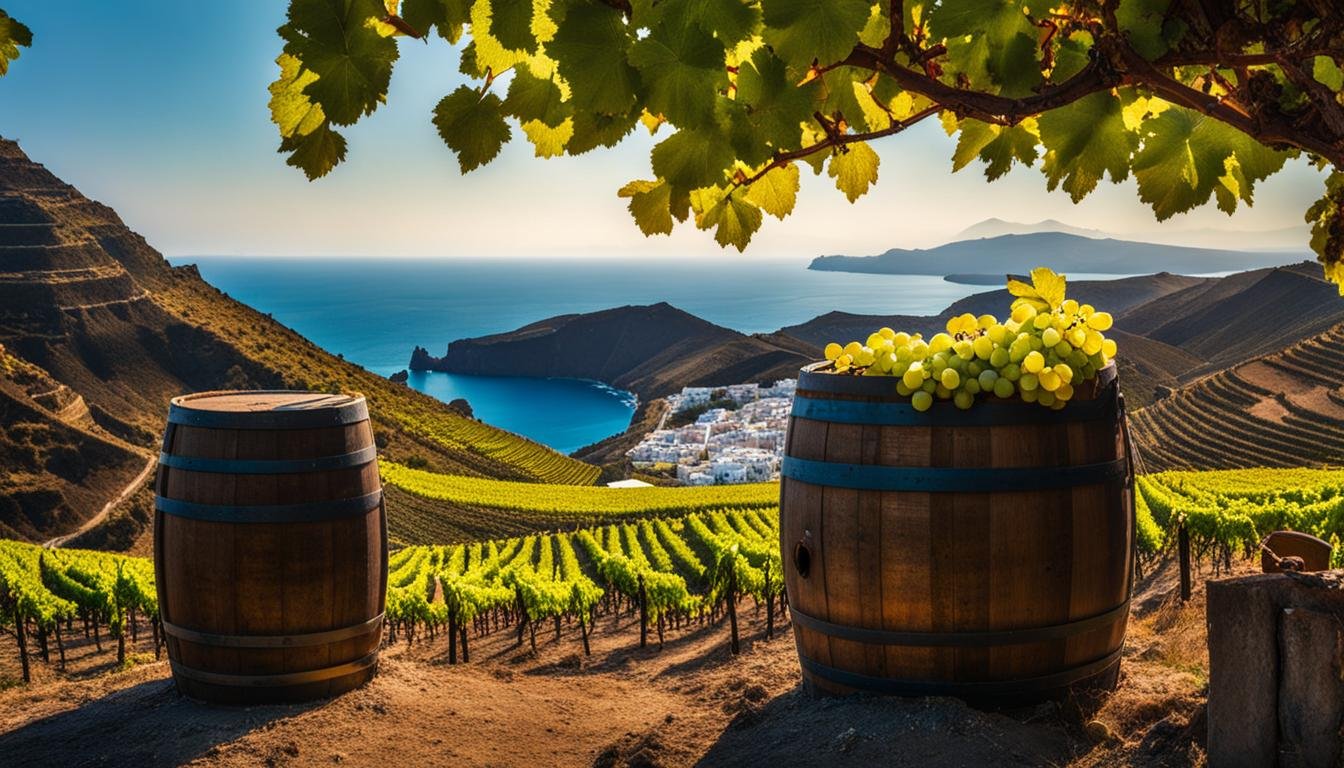
A volcanic island with no rain to speak of, brutal wind and vineyards that look like nothing you have seen. The vines are trained into baskets (kouloura) flat on the ground so the grapes ripen inside a coil of leaves, protected from the wind.
Grapes: Assyrtiko, with Athiri and Aidani in support. Mavrotragano for the rare reds.
Style: Bone-dry, high-acid whites with lemon, lime, flint and a salty finish, and surprisingly full-bodied at 13.5 to 14.5% alcohol. Nykteri is the night-harvested, oak-aged version. Vinsanto is the sweet wine from sun-dried grapes. Sigalas and Gaia are the names to look for.
Drink it with: Grilled octopus, whole baked fish, feta, oysters.
Closest Australian match: Jim Barry released Australia’s first Assyrtiko from the Clare Valley in 2016 and Henschke followed. Otherwise a dry Clare or Eden Valley Riesling.
Sopron, Hungary
On the Austrian border, next to Lake Fertő, and one of Hungary’s oldest wine towns. It shares its climate and its traditions with Austria’s Burgenland next door: moderate, a bit cooler and wetter than the rest of Hungary, with the Alps not far off.
Grapes: Kékfrankos (the Austrians call it Blaufränkisch) is two-thirds of the vineyard. Zweigelt, Pinot Noir, Merlot and Cabernet Sauvignon for the rest of the reds; Grüner Veltliner and Chardonnay for whites.
Style: Medium-bodied reds with sour cherry, pepper and a savoury spine. Think of Kékfrankos as somewhere between Pinot Noir and a light Shiraz. Weninger, Taschner and Hauer are the producers to try.
Drink it with: Anything with paprika: goulash, spiced red cabbage, roast pork.
Closest Australian match: A Yarra Valley Pinot Noir, or one of the handful of Australian Blaufränkisch bottlings from the Adelaide Hills.
Moldova
A small country between Romania and Ukraine that has been making wine since about 2800 BC and has more vineyard per person than almost anywhere. It also has the largest wine cellar on earth: Mileștii Mici, with around 200 kilometres of underground tunnels, holds the Guinness record, and Cricova’s tunnels are nearly as big and you drive through them.
Grapes: Local reds Fetească Neagră and Rară Neagră, local white Fetească Albă, plus plenty of Cabernet, Merlot and Pinot Noir.
Style: Traditionally a lot of sweet and semi-sweet wine for the old Soviet market. The modern wines are dry, and the Purcari reds (Negru de Purcari, Roșu de Purcari) are the ones that win the medals. Cricova makes decent traditional-method sparkling.
Drink it with: Grilled meat, hard cheese, and if you are being authentic, mămăligă (polenta) with sour cream.
Closest Australian match: A Coonawarra Cabernet Merlot for the Purcari blends.
Swartland, South Africa
An hour north of Cape Town: hot, dry wheat country with old bush vines on granite and sandstone, and cooling breezes off the Atlantic. In the 2000s a group of young winemakers (Eben Sadie of Sadie Family the best known) started making minimal-intervention wines from old vines here, and it became the most talked-about region in the country.
Grapes: Syrah, Grenache, Cinsault and Tinta Barocca for reds; old-vine Chenin Blanc for whites.
Style: Honest, savoury, not over-oaked. The Syrahs have damson, liquorice and tar with real grip. The Chenins are textural and dry. Treinspoor, a Syrah and Nebbiolo blend, is one of the region’s signatures.
Drink it with: A braai. Boerewors, lamb chops, anything off the coals.
Closest Australian match: A Barossa Grenache or an old-vine McLaren Vale Shiraz from a producer who goes easy on the oak.
Serra Gaúcha, Brazil
Brazil’s main wine region, in the hills of Rio Grande do Sul in the far south, settled by Italian immigrants in the 1870s. High altitude keeps it cooler than you would expect for Brazil, more like Mendoza than Rio.
Grapes: Chardonnay, Merlot, Sauvignon Blanc, plus Italian varieties like Teroldego and a lot of sparkling base.
Style: Fresh and fruit-forward. The surprise is the sparkling wine: Brazil makes very good traditional-method fizz, and Vale dos Vinhedos, the country’s first appellation, is the heart of it. Miolo and Salton are the big names.
Drink it with: Churrasco, obviously. The sparkling with anything fried.
Closest Australian match: A Tasmanian sparkling for the fizz, a Yarra Merlot for the reds.
Valle de Guadalupe, Mexico
About two hours south of San Diego in Baja California. Mediterranean climate, cooled by the Pacific, with vineyards at 300 to 400 metres. More than 150 wineries, mostly Mexican-owned, and a food scene that people fly in for.
Grapes: Cabernet Sauvignon, Merlot and Zinfandel for reds; Chenin Blanc, Colombard and Chardonnay for whites.
Style: Rich, sunny reds and fresh whites. LA Cetto is the big producer; Vena Cava, Casa de Piedra and El Mogor are the small ones worth a visit.
Drink it with: Fresh seafood from Ensenada down the road, or the farm-to-table cooking at Corazón de Tierra and Fauna.
Closest Australian match: A McLaren Vale Cabernet or Riverland Zinfandel. Almost none of it is exported, so this is one to drink there.
Virginia, USA
Thomas Jefferson tried to grow European vines at Monticello in the 1770s and failed; the modern industry only took off in the 1970s. Now there are more than 250 wineries across eight official areas, with Monticello, Middleburg and the Shenandoah Valley the main ones. Humid summers make it hard work.
Grapes: Cabernet Franc, Merlot, Chardonnay, Viognier, and the hybrid Vidal Blanc.
Style: Elegant rather than big. Cabernet Franc is the grape that suits the climate best: red fruit, herbs, medium body. Viognier is the signature white. Barboursville is the producer with the longest track record.
Drink it with: Roast chicken, ham, crab cakes.
Closest Australian match: A Margaret River Cabernet Merlot or an Eden Valley Viognier.
Which one should you start with?
If you only try one, make it Etna Rosso. It is the region on this list that has changed the most in twenty years, the wines are easy to find in Australia, and a $40 bottle drinks like something twice the price. After that, Galician Albariño in summer and Ribera del Duero in winter cover most of the year.
Frequently asked questions
Can I buy these in Australia?
Etna Rosso, Rías Baixas Albariño, Ribera del Duero, Puglian Primitivo and Santorini Assyrtiko all turn up in good independent bottle shops and online. Swartland is easier to find than it used to be. Sopron, Moldova, Brazil, Mexico and Virginia are rare here; those are ones to try when you travel.
Why do these regions cost less than famous ones?
Land is cheaper, the names are not on wine lists yet, and nobody is paying for a hundred years of reputation. The grapes, the weather and the winemaking can be just as good.
What is a DO, DOC or AVA on the label?
They are the official region names in Spain (DO), Italy (DOC) and the USA (AVA). They guarantee where the grapes came from and, in Europe, which grapes were used and how the wine was made.