Heads up: this guide contains an affiliate link. If you buy through it we earn a small commission at no extra cost to you.
Sagrantino is the most tannic grape in Italy, and possibly the most tannic in the world, which makes its home a surprise: Montefalco, a hilltop town in green, gentle Umbria, where monks are thought to have grown it for centuries to make sweet sacramental wine. The name comes from “sacro”, sacred. The tannin comes from skins so thick you could resole a shoe with them.
For most of the twentieth century it survived only as a sweet passito wine for Christmas. Then in the 1970s a few Montefalco producers made it dry, and the result was a black, powerful, age-defying red that sommeliers now whisper about. It is a wine for patience, a decanter and a plate of something that has been in the oven since lunchtime.
Table of Contents
What Does Sagrantino Taste Like?
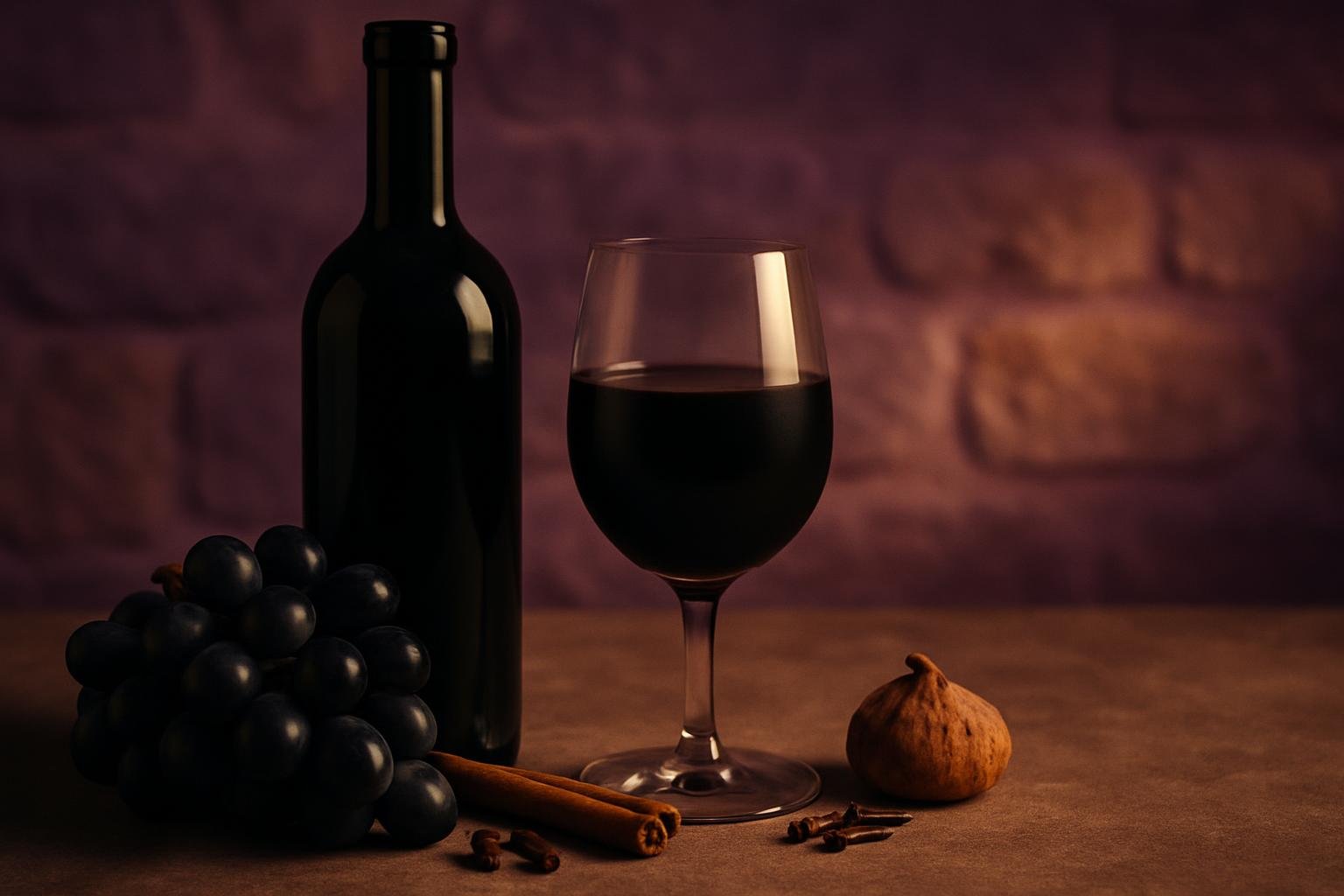
Blackberry, black cherry, plum and dried fig, with cinnamon, clove, cocoa, leather, tobacco and a distinct earthy, resinous edge. It is inky dark, full-bodied, extremely high in tannin and firm in acidity, with generous alcohol. Young bottles can be brutal; aged ones are velvety, spicy and profound. The sweet passito version tastes of raisins and chocolate.
| Aspect | Rating out of 5 | Characteristic |
|---|---|---|
| Sweetness | 🍷 | Dry in the modern secco style; passito is sweet |
| Body | 🍷🍷🍷🍷🍷 | Full, dense and powerful |
| Tannins | 🍷🍷🍷🍷🍷 | Off the charts, the most tannic grape in Italy |
| Acidity | 🍷🍷🍷🍷 | Firm, keeping the weight upright |
| Alcohol by Volume | 🍷🍷🍷🍷 | Typically 14–15% |
Each wine glass icon is one point on a 5-point scale: one glass is low, five is high, based on the grape’s typical style.
Where It Grows
Montefalco in Umbria, central Italy, and almost nowhere else. Montefalco Sagrantino DOCG must be 100 percent Sagrantino and aged at least 37 months; Montefalco Rosso blends it with Sangiovese for an easier drink. The whole zone is only a few hundred hectares. Tiny plantings exist in Australia, California, Argentina and Brazil.
Australia’s Sagrantino is a real curiosity. Chalmers in Heathcote brought it in, and a few growers in the King Valley, McLaren Vale and the Barossa have followed, drawn by its heat tolerance and sheer character. Bottles are rare and mostly cellar door. Umbrian imports are the way to try it, and they are not cheap, but they last decades.
How to Serve It
Temperature: 17–18°C.
Glass: a large Bordeaux bowl; see the glasses roundup.
Decanting: non-negotiable. Two or three hours in a decanter for anything under ten years old.
Ageing: among the longest-lived reds in Italy. Ten years is a starting point; thirty is not unusual.
What to Eat With It
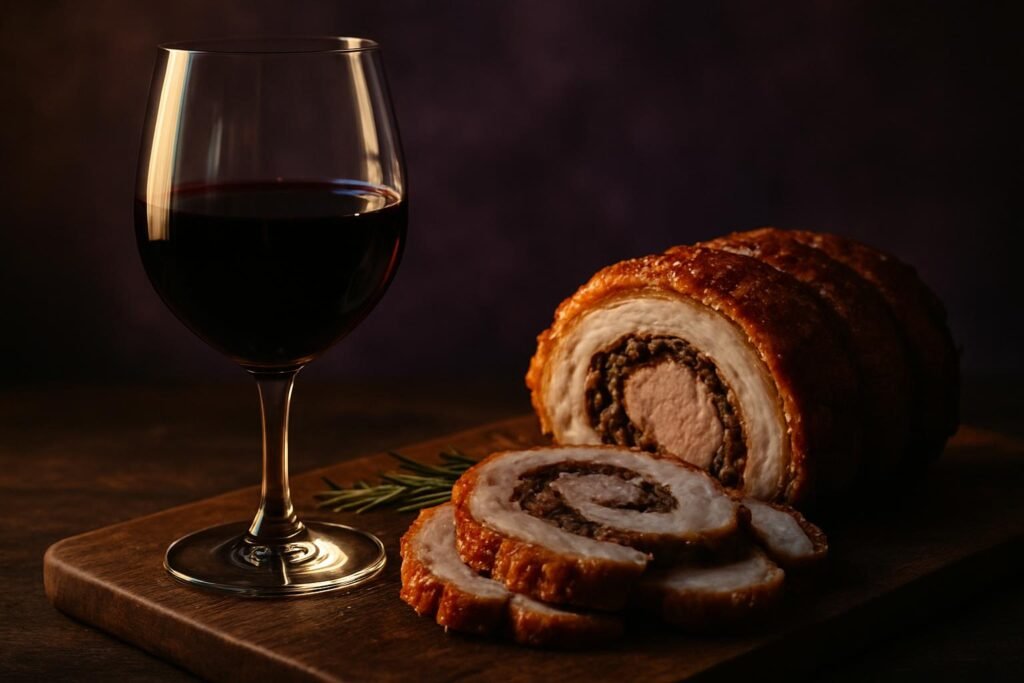
Umbrian food: roast pork porchetta, wild boar ragù, lamb, goat, lentils from Castelluccio (see our lentil pairing guide), black truffle dishes and aged pecorino. The tannin needs fat and time. More in the pairing guides.
Celebrated Wine Labels
| Wine Label | Country | Style |
|---|---|---|
| Arnaldo Caprai | Italy | The producer that made dry Sagrantino famous |
| Paolo Bea | Italy | Natural, traditional, cult status |
| Antonelli San Marco | Italy | Elegant, organic Montefalco |
| Tabarrini | Italy | Single-vineyard Sagrantino, powerful |
| Chalmers | Australia | Heathcote, Australian Sagrantino pioneers |
Can’t Find One? Drink This Instead
Honesty corner: our partner shop had no Sagrantino in stock when we checked. The closest match on the shelf is a structured, organic Margaret River Cabernet: firm tannin, dark fruit, a need for a decanter, and the same appetite for slow-roasted meat.

Voyager Coastal Margaret River Organic Cabernet Sauvignon 2024
Not Sagrantino, but a serious organic Cabernet is the nearest thing to a Montefalco dinner on the shelf. When a Sagrantino lands in stock, it takes this spot.
- Structured, dark and firm, the same job Sagrantino does with roast pork
- Certified organic from a family estate
- Lamb, boar ragù and aged cheese all work
- Fair price for organic Margaret River Cabernet
- A fraction of Sagrantino's tannin; you will not need three hours in a decanter
New to Just Wines? The code FIRST20 takes $20 off a first order over $99, so it is worth building a mixed six rather than buying the one bottle. New customers only, and the offer can change without notice.
Frequently Asked Questions
Is Sagrantino the most tannic wine?
It is regularly measured as the most tannic of all major grapes, ahead of Tannat and Nebbiolo. Read our Tannat guide for its closest rival.
How do you pronounce Sagrantino?
Sah-gran-TEE-no.
What is Sagrantino similar to?
Aglianico and Nebbiolo for tannin and ageing, Tannat for sheer grip, and a big Cabernet for structure. Read our Aglianico guide for the nearest Italian cousin.
What is Montefalco Rosso?
A blend of Sangiovese with 10 to 25 percent Sagrantino, which makes a much softer, earlier-drinking wine than pure Sagrantino. It is the Umbrian weeknight red.
Does Australia grow Sagrantino?
In tiny amounts, in Heathcote, the King Valley, McLaren Vale and the Barossa. It is a rare cellar-door find.
This post contains affiliate links. If you buy through them we earn a small commission at no extra cost to you. It keeps the wine flowing and the reviews honest.