Heads up: this guide contains an affiliate link. If you buy through it we earn a small commission at no extra cost to you.
Verdelho is the Portuguese grape that Australia quietly made its own. It arrived in the 1820s, one of the first varieties planted in the Hunter Valley, and it thrived in our heat so well that today Australia grows far more Verdelho as a dry white than Portugal does. Most Portuguese Verdelho goes into Madeira, the fortified island wine that Thomas Jefferson drank and that lasts, quite literally, for centuries.
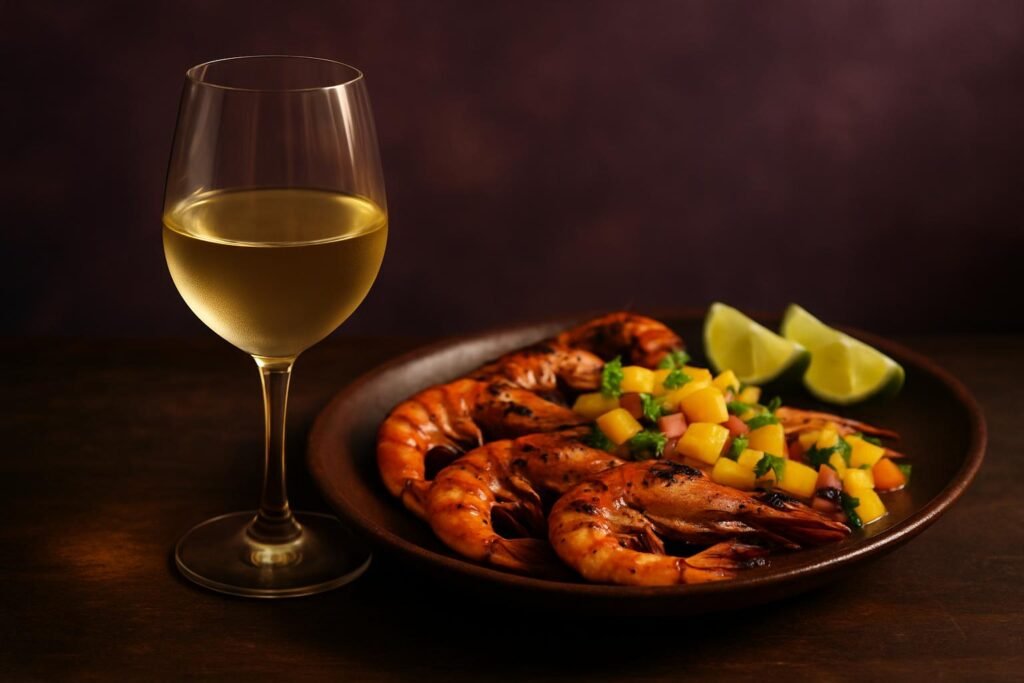
In the glass it is the fruit-salad white: tropical, zesty and generous, a wine for a hot afternoon and a plate of prawns. It is the great unsung Australian white, sitting between Semillon’s restraint and Chardonnay’s richness, and it costs less than either.
Table of Contents
What Does Verdelho Taste Like?
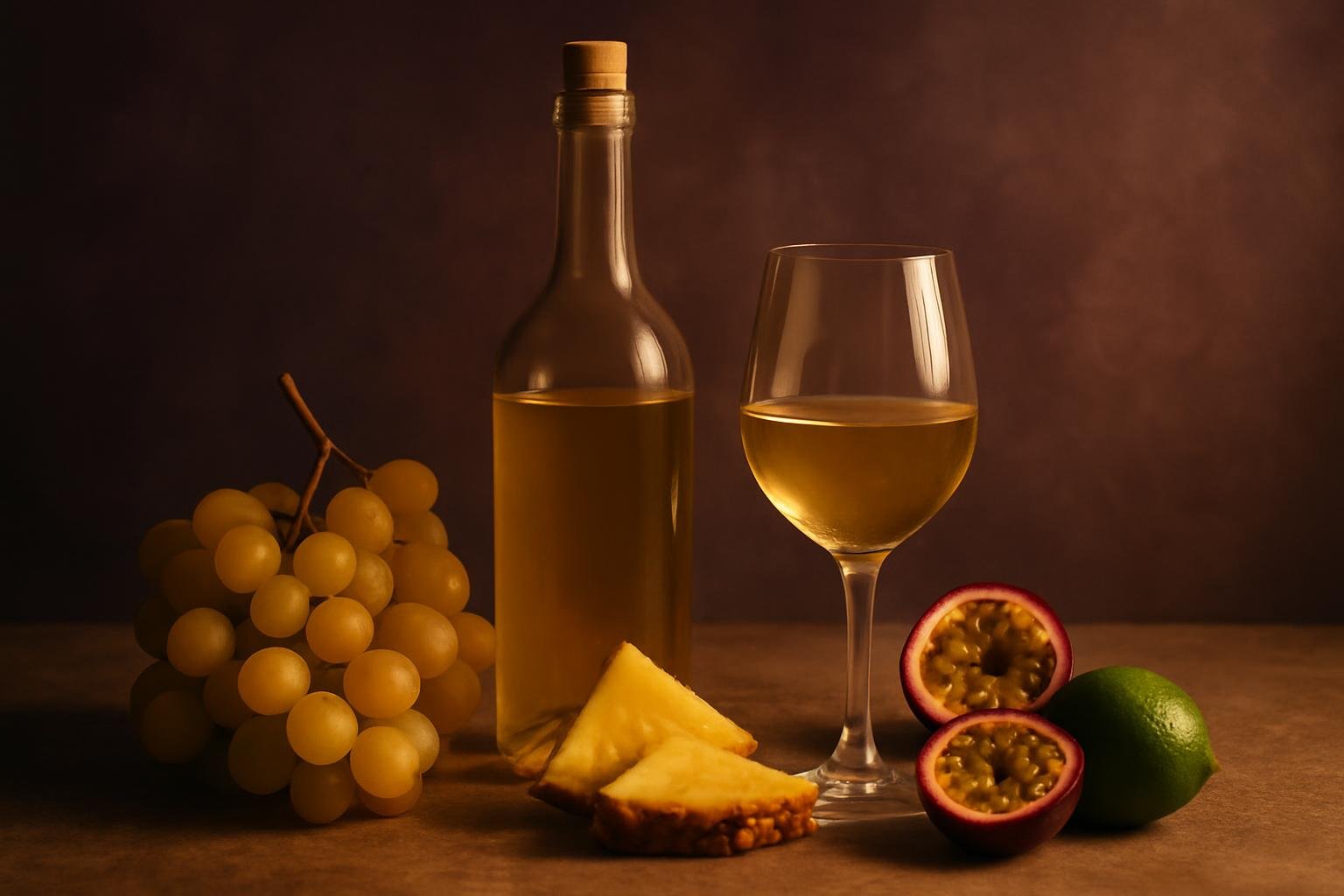
Pineapple, guava, passionfruit, lime and honeydew melon, with a spicy, gingery note and a crisp, slightly bitter citrus-pith finish. It is medium in body, dry, fresh in acidity and fuller than its tropical perfume suggests. Hunter versions gain honey and toast with a few years in bottle.
| Aspect | Rating out of 5 | Characteristic |
|---|---|---|
| Sweetness | 🍷 | Dry, though the pineapple says otherwise |
| Body | 🍷🍷🍷 | Medium, a fruit salad with structure |
| Tannins | – | None; clean and tropical |
| Acidity | 🍷🍷🍷🍷 | Fresh and zesty, the Hunter’s saving grace |
| Alcohol by Volume | 🍷🍷🍷 | Moderate, usually 12.5–13.5% |
Each wine glass icon is one point on a 5-point scale: one glass is low, five is high, based on the grape’s typical style.
Where It Grows
Madeira, the Portuguese island in the Atlantic, is the historic home, where Verdelho makes the medium-dry style of the fortified wine. The Azores grow it too, and Portugal’s Douro and Alentejo make small amounts of dry white. Outside Portugal it is rare, apart from one country.
Australia is that country. The Hunter Valley has grown Verdelho since the 1820s and still makes the benchmark versions; the Swan Valley in Western Australia is its other heartland, where it has been the signature white for over a century. Langhorne Creek, McLaren Vale and the Riverina grow it too. It handles heat, keeps its acid and ripens early, which is exactly what our warmer regions need.
How to Serve It
Temperature: 7–9°C.
Glass: a standard white bowl; see the glasses roundup.
Decanting: no.
Ageing: most within three years. Good Hunter Verdelho ages for five to ten, turning honeyed and toasty like its Semillon neighbour.
What to Eat With It
Prawns, fish and chips, salmon, Thai and Vietnamese food, Chinese food, lemon chicken and anything with mango or lime. It loves a barbecue. More in the pairing guides.
Celebrated Wine Labels
| Wine Label | Country | Style |
|---|---|---|
| Tyrrell’s | Australia | Hunter Valley, Verdelho since the 1800s |
| Moondah Brook | Australia | Swan Valley, the classic Western Australian Verdelho |
| Bleasdale | Australia | Langhorne Creek, generous and reliable |
| Blandy’s | Portugal | Madeira, the historic Verdelho fortified |
| Chapel Hill | Australia | McLaren Vale, textural modern style |
Can’t Find One? Drink This Instead
Honesty corner: our partner shop had no Verdelho in stock when we checked. The closest match is a tropical, zesty Sauvignon Blanc from a Hunter Valley family winery: the same fruit-salad freshness, the same love of prawns and a hot afternoon.

Tamburlaine Central Ranges Organic Sauvignon Blanc 2025
Not Verdelho, but a tropical organic Sauvignon Blanc from a Hunter name is the nearest thing on the shelf. When a Hunter or Swan Valley Verdelho lands in stock, it takes this spot.
- Tropical, zesty and dry, the same job Verdelho does at a barbecue
- Certified organic from a Hunter Valley family winery
- Prawns, Thai food and fish and chips all work
- Under twenty dollars
- Grassier than Verdelho, with less pineapple and ginger
New to Just Wines? The code FIRST20 takes $20 off a first order over $99, so it is worth building a mixed six rather than buying the one bottle. New customers only, and the offer can change without notice.
Frequently Asked Questions
Is Verdelho the same as Verdejo?
No. Verdelho is Portuguese, famous in Madeira and the Hunter Valley; Verdejo is Spanish, from Rueda. Similar names, unrelated grapes. See our Verdejo guide for the Spanish one.
What does Verdelho taste like?
Pineapple, passionfruit, lime and melon with a spicy, gingery edge and a crisp finish. Dry, medium-bodied and fresh.
Is Verdelho sweet?
As a table wine, no. Madeira Verdelho is medium-dry fortified wine, but Australian Verdelho is a dry white.
Why is Verdelho popular in Australia?
It arrived in the 1820s, handles heat well, ripens early and keeps its acid, so the Hunter and Swan Valleys adopted it early and never let go. Australia now grows more dry Verdelho than anywhere else.
What is Verdelho similar to?
A tropical Sauvignon Blanc or an unoaked Chardonnay in weight, with a Semillon-like ability to age. Read our Semillon guide for its Hunter neighbour.
This post contains affiliate links. If you buy through them we earn a small commission at no extra cost to you. It keeps the wine flowing and the reviews honest.