Heads up: this guide contains an affiliate link. If you buy through it we earn a small commission at no extra cost to you.
Verdejo is the white wine Spain drinks when it is not drinking Albariño, and it might be the better bargain. It grows on the high, dusty plateau of Rueda, north-west of Madrid, where summer days are scorching and nights are cold, and it makes a crisp, herby, slightly bitter white that costs half what it should.
For centuries Rueda used Verdejo to make a sherry-like oxidised wine that nobody outside the region wanted. In the 1970s the Rioja house Marqués de Riscal turned up, made it fresh and cold and modern, and Verdejo became Spain’s favourite everyday white almost overnight.
Table of Contents
What Does Verdejo Taste Like?
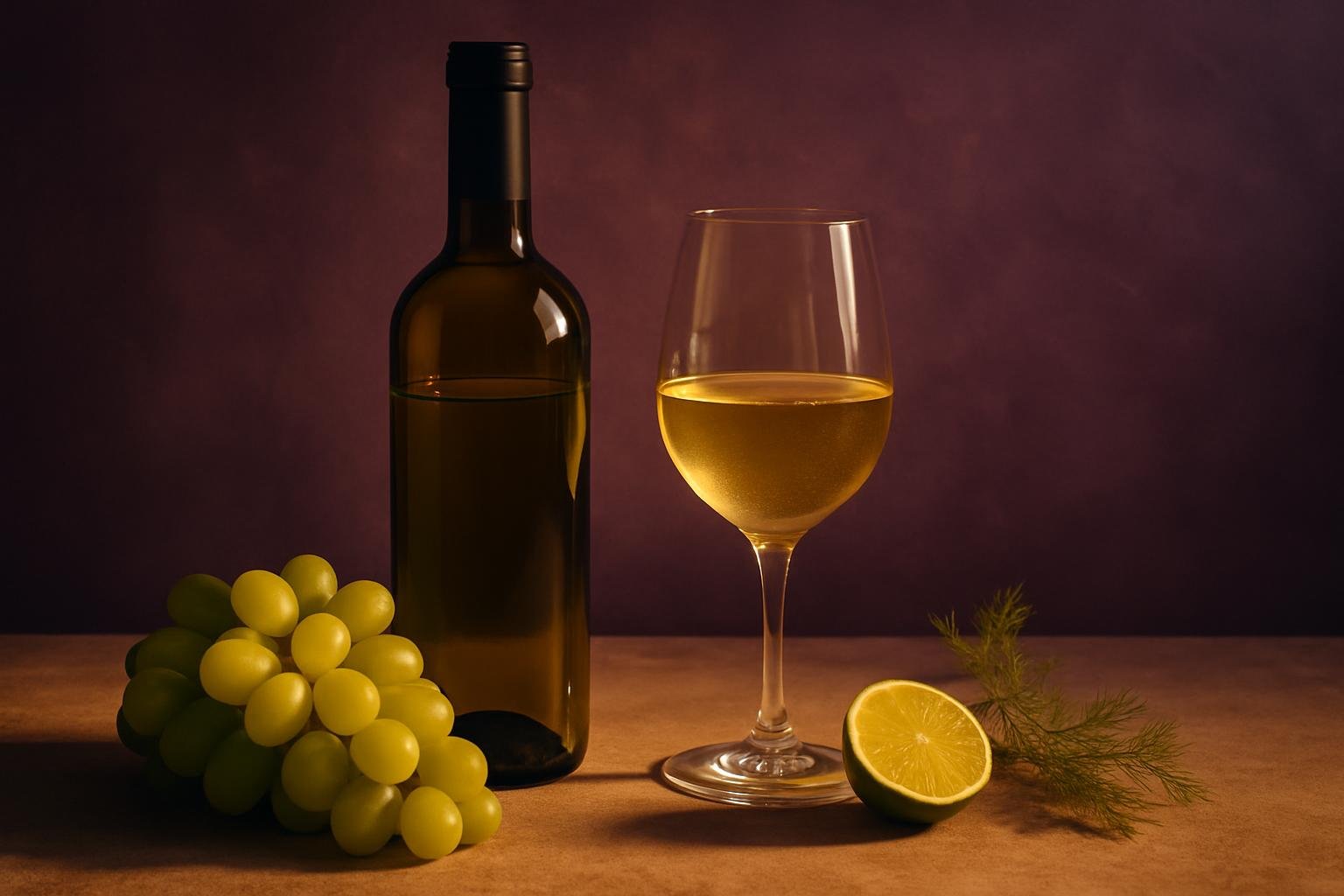
Lime, grapefruit, green apple, fennel and fresh-cut grass, with a note of bay leaf and a signature gentle bitterness on the finish, like the pith of a citrus fruit. It is light to medium in body, dry, and fresh without being shrill. Lees-aged and barrel-fermented versions add a creamy, nutty weight, and the best age surprisingly well.
| Aspect | Rating out of 5 | Characteristic |
|---|---|---|
| Sweetness | 🍷 | Dry, with a bitter-herb twist |
| Body | 🍷🍷 | Light to medium, a terrace wine |
| Tannins | – | None; clean and fresh |
| Acidity | 🍷🍷🍷🍷 | Bright, thanks to Rueda’s cold nights |
| Alcohol by Volume | 🍷🍷🍷 | Moderate, usually 12.5–13.5% |
Each wine glass icon is one point on a 5-point scale: one glass is low, five is high, based on the grape’s typical style.
Where It Grows
Rueda in Castilla y León is the home, and by law a Rueda Verdejo must be at least 85 percent Verdejo, often with a splash of Sauvignon Blanc. The vines sit at around 700 to 800 metres on gravel and sand, and some pre-phylloxera bush vines are over a century old. It is also grown in Extremadura and La Mancha, and in small amounts in Australia and California.
Australia has a few pioneering Verdejo growers, mostly in the Riverland, the Barossa and McLaren Vale, where its heat tolerance and bright acid make sense. Bottles are rare and sell out fast. For most Australians, Rueda imports are the way in, and they are among the best-value dry whites on any shelf.
How to Serve It
Temperature: 7–9°C.
Glass: a narrow-bowled white glass; the Winewings Sauvignon Blanc glass suits it, or see the glasses roundup.
Decanting: no.
Ageing: most Verdejo within two years. Old-vine and barrel-fermented versions can go five to ten.
What to Eat With It
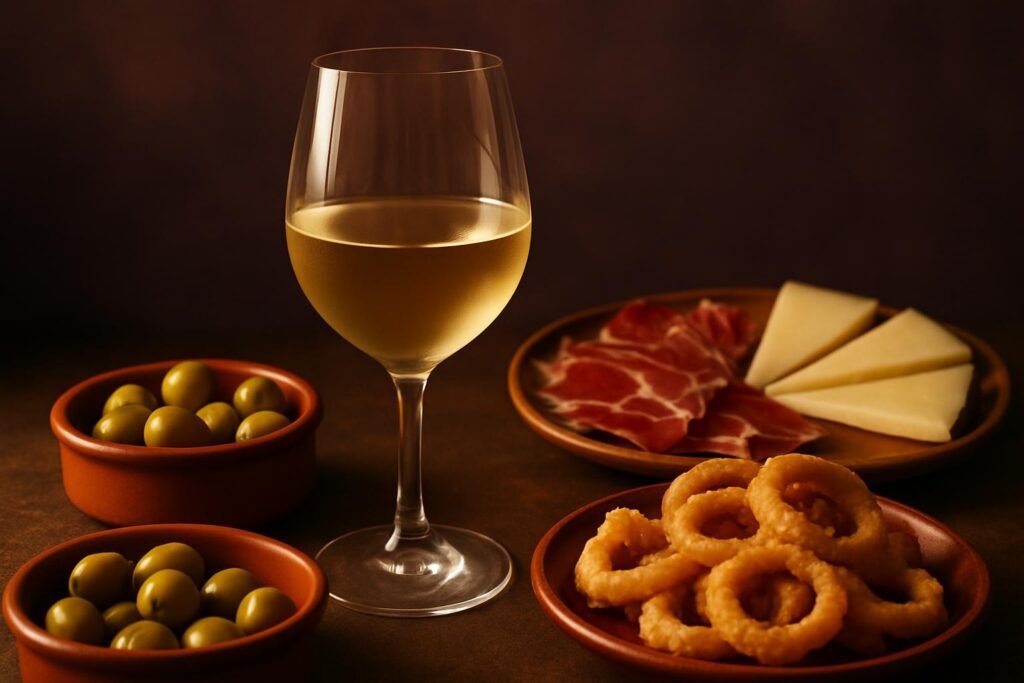
Tapas of every kind: olives, jamón, manchego, grilled prawns, fried calamari and fish and chips. It also handles asparagus, green salads, goat’s cheese and cod. More in the pairing guides.
Celebrated Wine Labels
| Wine Label | Country | Style |
|---|---|---|
| Marqués de Riscal | Spain | The house that reinvented Rueda in the 1970s |
| José Pariente | Spain | Modern Rueda benchmark, pure and precise |
| Belondrade y Lurton | Spain | Barrel-fermented, age-worthy Verdejo |
| Bodegas Naia | Spain | Old-vine specialists, great value |
| Ossian | Spain | Pre-phylloxera vines, cult status |
Can’t Find One? Drink This Instead
Honesty corner: our partner shop had no Verdejo in stock when we checked. The closest match is a crisp, herbal Sauvignon Blanc, which Rueda itself blends with Verdejo and which does the same zesty job with a plate of tapas.

Angove Organic South Australia Sauvignon Blanc
Not Verdejo, but a zesty organic Sauvignon Blanc is its natural blending partner and closest cousin. When a Rueda lands in stock, it takes this spot.
- Crisp, herbal and dry, the same job Verdejo does at the table
- Certified organic from one of Australia's oldest family wineries
- Tapas, prawns and salads all work
- Under fifteen dollars
- Grassier and more tropical than Verdejo, without the bitter fennel finish
New to Just Wines? The code FIRST20 takes $20 off a first order over $99, so it is worth building a mixed six rather than buying the one bottle. New customers only, and the offer can change without notice.
Frequently Asked Questions
Is Verdejo similar to Sauvignon Blanc?
Yes, closely. Both are dry, zesty and herbal. Verdejo is a little rounder with a bitter fennel and bay-leaf note, while Sauvignon Blanc is grassier and more tropical. Rueda often blends the two. Read our Sauvignon Blanc guide for the comparison.
Is Verdejo the same as Verdelho?
No. Verdejo is Spanish and grows in Rueda; Verdelho is Portuguese, famous in Madeira and the Hunter Valley. The names are similar and the grapes are not related.
Is Verdejo sweet or dry?
Dry, nearly always. The ripe citrus can seem generous, but Rueda Verdejo is a crisp, dry white.
How do you pronounce Verdejo?
Ver-DEH-ho. The j is a soft “h” sound, as in most Spanish words.
What is Rueda?
A wine region in north-west Spain, on the high plateau of Castilla y León, that is the home of Verdejo. “Rueda Verdejo” on a label means at least 85 percent Verdejo.
This post contains affiliate links. If you buy through them we earn a small commission at no extra cost to you. It keeps the wine flowing and the reviews honest.