Syrah and Shiraz are the same grape. Not cousins, not clones, not a blend: one grape, two spellings. Syrah is the French name from the northern Rhône, where it comes from. Shiraz is what Australia calls it, and because Australia grows more of it than anyone except France, the name stuck. What the two words have come to mean on a label, though, is different, and that is the useful part.
Table of Contents
Where the two names came from
The grape is French. DNA testing in 1998 showed Syrah is a natural cross of two obscure Rhône grapes, Dureza and Mondeuse Blanche, and it has been growing on the steep hills of Hermitage and Côte-Rôtie for centuries. The romantic story that it came from the Persian city of Shiraz, carried west by crusaders, is a legend with no evidence behind it; the spelling is most likely just what happened to a French word in an English-speaking mouth. James Busby brought cuttings to Australia in 1832, the colonists wrote it as Shiraz (or Hermitage, for a while), and the name spread with the wine.
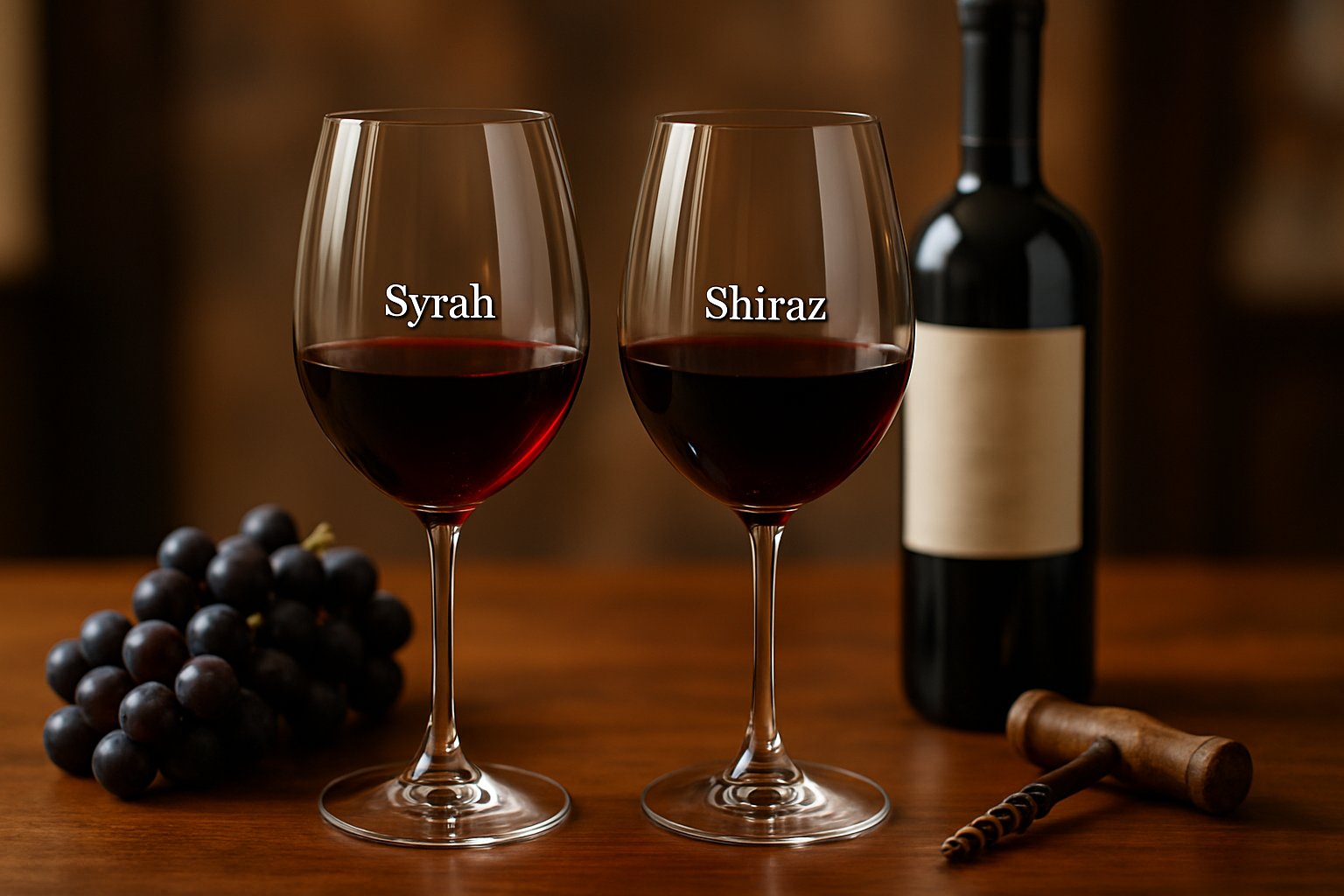
What the name tells you now
Because Australia built its reputation on big, ripe, warm-climate Shiraz and France on leaner, peppery, cool-climate Syrah, the two words have become shorthand for style. A winemaker anywhere in the world who puts Syrah on the label is telling you: this is the French way, savoury, medium-bodied, pepper and violets. Shiraz on the label means: this is the Australian way, ripe, full, blackberry and chocolate. Plenty of Australian producers in cool regions now label their wine Syrah for exactly that reason, and some South Africans and Americans do the same.
| “Syrah” style | “Shiraz” style | |
|---|---|---|
| Climate | Cool to moderate | Warm to hot |
| Tastes of | Black pepper, violets, blackberry, olive, smoked meat | Blackberry jam, plum, chocolate, liquorice, leather |
| Body | Medium | Full |
| Alcohol | 12.5 to 14 per cent | 14 to 15.5 per cent |
| Tannin and acid | Firmer tannin, brighter acid | Softer tannin, lower acid |
| Oak | Older, larger barrels, less obvious | Often new oak, vanilla and toast |
| Where | Northern Rhône; Yarra, Grampians, Canberra, Adelaide Hills; Hawke’s Bay in NZ | Barossa, McLaren Vale, Heathcote, Hunter (its own thing) |
| Serve with | Lamb with herbs, duck, charcuterie, mushrooms | Barbecued meat, slow-cooked beef, hard cheese |
The Australian styles
Shiraz is Australia’s most planted grape and its calling card, and in 2025 it went back to being the biggest variety in the national crush. But “Australian Shiraz” is not one thing. The Barossa makes the famous style: big, ripe, plush, chocolate and blackberry, high alcohol, the wine that made the country’s name overseas. McLaren Vale makes it a shade leaner with a dark chocolate and savoury edge from the sea air; our McLaren Vale guide explains. The Hunter makes a medium-bodied, earthy version that ages for decades and is really its own category; see our Hunter Valley guide. And the cool regions, the Grampians, the Yarra, Canberra and the Adelaide Hills, make the peppery, French style, often with a splash of Viognier fermented in, the way Côte-Rôtie does it. Clonakilla’s Shiraz Viognier from Canberra started that trend and is still its benchmark.
What to buy
Prices are Dan Murphy’s shelf prices on 9 September 2026 and will move about; BWS stocks many of the same names.
| Wine | Style | Price band | Why |
|---|---|---|---|
| Shingleback Red Knot Shiraz | Shiraz | About $13 | McLaren Vale; chocolate and blackberry, the honest cheap one |
| d’Arenberg The Footbolt Shiraz | Shiraz | About $16 to $20 | The McLaren Vale benchmark at twenty dollars |
| Chapel Hill The MV Shiraz | Shiraz | About $30 | Serious Vale Shiraz that keeps |
| Chapel Hill Road Block Shiraz | Shiraz | About $55 to $65 | Single vineyard, ten years in it |
| Any Grampians or Canberra Shiraz (Mount Langi Ghiran, Best’s, Clonakilla) | Syrah style | $30 to $100 | Pepper, spice, medium body; the Australian version of the Rhône |
| A Crozes-Hermitage or Saint-Joseph | Syrah | $35 to $60 | The cheapest way into the real northern Rhône; ask a good independent |
Our Shiraz guide covers the grape in full, and our guide to the world’s wine regions puts the Rhône next to the Barossa.
Heads up: the boxes below link to Just Wines, our partner shop. If you buy through them we earn a small commission at no extra cost to you. Prices were checked when this was written and move about.
Both styles from the partner shop:

Kalleske Moppa Barossa Valley Organic Shiraz 2024
- Barossa Shiraz from a seventh-generation organic and biodynamic family estate
- Big, ripe, chocolate and blackberry: the Australian style
- About twenty-eight dollars
- Young; better in two years

See Saw Orange Organic Shiraz 2024
- Cool-climate, medium-bodied organic Shiraz from Orange, New South Wales
- Spice, freshness and soft tannin: the French way, from an Australian hill town
- About twenty-three dollars
- Labelled Shiraz, but it drinks like a Syrah

Murray Street Wines Greenock Estate Barossa Valley Shiraz 2020
- Single-estate Shiraz from Greenock on the Barossa Western Ridge, 2020 vintage
- Tiny yields that year, so it is concentrated and built to keep
- About twenty-five dollars, well under its sixty-dollar full price at the time of writing
- A big Barossa style; not the peppery Syrah side of this post
How to choose
If you want a big, rich, comforting red for a barbecue or a cold night, buy a Barossa or McLaren Vale Shiraz and do not overthink it. If you find those too heavy, or you want a red that goes with food rather than sitting on top of it, look for the word Syrah on an Australian label, or for a Grampians, Canberra or Yarra Shiraz, or a Crozes-Hermitage from France. Serve the big ones at 16 to 18°C and open them an hour early; serve the peppery ones a degree or two cooler.
Frequently asked questions
Is Syrah the same as Shiraz?
Yes. It is one grape with two names. Syrah is the French name, Shiraz the Australian one, and the spelling has come to hint at the style: Syrah for savoury and peppery, Shiraz for ripe and rich.
Which is stronger, Syrah or Shiraz?
Wines labelled Shiraz are usually stronger, 14 to 15.5 per cent, because they come from warmer places. Syrah-style wines from cool regions sit around 12.5 to 14.
Which is sweeter?
Neither is sweet; both are dry. Warm-climate Shiraz tastes riper and jammier, which people sometimes read as sweetness.
Did Shiraz come from Iran?
No. The story that it came from the Persian city of Shiraz is a myth. DNA testing shows the grape is a natural cross of two French grapes from the northern Rhône.
Why do some Australian wines say Syrah?
To signal that they are made in the cooler, peppery, French style rather than the big Barossa style. It is a stylistic label, not a legal one.
What is Shiraz Viognier?
Shiraz with a small amount of the white grape Viognier fermented alongside it, a northern Rhône tradition from Côte-Rôtie. The Viognier lifts the perfume and softens the tannin. Clonakilla from Canberra is the Australian benchmark.