Heads up: this guide contains an affiliate link. If you buy through it we earn a small commission at no extra cost to you.
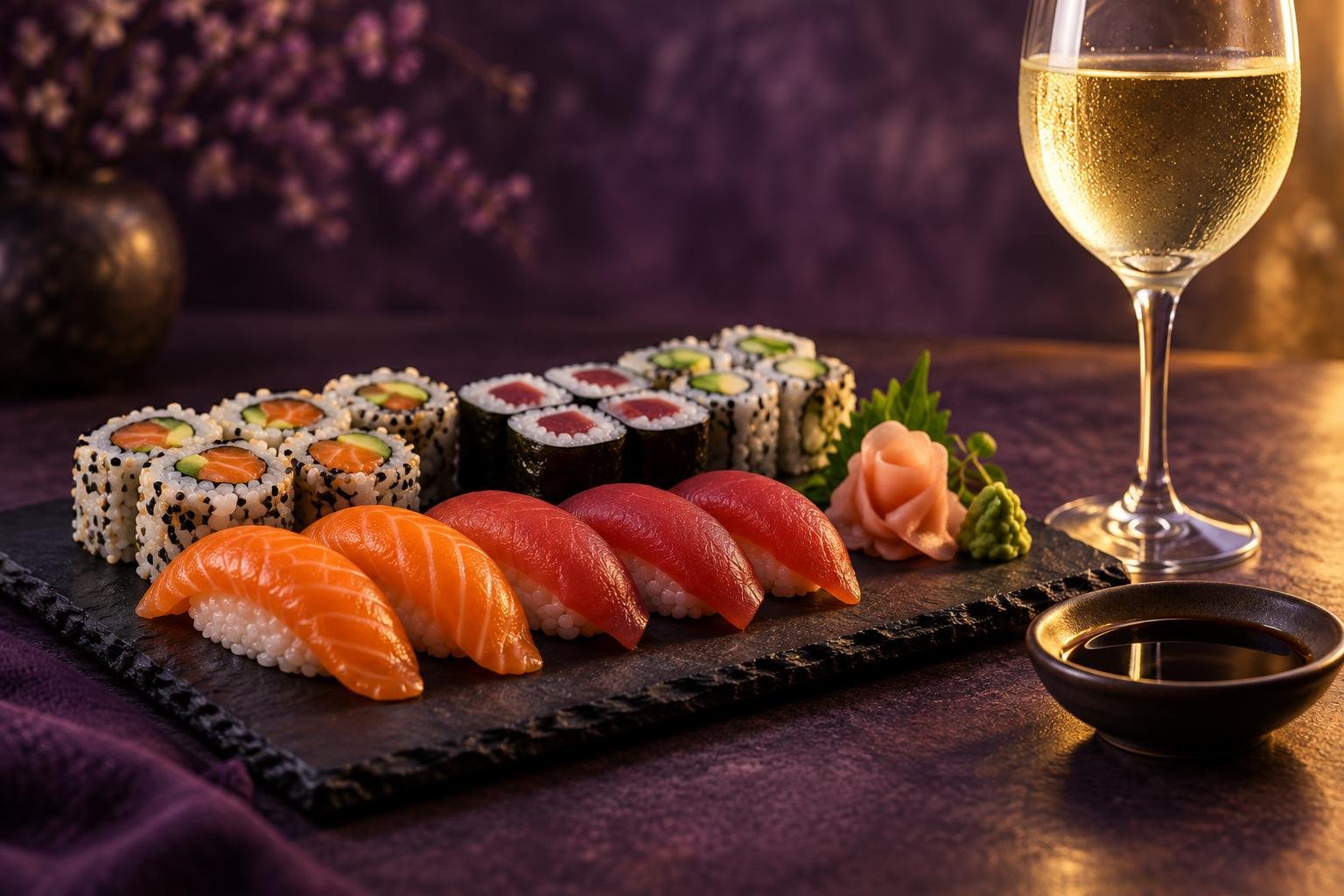
Dry Riesling, crisp sparkling wine and a light Pinot Gris are the three safest wines for sushi, and they cover almost any plate you can order. Sushi looks like it should be simple to match. Raw fish, a little rice, a smear of wasabi. How hard can it be?
Harder than it looks. Sushi is a small pile of salt, vinegar, sugar and umami sitting on very delicate fish, and most wines are not built for that. Get it wrong and the wine tastes metallic while the fish tastes flat. Get it right and both taste better than they did alone.
Table of Contents
The Short Answer
If you want to stop reading here, pour one of these three.
- Dry Riesling. High acid, low alcohol, citrus instead of oak. Serve it properly cold, around 8 degrees.
- Dry sparkling wine. The bubbles scrub the rice off your tongue between pieces. Prosecco, Cava or an Australian sparkling all do the job.
- Pinot Gris or Pinot Grigio. Soft, pear-like and quiet enough to stay out of the fish’s way. Serve it at about 10 degrees.
All three share the same two traits: bright acidity and no oak. Remember those two words and you can choose a bottle in a bottle shop in under a minute.
What Sushi Does to Wine
Sushi is not one flavour. It is five of them arriving at once, and each one pushes your glass in a different direction.
- Vinegar in the rice. Sushi rice is seasoned with rice vinegar, sugar and salt, so the base of every piece is tart and faintly sweet. A soft, low-acid wine tastes dull beside it.
- Salt from the soy. Salt softens a wine and makes it taste fruitier. That is good news for crisp whites and bad news for anything already sweet.
- Umami from the fish and the seaweed. Umami makes tannin taste harsher and drier, which is why a big red turns bitter next to raw tuna.
- Heat from the wasabi. Alcohol makes wasabi and chilli burn more, so a wine at 11 or 12 percent behaves far better here than one at 14.
- Fat in salmon, tuna belly and eel. Fat wants either acid to cut it or light tannin to grip it, and this is where a chilled red finally earns a seat.
Pickled ginger is the wildcard. It is there to reset your mouth between pieces, so let it do that job before you sip, not after.
Best Wines for Sushi
Dry Riesling, the all-rounder
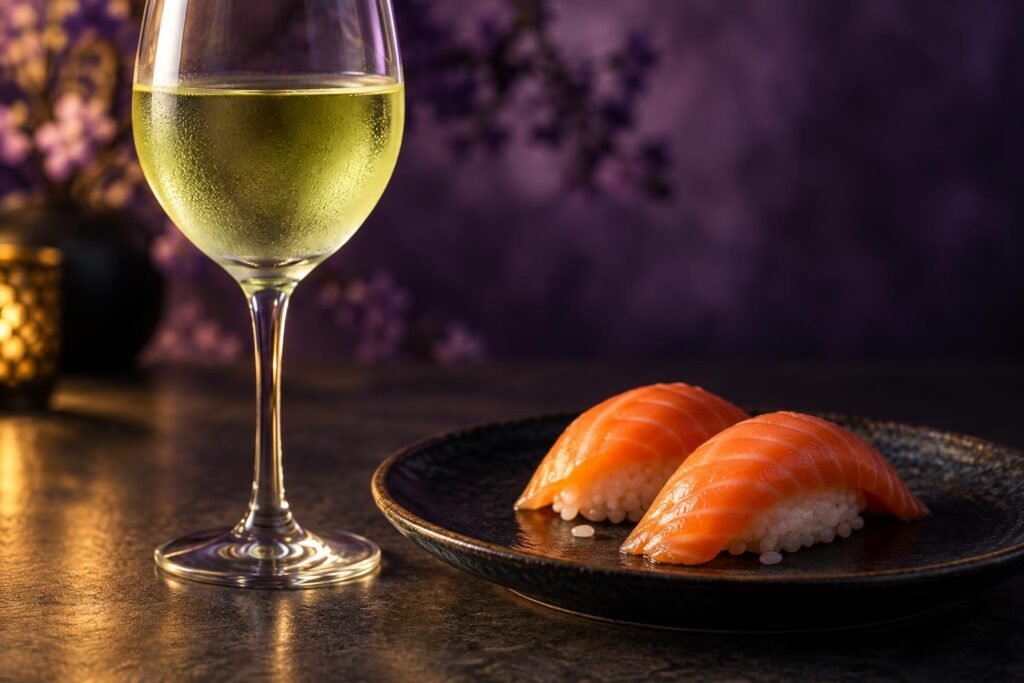
Riesling has the sharpest acidity of any common white and it almost never sees oak, which makes it the most reliable sushi wine on the shelf. Australian versions are usually bone dry with lime and green apple, and the grape does its best work in cool places: Clare Valley and Eden Valley between them account for about a third of all Australian Riesling, according to the Wine Australia profile of the variety. Pour it with salmon, snapper, prawn and anything that gets a squeeze of lemon. There is more on the grape in our Riesling guide.
Sparkling wine, best for a mixed platter
Bubbles are the great equaliser. The fizz lifts the rice off your tongue and resets your palate, which is what you want when a platter throws salmon, tuna, prawn and cucumber at you in random order. Prosecco leans soft and pear-like, while Cava is drier and a little nuttier. Our guide to the difference between Prosecco and Cava sorts out which is which.
Pinot Gris and Pinot Grigio, for delicate white fish
Snapper, kingfish and scallop are so gentle that a loud wine simply flattens them. Pinot Grigio in the crisp Italian style is light and lemony. Pinot Gris in the Australian and Alsace style is rounder, with pear and a touch of spice. Either works, but lean Grigio for plain sashimi and Gris for anything with mayonnaise in it. Here is the difference between Pinot Gris and Pinot Grigio.
Dry rosé, for spicy rolls
Spicy tuna, anything with sriracha mayo and salmon with chilli all want a wine that has a little fruit weight but no real tannin. A pale dry rosé gives you strawberry and citrus and sits under the heat instead of feeding it. Keep it dry, because sweet rosé plus soy sauce is a strange place to end up.
Light Pinot Noir, chilled, for tuna and eel
Red wine can work, as long as it is the shy kind. A light Pinot Noir with low tannin, given twenty minutes in the fridge, is lovely with fatty tuna, eel and anything glazed in sweet soy. The red fruit picks up the glaze and the chill keeps it fresh. Bring a Shiraz instead and you will regret it. The same logic runs through our notes on wine with miso, where savoury depth is the problem to solve.
What to Avoid
Three kinds of wine reliably spoil sushi.
- Big tannic reds. Cabernet Sauvignon, Shiraz and anything young and grippy. Umami in raw fish makes the tannin taste bitter and leaves the fish tasting faintly of tin.
- Heavily oaked Chardonnay. Vanilla, butter and toast on top of raw fish is a lot of noise for a very quiet dish.
- High alcohol anything. Once you go past about 13.5 percent, the wine starts to burn against wasabi instead of cooling it.
Sweet wine is not banned, but it needs a reason. Save it for eel or a dessert roll and keep it away from the sashimi.
Drink One Tonight
If you want one bottle that covers the whole plate, make it an Australian dry Riesling. This one is stocked and stock-checked as we write, and it is about as food-friendly as white wine gets.

Byrne Single Vineyard South Australia Riesling 2025
The Byrne family has been making wine for four generations, and this is their quiet achiever. It is dry, citrusy and low on fuss, which is exactly what a plate of raw fish asks for. Serve it very cold and pour small glasses so the last one is as sharp as the first.
- Bone dry, with lime and lemon zest rather than oak
- Fruit from vines planted in 1968 at the family Scotts Creek vineyard
- Light enough for sashimi, sharp enough to handle soy
- Single vineyard, so stock moves quickly
- Too lean if you wanted something rich and buttery
If You Are Ordering In
Two small things matter more than the label on the bottle. First, serve the wine colder than feels right: whites for sushi want roughly 8 to 10 degrees, which means from the middle of the fridge, not the door. A decent glass helps as well, and our roundup of wine glasses in Australia has cheap ones that do the job. Second, go easy on the soy. Dip the fish side rather than the rice side and you keep the salt down, which lets the wine stay in balance.
Worth knowing if the night runs long: a standard drink in Australia holds 10 grams of alcohol, and the national guidelines suggest healthy adults keep to no more than four standard drinks on any one day, per the Australian government guidance on how much alcohol is safe to drink. A 750 ml bottle at 12 percent holds about seven. You can run the numbers for your own bottle with our wine calorie calculator.
Frequently Asked Questions
What is the best wine for sushi if I only buy one bottle?
A dry Riesling. It copes with raw fish, cooked prawn, spicy rolls and vegetarian rolls better than anything else on the shelf, and it is rarely expensive.
Can you drink red wine with sushi?
Yes, but only light reds with soft tannin, and chill them first. Pinot Noir is the safest choice and it is very good with tuna and eel. Heavy reds clash badly with raw fish.
Does Champagne go with sushi?
Very well. Champagne and other traditional-method sparkling wines have the acidity and the bubbles to reset your palate between pieces. Choose a brut style, because sweetness and soy sauce do not get along.
What wine goes with spicy tuna rolls?
Dry rosé or an off-dry Riesling. A trace of fruit sweetness cools the chilli, while high alcohol makes it burn more, so look for a bottle around 11 or 12 percent.
What about vegetarian rolls like avocado and cucumber?
Keep it light and green. Sauvignon Blanc, Pinot Grigio or a dry sparkling all work. Avocado rolls are creamy, so a wine with fresh acidity stops the plate feeling heavy.
Should I just drink sake instead?
Sake is a lovely match and it does not fight umami the way wine can. A crisp white gets you most of the way there though, and you probably have one in the fridge already. If salmon is the star of the plate, our guide to wines that go with salmon goes deeper.
This post contains affiliate links. If you buy through them we earn a small commission at no extra cost to you. It keeps the wine flowing and the reviews honest.