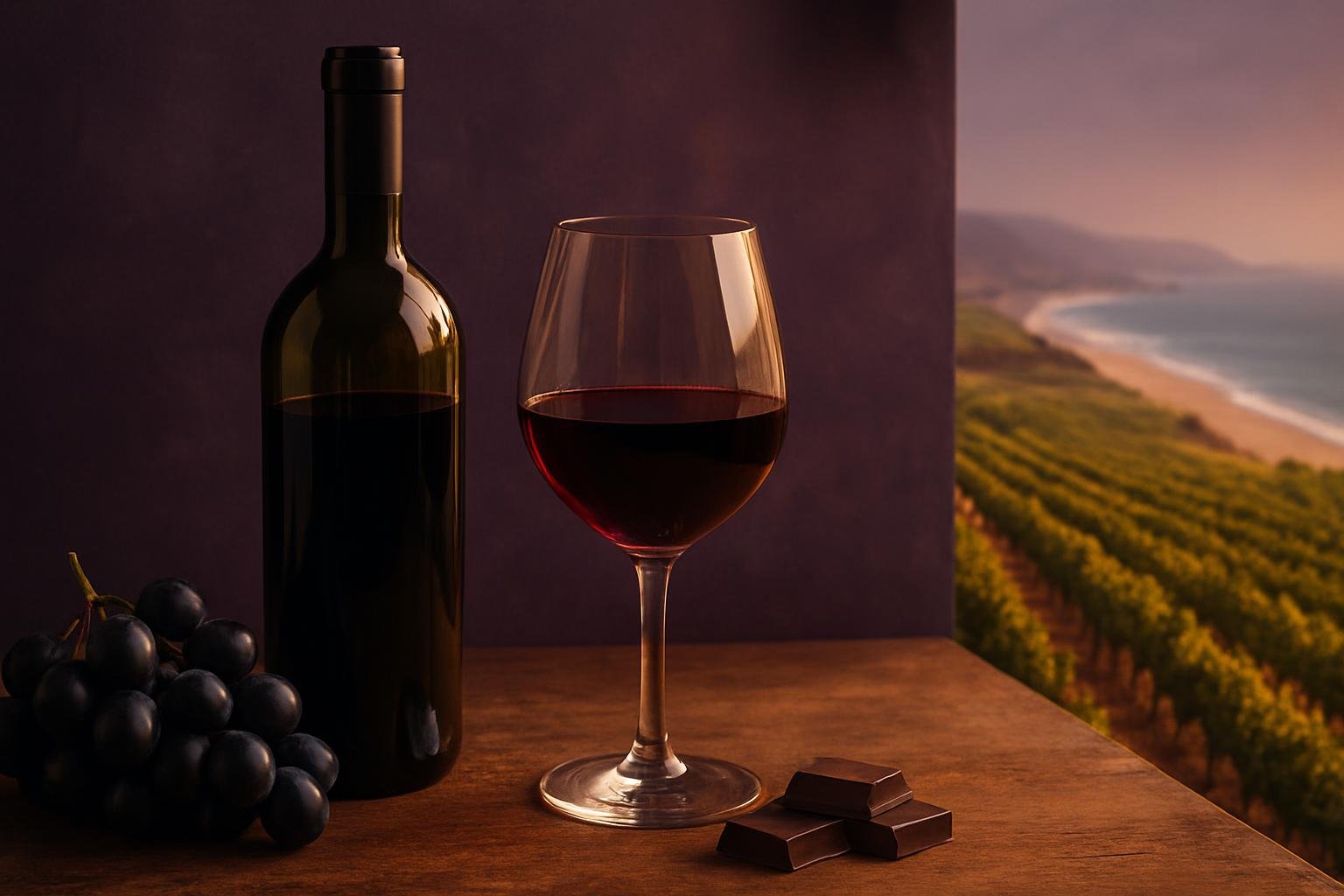
McLaren Vale is the wine region on Adelaide’s doorstep: about 33 kilometres south of the city, thirty-five minutes by car, squeezed between the Mount Lofty Ranges and the beaches of Gulf St Vincent. It is Shiraz country first, but its old-vine Grenache is the wine that gets wine people excited, and the sea breeze keeps both fresher than their Barossa cousins. It is also the easiest serious wine region in Australia to visit for an afternoon.
Table of Contents
Between the hills and the sea
The region runs for about 30 kilometres along the coast, from sea level up to 417 metres in the foothills, and that spread is the point. Vineyards near the beach ripen in a sea breeze and make softer, more elegant wine. Vineyards up in Blewitt Springs and Clarendon, on deep sand and higher ground, ripen slower and make finer, spicier wine. The average January temperature is a warm 21°C, but the gulf means it almost never frosts and rarely gets the scorching runs that hurt inland regions.
The soils are a jumble: red-brown loam, terra rossa, the famous deep sands of Blewitt Springs, cracking black clay near the creeks. Most of them drain freely, which is why the region’s old vines survive on winter rain alone. About a fifth of the vineyard is dry-grown, meaning no irrigation at all, and some of those vines have been producing since before Federation.
| Grape | Planted | Style in McLaren Vale |
|---|---|---|
| Shiraz | 3,218 hectares, about half the crush | Dark chocolate, blackberry, a savoury edge from the sea air |
| Cabernet Sauvignon | 1,288 hectares | Riper and softer than Coonawarra, often blended with Shiraz |
| Chardonnay | 722 hectares | Mostly from the cooler high ground |
| Grenache | 402 hectares, much of it very old and dry-grown | The region’s secret: raspberry, spice, silky tannin, like a warm-climate Pinot |
| Newer arrivals | Small but growing | Vermentino, Fiano, Nero d’Avola, Tempranillo: Mediterranean grapes for a Mediterranean climate |
What the wines taste like
Shiraz. If Barossa Shiraz is a big, ripe, plush wine, McLaren Vale Shiraz is its slightly leaner brother who lives near the beach. The dark chocolate note is the giveaway, along with blackberry, black olive and a savoury, salty edge. The tannins are soft and the wines are ready younger than Barossa, though the best ones keep for fifteen years.
Grenache. For most of the twentieth century the Vale’s old Grenache went into fortified wine and cheap blends. Now those same vines, some more than a century old, make some of the most exciting reds in the country: pale, fragrant, red-fruited, spicy, with fine dry tannin and none of the jammy weight the grape gets elsewhere. Think of it as the closest thing to Pinot Noir a warm region can make. If you have only ever had Barossa Shiraz, a McLaren Vale Grenache is the wine that will surprise you.
Everything else. The Cabernet is generous and chocolatey, the GSM blends (Grenache, Shiraz and Mourvèdre, sometimes called Mataro here) are the region’s easy-drinking staple, and the new wave of Italian and Spanish grapes, especially Fiano and Vermentino, makes some of Australia’s best summer whites.
A short history
John Reynell and Thomas Hardy planted vines here in 1838, two years after the colony was founded, and wineries were running by 1850. Hardy’s name is still on one of the biggest wine companies in the country, and Reynella is now a suburb. The region spent a century supplying strong red and fortified wine to Britain, went through the same slump as everywhere else in the 1980s, and came back on the strength of its Shiraz. Its geographical indication was registered in 1997, and it is part of Adelaide’s membership of the Great Wine Capitals network. The d’Arenberg Cube, a five-storey puzzle-cube of a building that opened in 2017, is the landmark most visitors photograph.
What to buy
The Vale is well stocked in every chain. Prices below are Dan Murphy’s shelf prices on 9 September 2026 and will move about; BWS stocks many of the same names.
| Wine | Price band | Why |
|---|---|---|
| Shingleback Red Knot Shiraz | About $13 | The honest cheap one; chocolate and blackberry for pizza night |
| d’Arenberg d’Arry’s Original Grenache Shiraz | About $16 to $20 | The region’s classic blend from its most famous family, made since the 1950s |
| Chapel Hill The Parson Shiraz | About $14 to $17 | Very good for the money, a step up in polish |
| d’Arenberg The Footbolt Shiraz | About $16 to $20 | The Vale’s benchmark twenty-dollar Shiraz |
| d’Arenberg The Custodian Grenache | About $20 | The cheapest way to taste old-vine Vale Grenache |
| Chapel Hill Vinedresser Grenache | About $25 | Fragrant, silky, the modern style |
| Chapel Hill The MV Shiraz | About $30 | A proper cellar wine at a fair price |
| Oliver’s Taranga Grenache | About $33 | Sixth-generation family, old vines, one of the region’s best |
| Chapel Hill Road Block Shiraz | About $55 to $65 | Single vineyard, ten-year bottle |
Worth finding at independents and cellar doors: Wirra Wirra, Coriole (also for Fiano and Sangiovese), Yangarra (biodynamic old-vine Grenache), Bekkers, Hither and Yon, Battle of Bosworth and Samuel’s Gorge. Our Shiraz guide covers the grape and how the Vale compares with Barossa and the Hunter, and our guide to the world’s wine regions puts it next to the Rhône, where Grenache and Shiraz started.
Heads up: the boxes below link to Just Wines, our partner shop. If you buy through them we earn a small commission at no extra cost to you. Prices were checked when this was written and move about.
What the partner shop has from the Vale right now:

Fox Creek Postmaster McLaren Vale GSM 2021
- Old-vine Grenache, Shiraz and Mourvèdre from a McLaren Vale family estate
- The region's classic blend from the excellent 2021 vintage
- About twenty-nine dollars
- A blend, so it shows the Vale's three grapes together rather than Grenache alone

Hardys Tintara Shiraz
- Made at Tintara, the McLaren Vale winery Thomas Hardy bought in 1876
- Red berries, milk chocolate and spice: the Vale signature
- About twenty-six dollars
- A big brand; the small-producer wines above have more personality

Sherrah South Australia Preservative Free Grenache 2025
- Small-batch, preservative-free Grenache from a McLaren Vale winemaker
- The modern, fragrant style; serve it a little cool
- About twenty-five dollars
- Labelled South Australia rather than McLaren Vale, and preservative-free wines are best drunk young
What to eat with it
Shiraz wants meat off a barbecue, slow-cooked lamb shoulder, a beef and red wine pie or a dark chocolate dessert if you are feeling brave. Grenache is more flexible: roast chicken, pork, duck, a mushroom risotto, charcuterie, and it is one of the few reds that works with a mild curry. Serve the Grenache a little cooler, around 14 to 16°C, and do not be afraid to put it in the fridge for twenty minutes in summer. The Fiano and Vermentino belong with the seafood the coast is famous for.
Visiting
This is the day-trip region. Thirty-five minutes from the Adelaide CBD, and you can be tasting by ten. There are more than 90 cellar doors and the good ones are close together: d’Arenberg and its Cube, Wirra Wirra, Coriole (with a lovely garden), Chapel Hill, Hardys at Tintara, Alpha Box and Dice for something odd, and the Salopian Inn or the Star of Greece at Port Willunga for lunch. The Shiraz Trail is an 8 kilometre walking and cycling path on the old railway between McLaren Vale and Willunga, and Willunga’s Saturday farmers’ market is the best in the state.
The beaches at Port Willunga, Aldinga and Maslin are ten minutes from the vines, which is the region’s real trick: no other Australian wine region lets you do a cellar door in the morning and a swim in the afternoon. Autumn, from March to May, is vintage; summer is beach weather; winter is green and quiet.
Tours, tastings and stays in McLaren Vale
McLaren Vale is forty minutes from Adelaide, close enough for a half day and good enough for a whole one.
McLaren Vale North Hop-On Hop-Off Wine Tour
A bus loop between the cellar doors, so you choose where to linger. Best value in the vale.
See dates and prices →McLaren Vale Wine Tasting, Sights and Glenelg (Half-Day Afternoon)
Short on time? An afternoon of tastings with a stop at the beach on the way back to Adelaide.
See dates and prices →McLaren Vale Small Group Wine Tour
The full day with a small group and a guide who picks the wineries for you.
See dates and prices →Stay in the vale: McLaren Vale township has cottages and small hotels within a short drive of the cellar doors.
Compare stays on Expedia →Partner links: if you book through them we earn a small commission at no extra cost to you. Prices and availability checked 29 September 2026; the booking page always has the current price.
Frequently asked questions
What is McLaren Vale famous for?
Shiraz, which is about half of everything grown there, and old-vine Grenache, which is the wine critics rate most highly. It is also known for being the closest major wine region to Adelaide.
How far is McLaren Vale from Adelaide?
About 33 kilometres south of the city centre, roughly thirty-five minutes by car.
What is the difference between McLaren Vale and Barossa Shiraz?
Barossa Shiraz is bigger, riper and more plush. McLaren Vale Shiraz is a touch leaner, with a dark chocolate note and a savoury, salty edge from the sea air.
Why is McLaren Vale Grenache special?
Many of the vines are more than a century old and grow without irrigation, giving small crops of intense fruit. Made lightly, the wine is fragrant, spicy and silky rather than jammy.
When is the best time to visit?
Autumn, from March to May, for vintage and the colours. Summer for the beaches. Weekdays for quieter cellar doors.
What is a good first McLaren Vale wine?
d’Arenberg The Footbolt Shiraz or d’Arry’s Original Grenache Shiraz, both around $20, or The Custodian Grenache if you want to try the grape the region is proudest of.