Heads up: this guide contains an affiliate link. If you buy through it we earn a small commission at no extra cost to you.
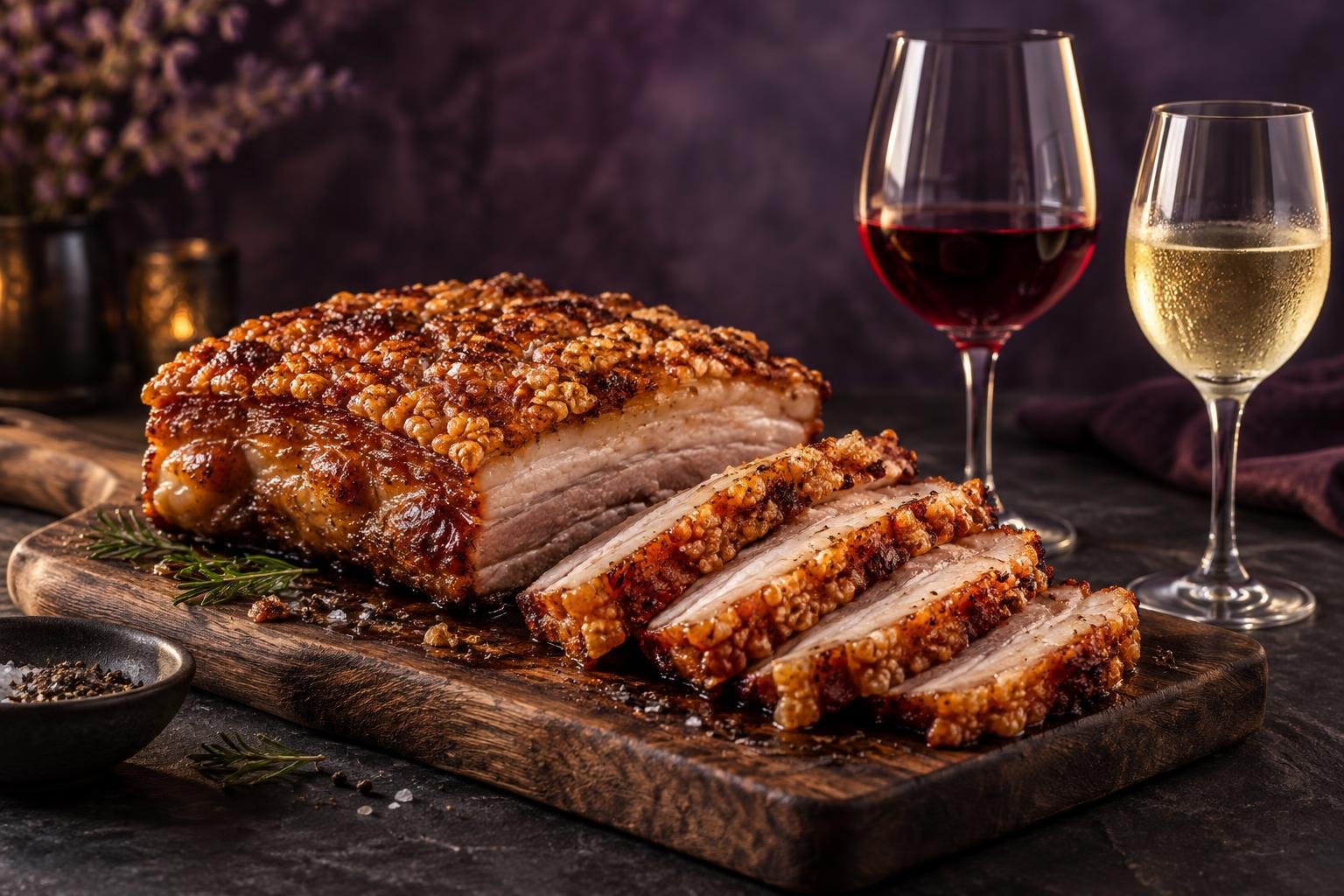
Off-dry Riesling and a light, cool-climate Pinot Noir are the two safest pours for pork belly. Both carry enough acidity to cut through the fat, and neither brings the heavy tannin that turns crackling into hard work.
Pork belly is rich, salty and usually glazed with something sweet. That combination breaks a lot of the wines people reach for out of habit. A big Shiraz does not lose to pork belly so much as it stops being noticed, which is a sad end for a good bottle. The good news is that the wines that do work are cheap, easy to find and pleasant on their own.
Table of Contents
The Short Answer
- Off-dry Riesling. A whisper of sweetness meets the glaze, and the acid scrubs the fat away. Serve it properly cold, around 8 degrees.
- Cool-climate Pinot Noir. Light body, bright red fruit, soft tannin. Chill it for fifteen minutes in the fridge before pouring.
- Dry sparkling. Bubbles and acid do the same job from a different angle, and they are very good with crackling. Serve it at fridge temperature.
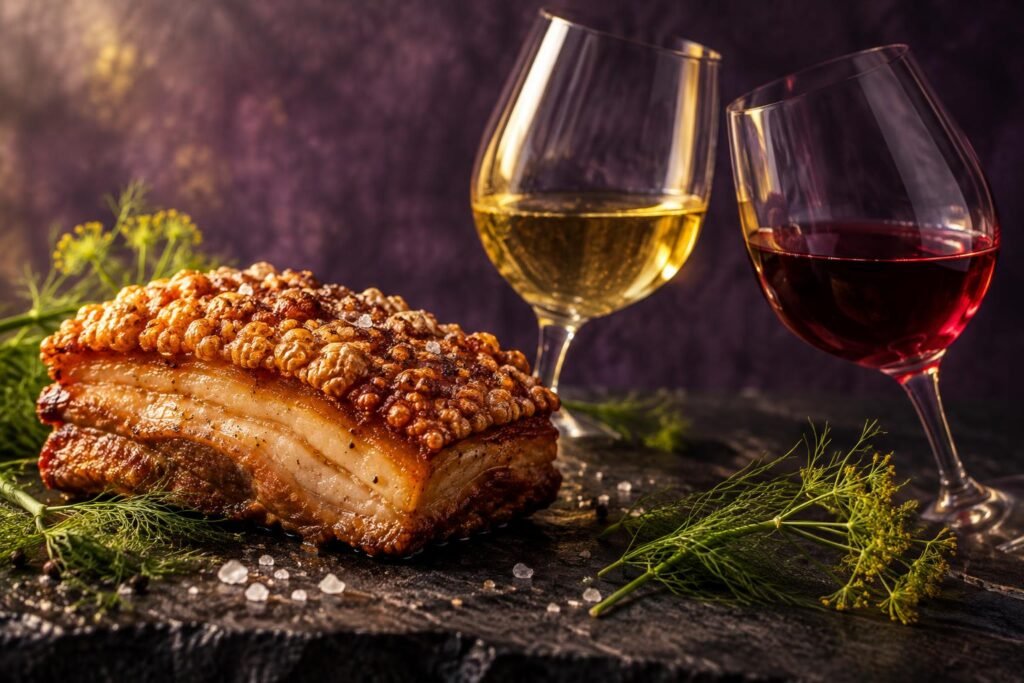
What Pork Belly Does to Wine
Four things in the dish are doing the damage, and each one asks something different from the glass.
- Fat. Soft pork fat coats your tongue. Acidity is what removes it, which is why a crisp white often beats a red here.
- Salt. The skin is usually salted hard to get it crisp. Salt makes tannin taste harsher and bitter, so heavy reds turn dry and grippy.
- Sweetness. Hoisin, apple sauce, maple, honey soy. A bone-dry wine next to a sweet glaze tastes thin and sour. A wine with a touch of sugar meets it halfway.
- Texture. Crackling is loud and brittle, the meat underneath is soft. Bubbles or bright acid give the palate somewhere to reset between bites.
Get the fat and the sweetness right and the rest tends to follow.
Best Wines for Pork Belly
Off-Dry Riesling
This is the classic match and it is not close. Riesling keeps very high natural acidity even when a little sugar is left in the wine, so it cuts fat and handles a sweet glaze at the same time. Clare Valley and Eden Valley between them account for a third of all Australian Riesling, and Wine Australia describes the style as light to medium bodied with high acidity and vibrant citrus fruit, which is the exact shape of wine this dish wants. Look for one labelled off-dry if the glaze is sweet, or a dry Clare Riesling if you are serving plain roast belly with fennel and salt.
Cool-Climate Pinot Noir
If you want a red, this is the one. Pinot Noir grown somewhere cool gives you red cherry, soft tannin and a fresh acid line, so it sits beside pork rather than stamping on it. Tasmania, Orange, the Yarra Valley and the Mornington Peninsula all make the style. Give it fifteen minutes in the fridge first, because a warm Pinot tastes flat and a touch sweet.
Grenache
Grenache is the sleeper here. It has generous red fruit and gentle tannin, and a lighter Australian example stands up to sticky char siu pork belly better than most reds. Go for a fresher style rather than a big ripe one, and serve it a little cool.
Unoaked Chardonnay
An unoaked or lightly oaked Chardonnay has the weight to match roast pork without adding tannin. Skip anything heavily oaked, because butter and vanilla on top of pork fat is too much of the same idea.
Dry Sparkling
Bubbles and acid scrub the palate clean, which is why sparkling wine is so good with anything fried or crisp. A dry Australian sparkling or a Prosecco both work, and the fizz is genuinely fun with crackling.
What to Avoid
- Big, tannic reds. Cabernet Sauvignon and full-bodied Shiraz meet the salt on the crackling and turn hard and bitter. The wine loses and so does the pork.
- Heavily oaked whites. Oak, butter and pork fat all pull in the same direction. The plate ends up rich on rich with nothing to lift it.
- Bone-dry wine with a sweet glaze. Next to hoisin or maple, a very dry white tastes sour and stripped out. Leave it for the plain roast.
- Anything served warm. Room temperature in an Australian kitchen is not cellar temperature. A warm red beside hot fatty pork is hard going.
Drink One Tonight

See Saw Orange Organic Pinot Noir 2025
See Saw is a family-run certified organic producer in Orange, New South Wales, where the vineyards sit high enough that the nights stay cool. That shows up in the glass as fresh red fruit and a clean acid line rather than jammy weight, which is exactly what roast pork belly wants. Stock-checked on the morning this guide was published.
- Light to medium body with soft tannin, so it never fights the crackling
- Bright acidity cuts the fat
- Certified organic, from high-altitude vineyards in Orange, New South Wales
- Too delicate for a heavily chilli-spiced belly
- Needs fifteen minutes in the fridge to show its best
If You Are Cooking It
Dry the skin properly. Pat the belly with paper towel, salt the skin, then leave it uncovered in the fridge overnight if you have the time. Dry skin crackles, damp skin steams, and no wine on earth rescues soggy crackling. If your glaze is very sweet, brush it on in the last ten minutes rather than at the start, so it does not burn and so the wine has less sugar to argue with.
Serve the wine cooler than feels natural. Whites at about 8 degrees, the Pinot at about 14. A wider bowl helps a light red show its fruit, and our guide to wine glasses in Australia covers the shapes worth owning. For a simpler weeknight version of the same pairing logic, see our notes on wine with pan-fried pork chops.
Frequently Asked Questions
What is the best wine with pork belly?
An off-dry Riesling or a light, cool-climate Pinot Noir. Riesling wins if the belly is glazed with something sweet like hoisin or maple. Pinot Noir wins if it is plain roast belly with herbs and salt.
Can you drink red wine with pork belly?
Yes, as long as the red is light and low in tannin. Pinot Noir and Grenache are the two to look for. Heavy Cabernet and full-bodied Shiraz clash with the salt on the crackling and taste bitter.
What wine goes with crispy pork belly and crackling?
Dry sparkling wine. The bubbles and acid reset your palate between bites, and the crisp texture of the wine mirrors the crisp skin. A dry Australian sparkling or a Prosecco both do the job.
What wine goes with char siu or Chinese pork belly?
Off-dry Riesling first, then a fresher Grenache. Char siu is sweet and a little smoky, so a bone-dry wine tastes thin next to it. A wine with a touch of residual sugar meets the glaze instead of fighting it.
How much wine should I pour with a rich meal like this?
A standard 150 ml pour of a 13 per cent wine is about 1.5 standard drinks. The Australian guidelines suggest no more than 4 standard drinks on any one day and no more than 10 a week, so two glasses with dinner sits inside that. Our wine calorie calculator works out the rest.
This post contains affiliate links. If you buy through them we earn a small commission at no extra cost to you. It keeps the wine flowing and the reviews honest.