Heads up: this guide contains an affiliate link. If you buy through it we earn a small commission at no extra cost to you.
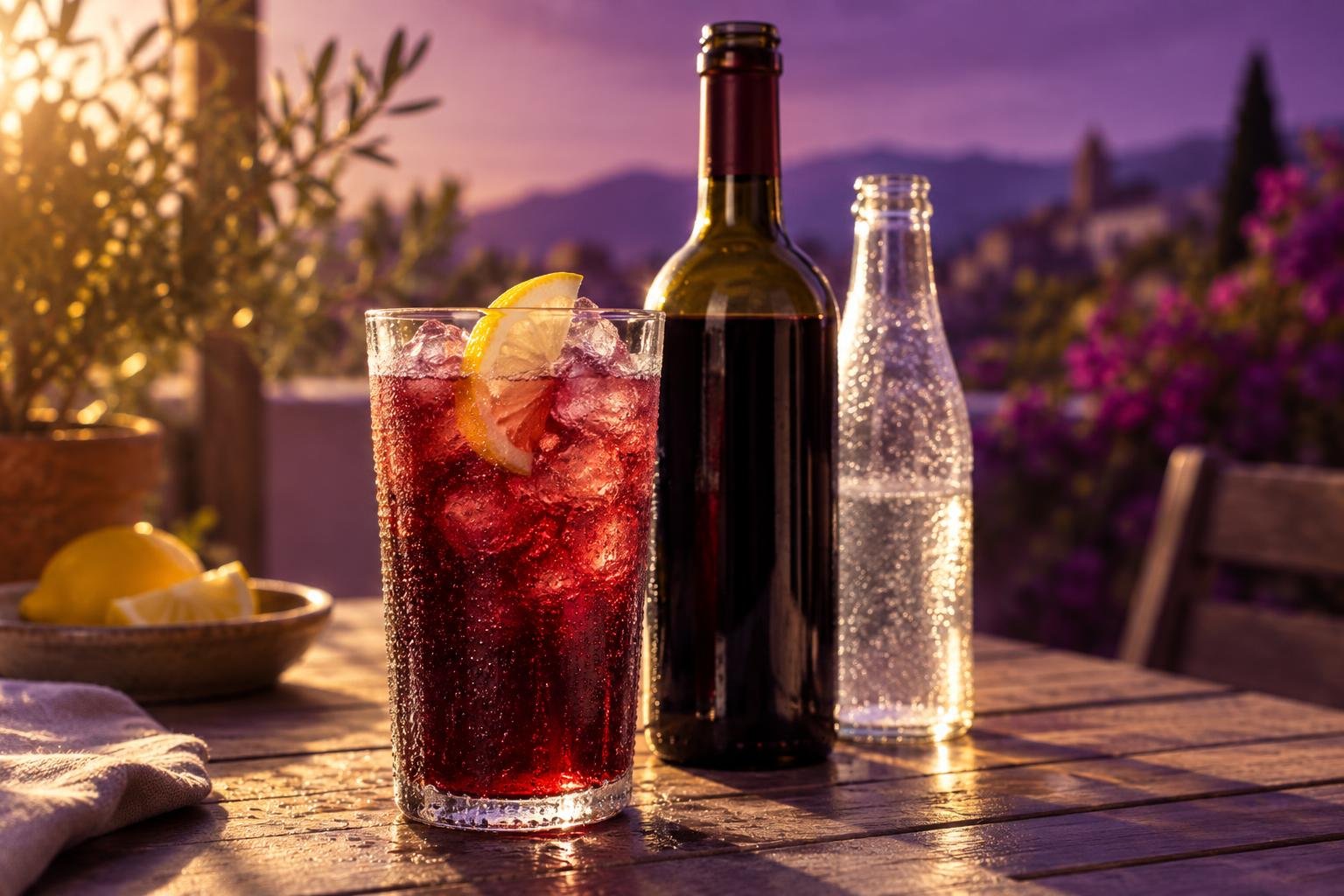
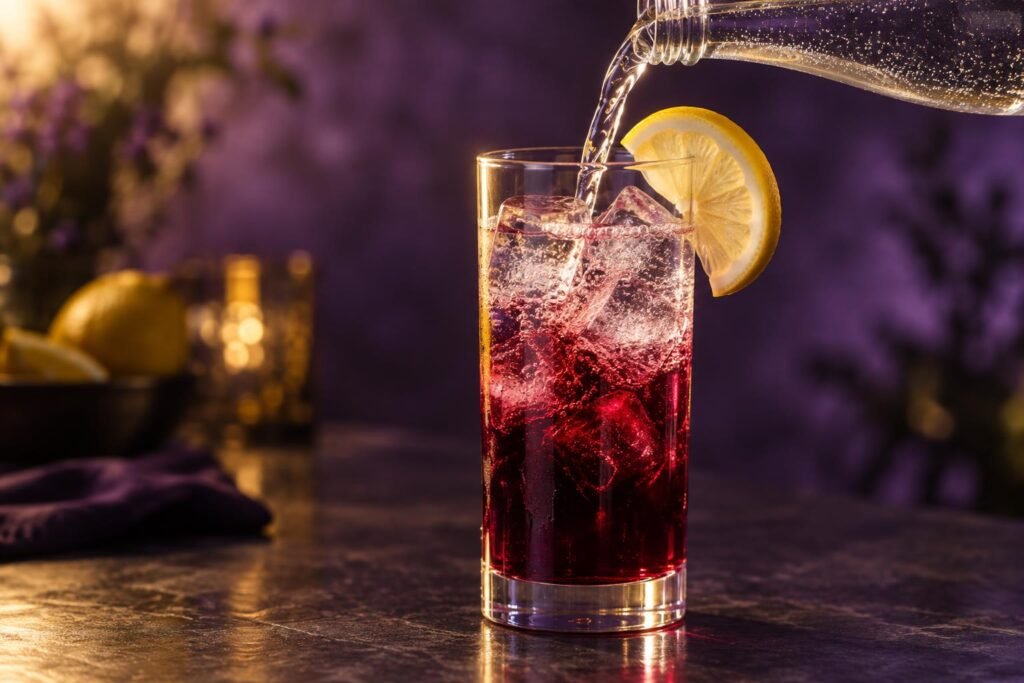
Red wine with soda water, half and half, poured over a lot of ice with a slice of lemon. That is tinto de verano, the drink Spain actually orders on a hot afternoon while the tourists are working through a jug of sangria.
It takes about eleven seconds to make and it costs almost nothing. The only thing worth getting right is which fizzy thing you reach for, because Spain and Australia mean slightly different things by soda.
Table of Contents
What You Need
- Cheap, juicy red wine. Tempranillo, Garnacha or any soft young red. Save the good bottle.
- Something fizzy. Plain soda water for a dry version, or a lemon soda for the Spanish original. More on that below.
- Ice. More than you think. Fill the glass.
- A slice of lemon, or orange if that is what is in the bowl.
That is it. No brandy, no chopped fruit, no cinnamon stick, no overnight soaking. If it has fruit floating in it, you have made sangria.
How to Make It
- Chill the wine and the mixer. Both of them, properly. This drink is only as good as it is cold.
- Fill a tall glass to the top with ice.
- Pour in equal parts red wine and fizzy mixer. About one hundred millilitres of each in a standard tumbler.
- Stir once, gently, so you keep the bubbles.
- Drop in a slice of lemon and drink it before the ice melts.
For a jug, use one bottle of red and the same amount of mixer, which gives you six to eight glasses. Combine it just before you serve rather than in advance, because a jug that has been sitting goes flat and warm and sad.
Gaseosa, Soda Water and What to Use Here
This is the bit most recipes gloss over. In Spain the traditional mixer is gaseosa, a lightly sweetened lemon soda sold under names like La Casera and Sandevid. It is not the same as our soda water. Gaseosa carries a little sugar and a little lemon, which rounds off the edges of a rough red.
In Australia you have three sensible options:
- Plain soda water. The driest version and the one the post title promises. Clean, refreshing, and it lets a good red still taste like wine.
- Lemonade cut with soda water, half and half. This is the closest thing to real gaseosa and the version most Spanish bars would recognise.
- Straight lemonade. Sweeter than the original. Fine if your red is tannic and cheap, too much if the wine is decent.
Start with plain soda water and add a small splash of lemonade if the wine tastes harsh. That is easier than trying to rescue a drink that is already too sweet.
Which Wine to Use
Soft, fruity and young. Tannin is the enemy here, because bubbles and cold both make tannin feel harder, so an oaky, grippy red turns thin and bitter the moment you add soda. A young Tempranillo is the traditional choice and it is still the best one. Grenache works just as well.
Skip anything with heavy oak, anything above about fourteen and a half per cent, and anything you were saving. This is a drink built for a twenty dollar bottle.
Where It Came From
The drink was born in Cordoba in the early nineteen hundreds. Federico Vargas ran a roadside bar called Venta Vargas on the road up to El Brillante, and he started mixing local red wine with gaseosa for his customers. People began asking for it by name.
At first they called it un Vargas, after the man. Then they started asking for the red one for summer, and the name stuck. Wikipedia records both names and the Cordoba origin, and notes the one thing that separates it from sangria: no fruit, no cinnamon, no extras.
It is still the everyday order along the Costa del Sol and through southern Spain, where sangria is quietly regarded as the drink you serve to visitors.
Tinto de Verano, Sangria and Calimocho
| Tinto de verano | Sangria | Calimocho | |
|---|---|---|---|
| Mixer | Lemon soda or soda water | Brandy, fruit, sometimes soda | Cola |
| Fruit | A slice of lemon | Chopped, soaked | A slice of lemon, if any |
| Prep time | Seconds | Hours | Seconds |
| Sweetness | Low to medium | High | High |
| Where you find it | Spanish bars, all day | Tourist menus and parties | Basque festivals and student parties |
Sangria gets the postcards, tinto de verano gets drunk. Calimocho, red wine and cola, is the third cousin, and it is better than it sounds.
A Bottle Worth Mixing

Casa Lluch Spanish Organic Tempranillo 2022
undefined
- Spanish Tempranillo, which is what the drink was built on
- Soft and fruity with light tannin, so soda does not turn it bitter
- Under twenty dollars, and certified organic
- Not a bottle for slow sipping on its own
- Light, so it disappears if you go heavy on the mixer
The point of this drink is that the wine should be honest rather than impressive. A young Spanish Tempranillo at under twenty dollars is exactly the brief, and half a bottle makes four generous glasses.
How Strong Is It?
One Australian standard drink is ten grams of pure alcohol. A seven hundred and fifty millilitre bottle of red at thirteen and a half per cent holds about eight standard drinks. Split that bottle across six glasses and top each one with soda and ice, and each glass carries roughly one and a third standard drinks.
So it is not a soft drink. It just tastes like one, which is worth remembering on a hot afternoon. Use more ice and a longer glass if you want to stretch it further. The wine calorie calculator will do the kilojoule side of the sum, and remember that a sweet mixer adds sugar the wine never had. Our explainer on residual sugar covers what is already in the bottle.
Frequently Asked Questions
Is red wine with soda water the same as a spritzer?
Close. A spritzer is usually white wine and soda. Tinto de verano is the red version, and in Spain it is normally made with a lightly sweet lemon soda rather than plain soda water.
Does adding soda water ruin good wine?
It does not ruin it, but it wastes it. Bubbles and cold make tannin and oak feel harsher, so the qualities you paid for are the first things to disappear. Use a simple young red.
What is the correct ratio?
Half and half is the standard. Go lighter on the wine if you want a longer afternoon, heavier if the mixer is sweet.
Can I use white or rosé?
Yes. Rosé with lemon soda is common in Spain in the summer, and white wine with soda is the classic spritzer. The method does not change.
Should I add fruit?
Only a slice of lemon or orange for the aroma. Chopped soaked fruit turns it into sangria, which is a different drink with a different amount of work.
Can I make it ahead for a party?
Mix it in the jug just before people arrive, not the night before. Chill the wine and the mixer separately so nothing needs to sit around going flat.
This post contains affiliate links. If you buy through them we earn a small commission at no extra cost to you. It keeps the wine flowing and the reviews honest.