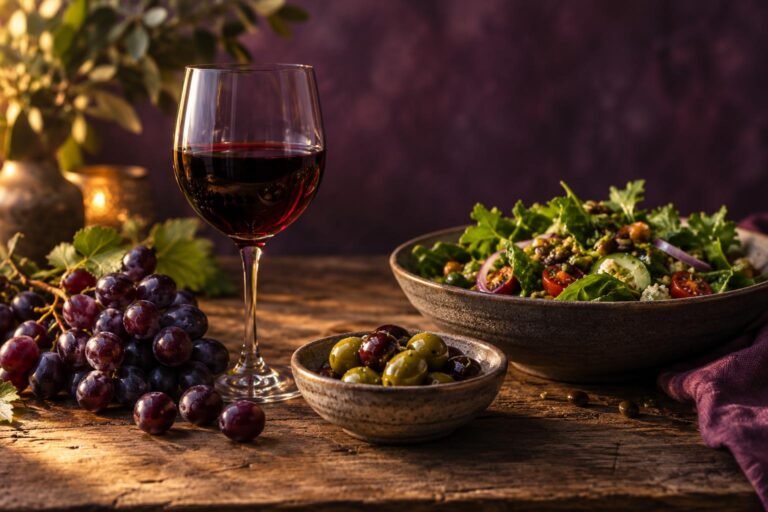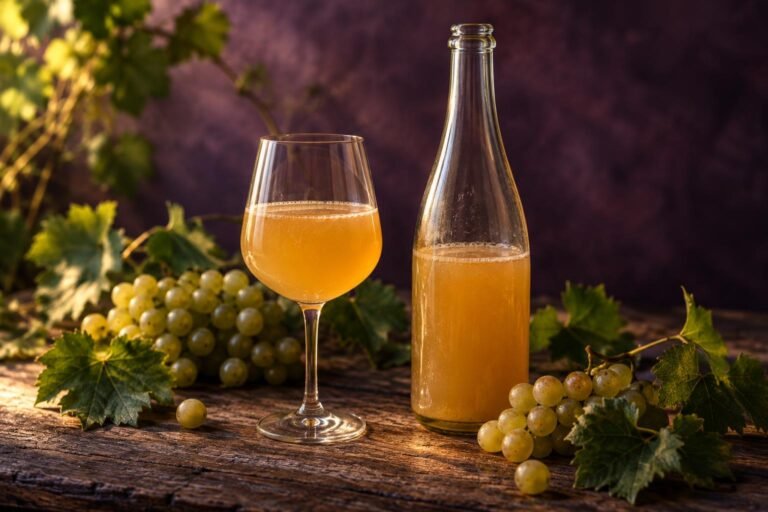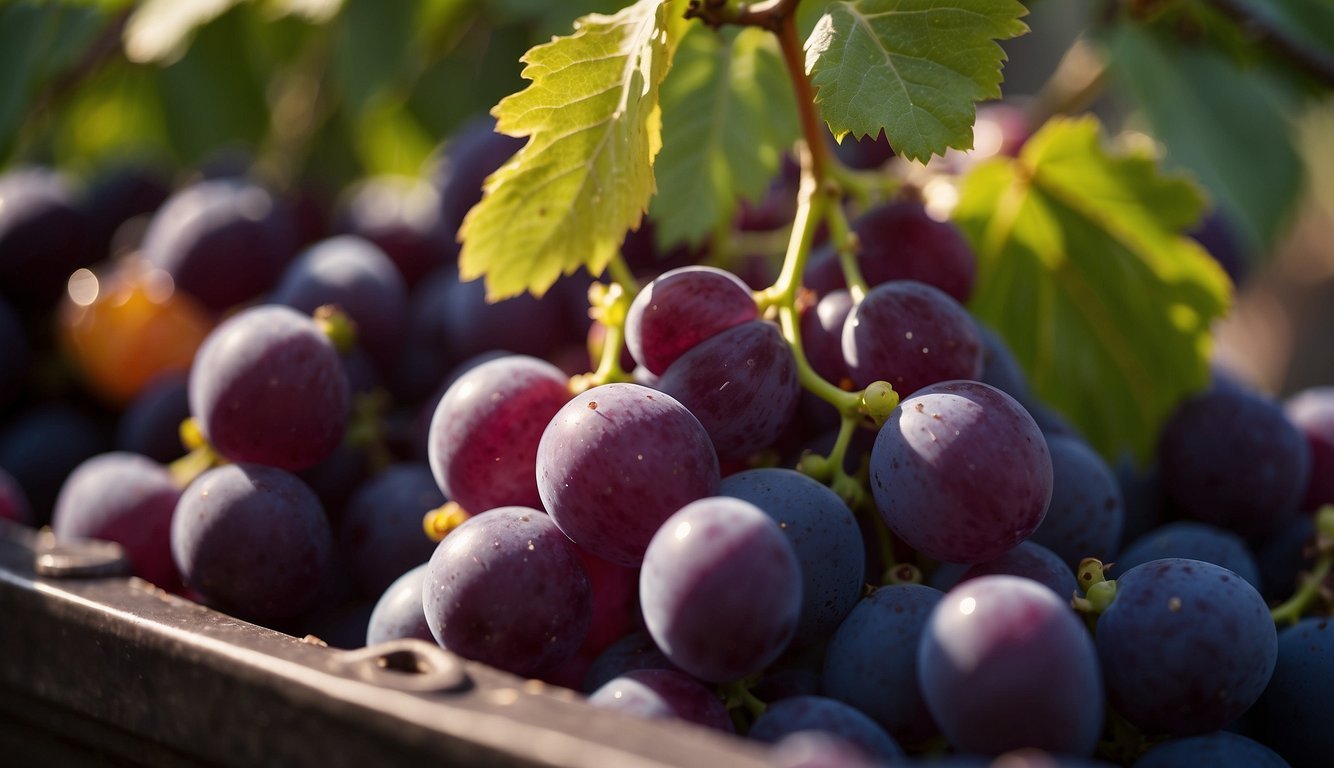
Grape must is freshly crushed grapes before they have fermented: the juice plus the skins, seeds and sometimes stems, all together in the tank. It is the raw material every wine starts from, and most of the decisions that shape a wine’s colour, tannin and style are made while it is still must. The word comes from the Latin vinum mustum, meaning young wine.
Table of Contents
What is in it
Juice, which is mostly water and sugar, with the acids that give wine its freshness. Skins, which carry the colour, the tannin and a lot of the flavour. Seeds, which add tannin (too much if they are crushed). Stems, if the winemaker leaves them in, which add a green, spicy edge. And on the outside of every grape, wild yeast, which is what starts fermentation if nobody adds a cultured strain.
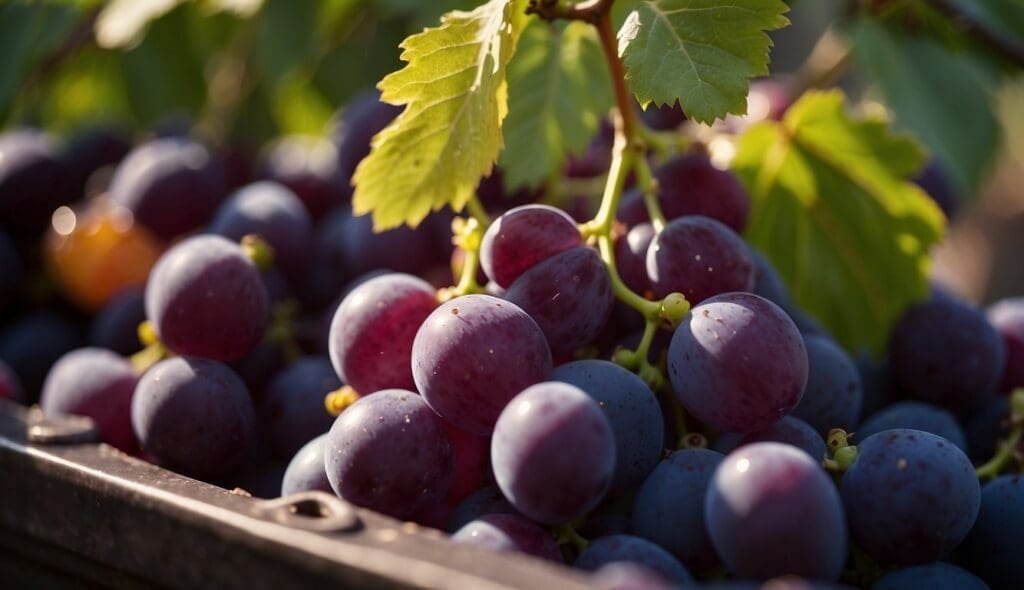
The sugar level of the must is the first thing a winemaker measures, because it decides the alcohol of the finished wine. Roughly, every 17 grams of sugar per litre becomes one per cent of alcohol. Must from a Barossa Shiraz picked ripe will be darker, sweeter and more tannic than must from a Tasmanian Chardonnay picked early, and the wines follow.
What winemakers do with it
The must stage is where the big style decisions happen.
Press it now or later. Press the must straight away and ferment only the juice, and you get a white or rosé wine, even from red grapes. Leave the juice on the skins through fermentation and you get red wine. Leave white grapes on their skins and you get orange wine, which we explain in our guide to orange wine and what to eat with it.
Cold soak. Many red winemakers chill the must for a few days before fermentation starts, to pull colour and fruit flavour out of the skins gently before the alcohol arrives.
Adjust it. In cool years, sugar can be added to the must to lift the alcohol (chaptalisation, common in Europe, not permitted in Australia). In hot years, acid can be added to keep the wine fresh, which is routine here.
Choose the yeast. Let the wild yeast on the skins do the job, or add a cultured yeast for a predictable result. Both are normal.
Once fermentation starts, the must becomes wine, the solids that are left are called pomace, and the pomace gets pressed one more time to squeeze out the last of the wine. Pomace is also what grappa is made from.
Must in the kitchen
Long before fridges, boiling grape must down into a syrup was how Mediterranean cooks kept sweetness through the winter. Most of those products are still made and several are worth finding.
| Product | Where from | What it is | Use it on |
|---|---|---|---|
| Saba (also sapa) | Emilia-Romagna and Sardinia | Must boiled down to a thick, sweet-sour syrup | Roast pumpkin, ice cream, hard cheese, in a vinaigrette |
| Mosto cotto | Southern Italy | The same idea, often a little thinner | Biscuits, drizzled on ricotta |
| Vincotto | Puglia | Cooked must aged in wood, sometimes flavoured with fig or lemon | Grilled meat, roast vegetables, strawberries |
| Traditional balsamic vinegar | Modena and Reggio Emilia | Cooked Trebbiano must fermented and aged for at least 12 years in a series of barrels | Parmesan, strawberries, a few drops on anything |
| Pekmez | Turkey and the Middle East | Grape molasses | With tahini at breakfast |
| Moustalevria and soutzoukos | Greece and Cyprus | Must pudding thickened with flour; strings of nuts dipped in must jelly | Harvest-time sweets |
In Australia, saba and vincotto are the two to look for; Italian delis and good grocers stock them, and a few local producers make their own from Barossa and McLaren Vale grapes.
Must is not verjuice
The two get confused. Must is the crushed juice of ripe grapes and it is sweet. Verjuice is the juice of unripe grapes picked early, and it is sour, used like a gentle vinegar or lemon juice. Maggie Beer made verjuice famous in Australia from the Barossa. Our guide to verjuice explains what to do with it.
Frequently asked questions
Is grape must the same as grape juice?
Not quite. Grape juice is just the liquid. Must is the whole crushed grape, skins and seeds included, on its way to becoming wine. Press the solids out of must and you have juice.
Does grape must contain alcohol?
No, not until fermentation begins. Once the yeast starts working on the sugar it is on its way to being wine, and winemakers stop calling it must.
Can you drink grape must?
Yes. Fresh must is sweet, cloudy grape juice with a bit of tannin from the skins. In wine regions it is drunk during harvest, and partly fermented must (called federweisser in Germany) is a seasonal treat.
What is pomace?
The skins, seeds and stems left after the wine is drained off the must. It is pressed for the last of the wine, then used for grappa, compost or feed.
What is the difference between must and verjuice?
Must comes from ripe grapes and is sweet. Verjuice comes from unripe grapes and is sour. Use must products like a syrup and verjuice like a mild vinegar.