Heads up: this guide contains an affiliate link. If you buy through it we earn a small commission at no extra cost to you.
The best wines for Mexican food are off dry Riesling, dry rose and a light, low alcohol red such as Tempranillo or Grenache. The rule that matters is not red or white. It is alcohol: the stronger the wine, the hotter the chilli will taste.
That is not a figure of speech. There is a receptor in your mouth that handles both heat and chilli burn, and alcohol switches it on. Once you know that, the whole Mexican wine list sorts itself out.
Table of Contents
The Short Answer
- Off dry Riesling. A touch of sweetness cools chilli faster than anything else on the table. Serve it properly cold, about 8 degrees.
- Dry rose. Fruit, acid and low tannin, which suits tomato, lime and grilled meat all at once. Also about 8 degrees.
- Tempranillo or Grenache, kept under about 14 per cent alcohol. Enough grip for carne asada without setting your mouth alight. Serve cool, around 15 degrees.
What Mexican Food Does to Wine
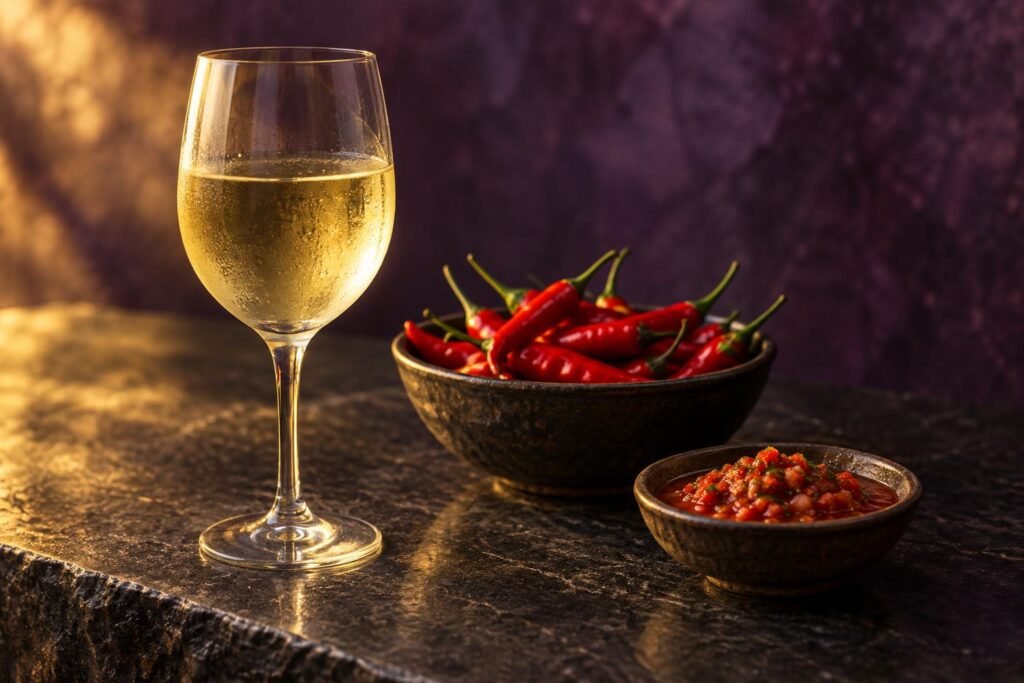
Chilli heat comes from capsaicin, which does not burn anything. It fools a receptor in your mouth called TRPV1 into reporting heat that is not there. That same receptor normally needs about 42 degrees of real heat before it fires. Alcohol will not put chilli heat out. Researchers testing drinks against capsaicin found beer-strength alcohol was no better than plain water, so reach for something lower in alcohol rather than something stronger.
Here is the part that matters at dinner. A 2002 study in Nature Neuroscience found that ethanol drops the firing point of that receptor from about 42 degrees to about 34 degrees, and makes it more sensitive to capsaicin at the same time. Your mouth sits at roughly 36 degrees. So alcohol pulls the trigger below body temperature, and every extra half a per cent in the glass turns the chilli up. A 15 per cent Shiraz with a habanero salsa is not a bold choice, it is a small act of self harm.
Sugar works the other way. A little residual sugar in the wine soothes the burn, which is why off dry whites beat bone dry ones with anything hot. Fat and dairy help too, so the sour cream is doing more than decorating the plate.
| What is on the plate | What it does to wine | Pour this |
|---|---|---|
| Fresh chilli and hot salsa | Alcohol makes the burn worse, tannin turns bitter | Off dry Riesling, low alcohol, well chilled |
| Lime, coriander and fresh salsa | Sharp acid makes a soft wine taste flabby | A high acid dry white or a dry rose |
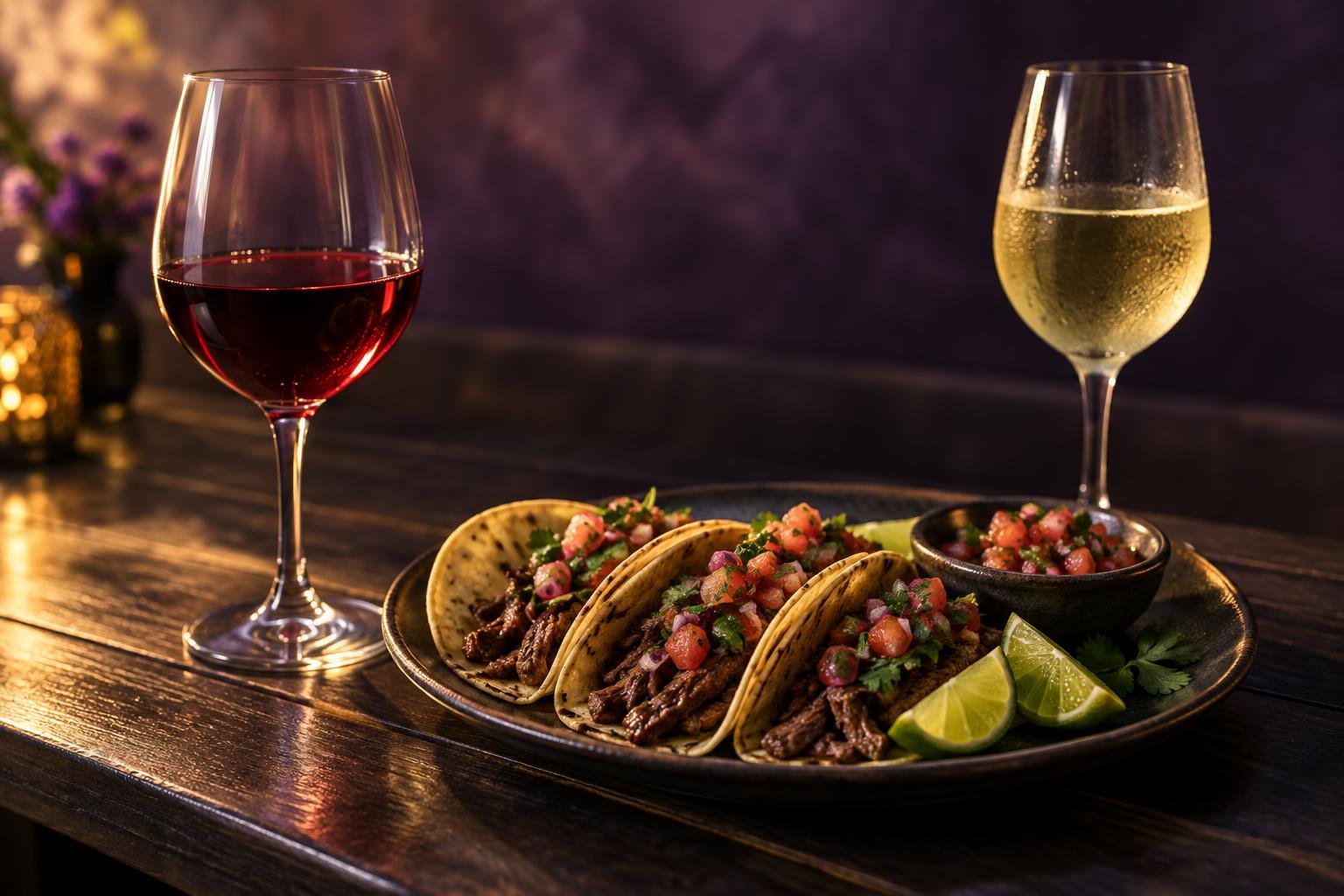
| Slow cooked pork, beef barbacoa, carne asada | Fat and char want fruit and some structure | Tempranillo, Grenache or a cool climate Shiraz |
| Melted cheese, sour cream, refried beans | Rich and heavy, needs cutting through | Sparkling wine, or a crisp dry white |
| Chipotle and smoked chilli | Smoke plus oak equals ashtray | Fruit forward reds with little or no new oak |
| Mole with chocolate and spice | Sweet, bitter and savoury all at once | A fruity Grenache or an off dry rose |
Best Wines for Mexican Food
Off dry Riesling, the chilli tamer
Tastes of lime, green apple and a little honey, with bright acid and a touch of sugar. It works because the sugar cools capsaicin while the acid handles the lime and the fat. This is the single most useful bottle to have in the fridge on taco night. If the phrase off dry is new to you, the off dry explainer covers it. Clare Valley and Eden Valley make the dry ones; look to the Great Southern in Western Australia or Germany for the softer style.
Dry rose, the whole table pleaser
Tastes of strawberry, watermelon and citrus peel. It works because it has red fruit without tannin, which means it can sit next to grilled beef and fresh salsa in the same mouthful. Keep it dry and keep it cold. Provence style pale rose or an Australian version from the Adelaide Hills both do the job.
Tempranillo, the one for slow cooked meat
Tastes of red plum, dried cherry, leather and a little vanilla, with medium tannin. It works because Spanish reds grew up next to smoked paprika and grilled meat, and because good Tempranillo carries flavour without carrying much alcohol. Barbacoa, carnitas and steak tacos all say yes.
Grenache, the fruit bomb that behaves
Tastes of raspberry, red liquorice and warm spice, with soft tannin. It works with mole, with anything sweet and smoky, and with dishes where a firmer red would turn bitter. McLaren Vale and the Barossa make excellent versions.
Sparkling wine, the one nobody orders
Tastes of green apple, citrus and bread, with a scrub of bubbles. It works on melted cheese, refried beans and fried tortilla better than any still wine, because the bubbles and acid reset your palate between bites. Prosecco or an Australian traditional method sparkling both work, and neither costs much.
What to Avoid
- High alcohol reds. Anything over about 14.5 per cent will make the chilli hotter, and the research above explains exactly why.
- Big tannic Cabernet. Chilli and salt both push tannin towards bitter, so the wine tastes like a mouthful of stewed tea.
- Heavily oaked wines with smoked chilli. Oak smoke plus chipotle smoke is too much of a fine thing.
- Bone dry whites with genuinely hot food. Without a little sugar they leave the burn standing.
Drink One Tonight
Spanish Tempranillo is the natural bridge here, and this one is organic, unfussy and cheap enough to open on a Tuesday when someone has bought too many tortillas.

Bodegas Finca Enguera Spanish Organic Tempranillo 2023
Chill it slightly, pour it with slow cooked pork or beef tacos, and keep something off dry in the fridge for whoever ordered the hot sauce. Two bottles will cover any Mexican table.
- Red plum and dried herb fruit with soft, well behaved tannin
- Certified organic and under twenty dollars
- Spanish reds are built for smoked paprika and grilled meat
- Not the bottle for a very hot salsa. Go to the Riesling for that
- Better with fifteen minutes in the fridge than straight off the shelf
If You Are Cooking It
The lever you control is heat, and you control it after the food is cooked rather than during. Serve the chilli on the side. That way one bottle can cover the whole table, because each person sets their own burn level instead of the cook setting it for everybody.
Two more small things. Put the lime wedges out rather than squeezing them over the dish in the kitchen, because acid on the plate makes a soft wine taste dull. And chill your reds. Fifteen minutes in the fridge takes a red down to about the right temperature and makes it taste noticeably less alcoholic, which is exactly what you want here.
Frequently Asked Questions
What is the best wine for tacos?
It depends on the filling more than the tortilla. Beef and pork tacos want a light red like Tempranillo or Grenache. Fish tacos want a crisp dry white or a sparkling. If there is serious chilli involved, an off dry Riesling beats both.
Red or white wine with Mexican food?
Both work, and alcohol matters more than colour. Keep whites crisp and slightly off dry, keep reds light and under about fourteen per cent, and you will not go wrong. The bottle to leave on the shelf is the big, warm, oaky red.
What wine goes with enchiladas?
Cheesy enchiladas want acid, so a dry rose or a sparkling wine. Red sauce enchiladas with beef are happier with a soft red like Grenache. Green sauce with tomatillo is sharp, so match it with a high acid white.
Does wine go with guacamole?
Yes, and better than most people expect. Avocado is fatty and mild, lime is sharp, so a crisp dry white or a sparkling wine handles both. Skip anything oaky, which flattens it.
What should I drink with really spicy Mexican food?
Something cold, low in alcohol and slightly sweet. An off dry Riesling at around nine or ten per cent is the best wine answer. If the heat is genuinely brutal, no wine will save you and a cold beer or a glass of milk will do more good.
Is Mexican wine any good?
Yes, though almost none of it reaches Australia. Baja California is the main region and it makes serious Cabernet, Nebbiolo and blends. If you spot a bottle, it is worth the curiosity. The same low alcohol logic applies to any cuisine built on chilli.
The alcohol and chilli research is Trevisani and colleagues, Ethanol elicits and potentiates nociceptor responses via the vanilloid receptor-1, Nature Neuroscience, volume 5, June 2002.
Birria is usually goat, and our guide to wine with goat meat explains why lean meat needs a softer red.
This post contains affiliate links. If you buy through them we earn a small commission at no extra cost to you. It keeps the wine flowing and the reviews honest.