Heads up: this guide contains an affiliate link. If you buy through it we earn a small commission at no extra cost to you.
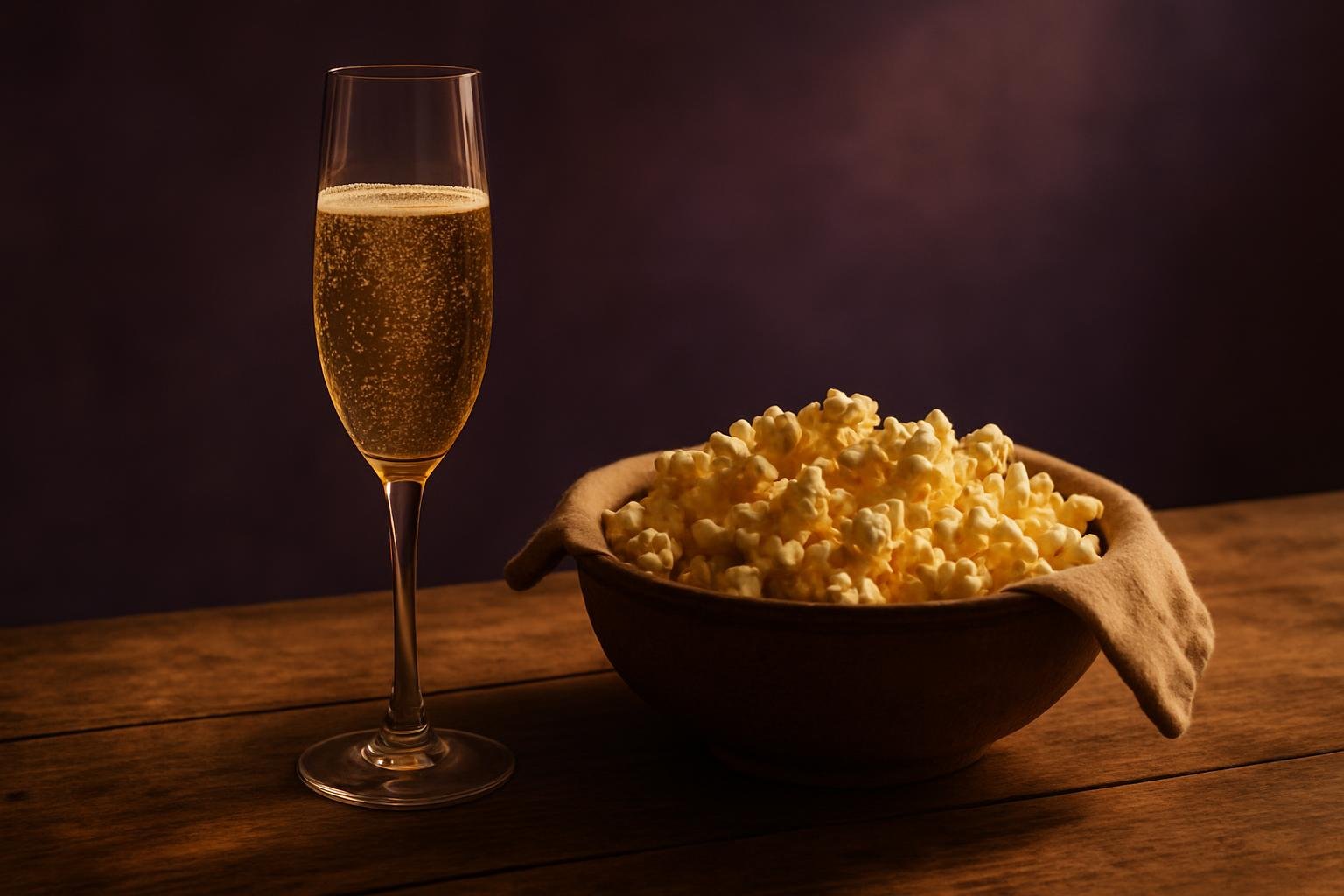
Sparkling wine is the answer to popcorn, and it is not close. Bubbles and acidity cut through the butter, and the salt on the popcorn makes the wine taste rounder and less bitter. Unoaked Chardonnay and dry Riesling come next.
Popcorn gets treated as a snack that does not deserve a proper wine. That is a mistake. It is salty, fatty and toasty all at once, which is the same job description as a plate of fried food, and fried food is one of the great sparkling wine partners.
Table of Contents
The Short Answer
- Prosecco or traditional-method sparkling. Bubbles scrub the butter off your tongue and the acidity resets your palate. Serve it properly cold, 6 to 8 degrees.
- Unoaked Chardonnay. Enough weight to stand up to butter, no oak to clash with the toasty corn. Serve at about 10 degrees.
- Dry Riesling. Sharp, limey and light, which is what you want with heavily salted popcorn. Serve at 8 degrees.
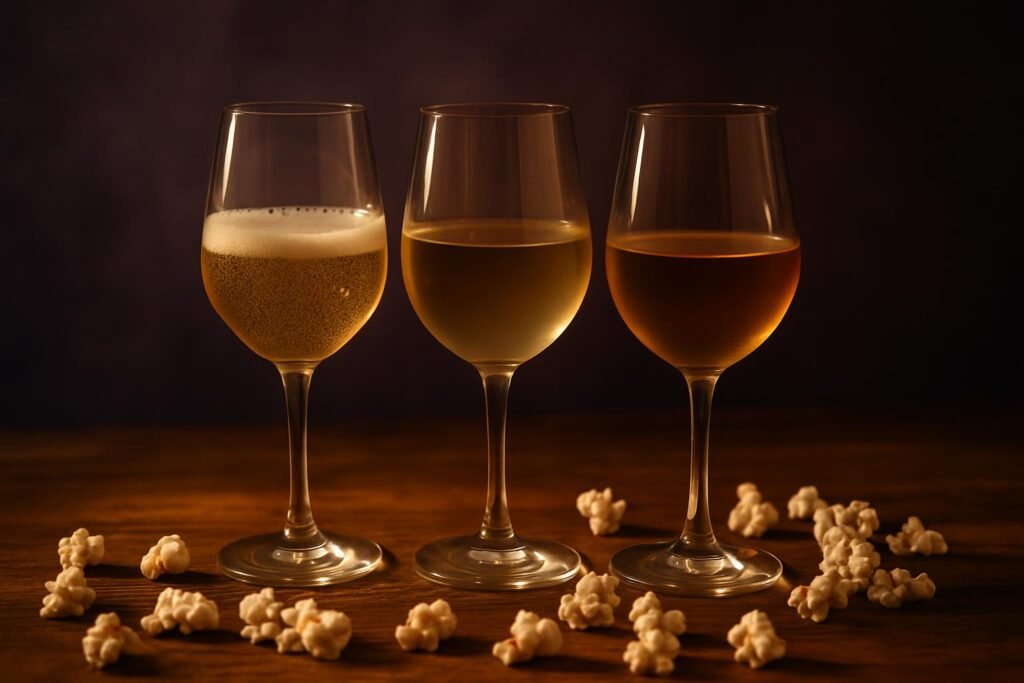
What Popcorn Does to Wine
Salt. This is the useful one. Sodium suppresses bitterness, and it does it at the taste bud rather than in your head. Breslin and Beauchamp showed this in Chemical Senses in 1995: sodium and lithium salts cut perceived bitterness, potassium did not, and the effect held even for sodium salts that taste less salty. In practice, salted popcorn makes a tannic or bitter wine taste softer than it is.
Butter and oil. Fat coats your tongue and flattens flavour. Acidity and bubbles are the two things that cut through it. A soft, low-acid wine will feel greasy after three handfuls.
The roasty smell. Popcorn does not taste of much on its own. Its character is almost entirely aroma, and the main one is a compound called 2-acetyl-1-pyrroline, formed as the kernel heats. Chemists list it alongside a fatty, fried note and a coffee-like note as the three that define popcorn. That toasty smell is why heavily oaked wine goes wrong here: you end up with toast on toast.
Dryness. Popcorn is bone dry and it pulls moisture out of your mouth. Tannin does the same. Put the two together and your mouth feels like a sandpit.
Best Wines for Popcorn
Prosecco and Traditional-Method Sparkling
The first choice, for salted, buttered or plain popcorn. Bubbles physically lift the fat, and the acidity is high enough to keep every mouthful tasting like the first one. Prosecco brings pear and a touch of sweetness that flatters salt. Traditional-method sparkling adds a bready note that echoes the popcorn itself. Our guide to the difference between Prosecco and Cava explains why the two taste so different.
Unoaked Chardonnay
Chardonnay without oak has weight and stone fruit and enough acid to handle butter. Look for Adelaide Hills, Tasmania or Yarra Valley if you want the Australian version. Skip anything described as buttery or heavily oaked, because it doubles down on flavours the popcorn already has. The Chardonnay guide covers how much oak is too much.
Dry Riesling
The best match for very salty popcorn. Riesling has the highest natural acidity of the common whites, and it is light enough that it never fights the snack. Clare Valley and Eden Valley are the Australian benchmarks. See the Riesling guide for the dry versus sweet question.
Dry Rosé
A good middle option when half the room wants red. Dry rosé has red-fruit flavour without tannin, which is exactly the shape popcorn needs. Serve it cold enough to be refreshing, around 8 degrees.
Chilled Pinot Noir, for Caramel or Sweet Popcorn
Sweet popcorn changes the maths. Sugar makes a dry wine taste sour and thin, so you need fruit rather than structure. A light Pinot Noir served at about 14 degrees has enough red fruit to keep up and almost no tannin to get in the way. A sweet sparkling such as Moscato works too.
What to Avoid
- Big tannic reds. Cabernet, Shiraz and Malbec dry your mouth out, and popcorn has already done that job. You get dust.
- Heavily oaked whites. Toasty oak plus toasty corn is one note played twice.
- Anything warm. A room-temperature white tastes flabby against salt. Cold is doing half the work here.
- Sweet wine with salted popcorn. It sounds like it should work. In practice the sugar and the salt fight and the wine tastes cloying.
Drink One Tonight
If you buy one bottle for movie night, make it a Prosecco. It is the least fussy wine on the list, it suits salted and buttered popcorn equally, and nobody has ever been disappointed to see it opened.

Grant Burge Prosecco NV
A straightforward, properly dry Australian Prosecco that does the one job popcorn needs: bubbles and acid against butter and salt. Serve it very cold.
- Crisp pear and citrus with a soft finish, which is what salt wants
- Australian-grown Glera from the King Valley end of the style
- Light at around 11 per cent, so a second glass is not a decision
- Just over $20
- It is not a wine you will still be thinking about tomorrow. It is not meant to be.
Pour it into something with a bit of room rather than a narrow flute. Our glasses roundup explains why, and the calorie calculator will tell you what the evening actually cost you.
If You Are Making the Popcorn
Salt it while it is still hot and slightly damp, or the salt slides straight off and sits at the bottom of the bowl. Use fine salt rather than flakes for the same reason. And go easy on the butter if you are pouring a lighter white, because a heavy hand with butter needs bubbles, not Riesling.
Air-popped corn with a little olive oil and salt is the friendliest version for wine. It is also the one that lets the toasty aroma through instead of burying it.
Frequently Asked Questions
What is the best wine with popcorn?
Sparkling wine, and Prosecco in particular. The bubbles and acidity cut through butter, and the salt on the popcorn makes the wine taste softer and fruitier. Unoaked Chardonnay and dry Riesling are the next best options.
Does red wine go with popcorn?
Only light, low-tannin reds, and only chilled. Pinot Noir or Gamay at about 14 degrees works, especially with caramel popcorn. Big tannic reds such as Cabernet and Shiraz dry your mouth out on top of an already dry snack.
What wine goes with buttered popcorn?
Something with high acidity or bubbles. Traditional-method sparkling, Prosecco or unoaked Chardonnay all cut through the fat. Avoid soft, low-acid whites, which taste greasy after a few handfuls.
What wine goes with sweet or caramel popcorn?
A wine with sweetness of its own, or plenty of ripe fruit. Moscato, demi-sec sparkling or a light chilled Pinot Noir. A bone-dry wine will taste sour next to caramel.
Why does salted popcorn make wine taste better?
Sodium suppresses bitterness at the taste bud. Breslin and Beauchamp measured this in 1995 and found the effect came from the sodium ion itself, not from how salty the salt tasted. A slightly bitter or tannic wine genuinely does taste rounder after salted popcorn.
Is Champagne worth opening for popcorn?
It works beautifully, and there is a long tradition of pairing crisps and Champagne for exactly the same reasons. Whether it is worth the price is between you and your budget. A good Prosecco or Australian sparkling gets you most of the way.
For the other great couch snack, our best wine with nachos guide explains why a chilled Grenache beats a big Shiraz once the jalapeños arrive.
This post contains affiliate links. If you buy through them we earn a small commission at no extra cost to you. It keeps the wine flowing and the reviews honest.