Heads up: this guide contains an affiliate link. If you buy through it we earn a small commission at no extra cost to you.
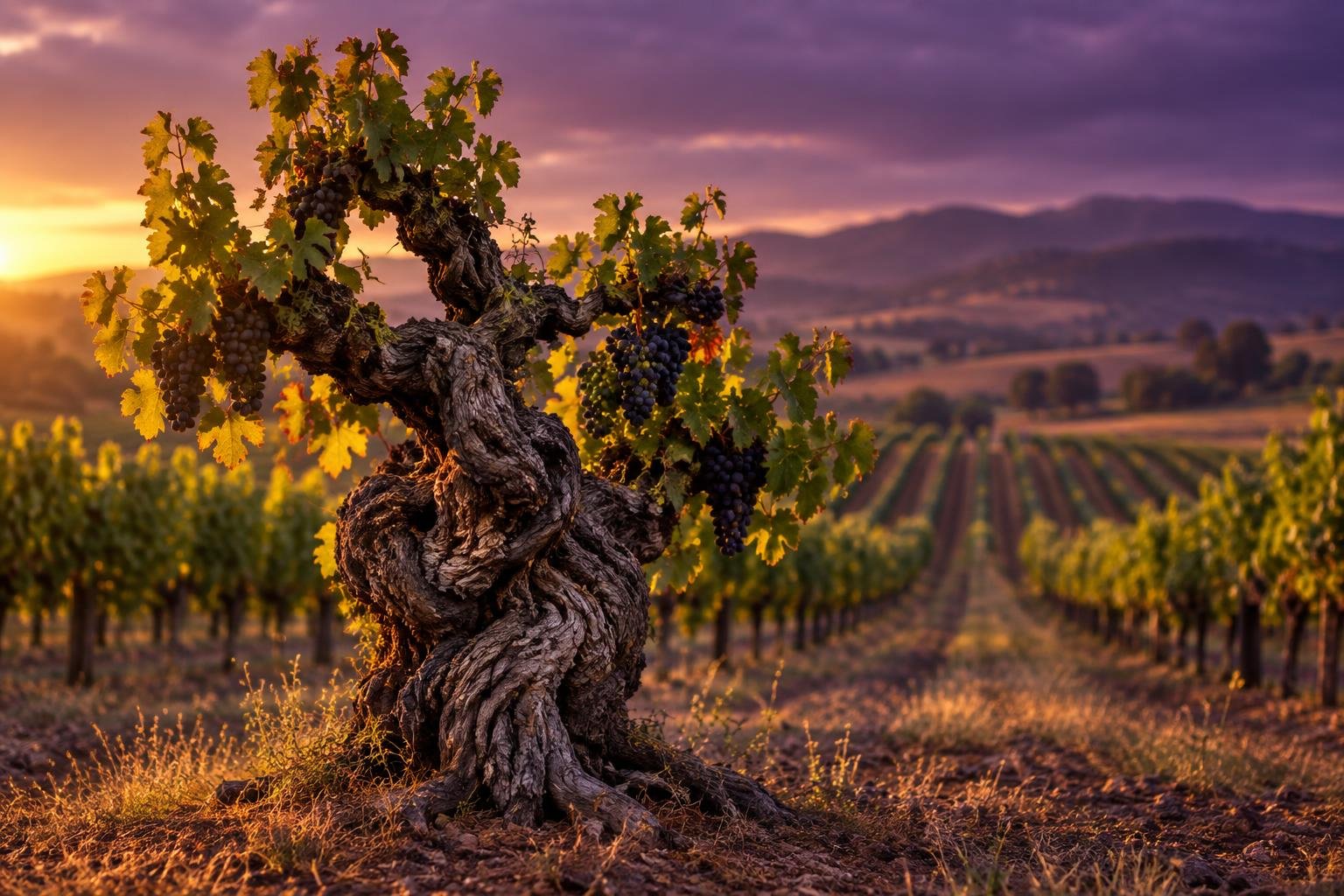
The Barossa Valley sits about an hour north-east of Adelaide, and it is the most famous wine region in Australia for one simple reason: the vines here are older than almost anywhere else on earth. Some of them were planted in 1843 and are still producing fruit.
Wine Australia puts the region at 578 square kilometres with 11,609 hectares under vine, at heights from 112 to 596 metres. It is warm, it is dry, and it makes big, generous reds. Go for the Shiraz. Stay for the fact that you can stand in a vineyard planted before the American Civil War.
Table of Contents
What the Region Tastes Like
Shiraz takes up half of everything planted in the Barossa, and it is the reason the region turns up on wine lists in London and New York. The valley floor is warm, the January mean sits at 21.9 degrees, and the growing season sees only about 220 millimetres of rain. Grapes ripen fully, so the wines come out rich rather than lean.
| Grape | What you get | Worth knowing |
|---|---|---|
| Shiraz | Full-bodied, ripe dark fruit, plush tannins | Half the vineyard area. The best examples keep enough acid to stay fresh rather than jammy. |
| Grenache | Ripe raspberry and peppery spice | Often blended with Shiraz and Mataro as GSM, and increasingly bottled on its own. |
| Cabernet Sauvignon | Dark fruit with softer tannins than you expect | Wine Australia rates the Barossa style as riper and softer than Coonawarra or Margaret River. |
| Riesling | Classic lime, ages ten years or more | The most important white in the region, though the Eden Valley next door gets more attention for it. |
The Cabernet Sauvignon guide and the Riesling guide go deeper on both of those if you want the full picture.
The Old Vine Charter, Explained Properly
This is the part of the Barossa nobody explains well, and it is the most interesting thing about the place. In 2009 the regional body, Barossa Australia, wrote down a charter that sorts old vineyards into four named tiers by age. It is not marketing fluff. It is a register, and each label means something specific.
- Barossa Old Vine. At least 35 years old. Fully mature, with a thick trunk and a deep root structure.
- Barossa Survivor. At least 70 years old. These made it through the 1980s Vine Pull scheme, when growers were paid to rip old vineyards out.
- Barossa Centenarian. At least 100 years old. Thick, gnarled and very low yielding.
- Barossa Ancestor. At least 125 years old, and believed to be among the oldest producing vines anywhere in the world.
The reason these vines still exist comes down to a quarantine rule. Phylloxera, a root-feeding insect, destroyed around 90 per cent of European vineyards in the nineteenth century. South Australia kept it out with strict border controls, so Barossa vines were never grafted onto American rootstock and never pulled out. Langmeil claims the oldest surviving Shiraz vineyard in the world, planted in 1843, and Cirillo Estate has a Grenache block dating from 1850.
Does old fruit actually taste different? Growers say the vines are steadier. They carry small crops, they cope better with a hot summer, and they give roughly the same wine every year instead of swinging with the weather. Whether you can taste a hundred and eighty years in a glass is a fair argument to have over dinner.
Five Cellar Doors Worth the Drive
Hours change, and two of these were confirmed on the day this guide was updated. Ring ahead for the rest.
Langmeil, Tanunda
Home of The Freedom 1843 Shiraz, planted by Christian Auricht and now thought to be the oldest surviving Shiraz vineyard on the planet. Standard tastings are free. Open ten until four most days, with Saturday running to five and Sunday opening at eleven. langmeilwinery.com.au
Kalleske, Greenock
The Kalleske family has farmed at Moppa since 1853, and the wines are certified organic and biodynamic. The cellar door is in the old Nenke General Store in Greenock, open ten until five daily. kalleske.com
Yalumba, Angaston
Founded in 1849 and still in family hands, which makes it the oldest family-run winery in the country. The Tri-Centenary Grenache comes off vines planted in 1889. yalumba.com
Turkey Flat, Tanunda
A small, focused producer sitting on very old Shiraz, and one of the few places where the rosé is the wine people actually queue for. turkeyflat.com.au
Chateau Tanunda
A bluestone building from 1890 with a lawn out the front and old vine Semillon and Shiraz inside. A good first stop if you have never done the Barossa before. chateautanunda.com
When to Go and How to Get There
It is about an hour by car from the Adelaide CBD, north-east up the Sturt Highway. There is no useful train, so hire a car or book a tour, and sort out a driver before you leave rather than after the third tasting.
Harvest runs roughly February to April, when the valley is busy and the whole place smells of fermenting fruit. Autumn, April and May, gives you colour in the vines and cooler afternoons. Winter is quiet, cheap and surprisingly good, because the tasting rooms light the fires and you get the staff to yourself. The Barossa Vintage Festival runs every second year in April.
Serving big Barossa reds at home takes a bit of air. Our decanter roundup covers the practical options, and if you are working through a few cellar doors in one day the wine calorie calculator is a sobering little tool.
A Bottle to Try at Home
From one of the cellar doors above, and in stock at the time of writing.

Kalleske Moppa Barossa Valley Organic Shiraz 2024
A proper Barossa Shiraz from a family that has farmed the same patch of Moppa dirt since 1853, grown organically and made without fuss. Dark plum, blackberry and a warm spice edge, with the plush tannins the region is known for. If you want to understand what people mean by Barossa Shiraz without spending a hundred dollars, start here.
- Certified organic and biodynamic fruit
- Family estate at Moppa since 1853
- Classic Barossa dark fruit without the price tag
- Under thirty dollars
- Young, so give it an hour in a decanter
- Full-bodied by design, not a light lunch wine
Tours, tastings and stays in the Barossa
The Barossa is an hour from Adelaide, so you can do it as a day trip or settle in for a weekend. Either way, let someone else drive.
Barossa Valley Hop-On Hop-Off Wine Tour
A bus loop between the cellar doors so you pick the stops and the pace. The cheapest way to see a lot of the valley.
See dates and prices →Premium Barossa Small Group Tour: Wine Tasting, Lunch and Chocolate
Adelaide pick-up, four tastings, lunch and chocolate, small group. The one most people book, and the reviews say why.
See dates and prices →Barossa Valley Wine Tour with Local Guide, Barossa Pick-up and Lunch
Already staying in the Barossa? This one collects you from your accommodation and skips the highway.
See dates and prices →Stay in the valley: Tanunda is the walkable centre, with cellar doors and dinner within a stroll.
Compare stays on Expedia →Partner links: if you book through them we earn a small commission at no extra cost to you. Prices and availability checked 29 September 2026; the booking page always has the current price.
Frequently Asked Questions
What is the Barossa Valley known for?
Shiraz above everything else, along with some of the oldest producing vines in the world. Grenache, Cabernet Sauvignon and Riesling are also grown widely.
How far is the Barossa Valley from Adelaide?
About an hour by car, north-east of the city. There is no practical public transport, so drive or take a tour.
How old are the oldest vines in the Barossa?
Some date to 1843. Barossa Australia sorts old vineyards into four tiers, running from Old Vine at 35 years to Ancestor at 125 years or more.
Why did the Barossa keep its old vines when Europe lost theirs?
Phylloxera destroyed roughly 90 per cent of European vineyards in the nineteenth century. South Australia kept the pest out with strict quarantine rules, so the original vines survived.
What is the difference between the Barossa Valley and the Eden Valley?
The Eden Valley sits higher and cooler in the ranges above the Barossa floor, and makes finer Riesling and leaner Shiraz. The Barossa Valley makes the bigger, riper reds.
When is the best time to visit the Barossa?
Autumn, around April and May, for colour and mild weather. Harvest from February to April is busy and atmospheric. Winter is quiet and cheap.
This post contains affiliate links. If you buy through them we earn a small commission at no extra cost to you. It keeps the wine flowing and the reviews honest.