Heads up: this guide contains an affiliate link. If you buy through it we earn a small commission at no extra cost to you.
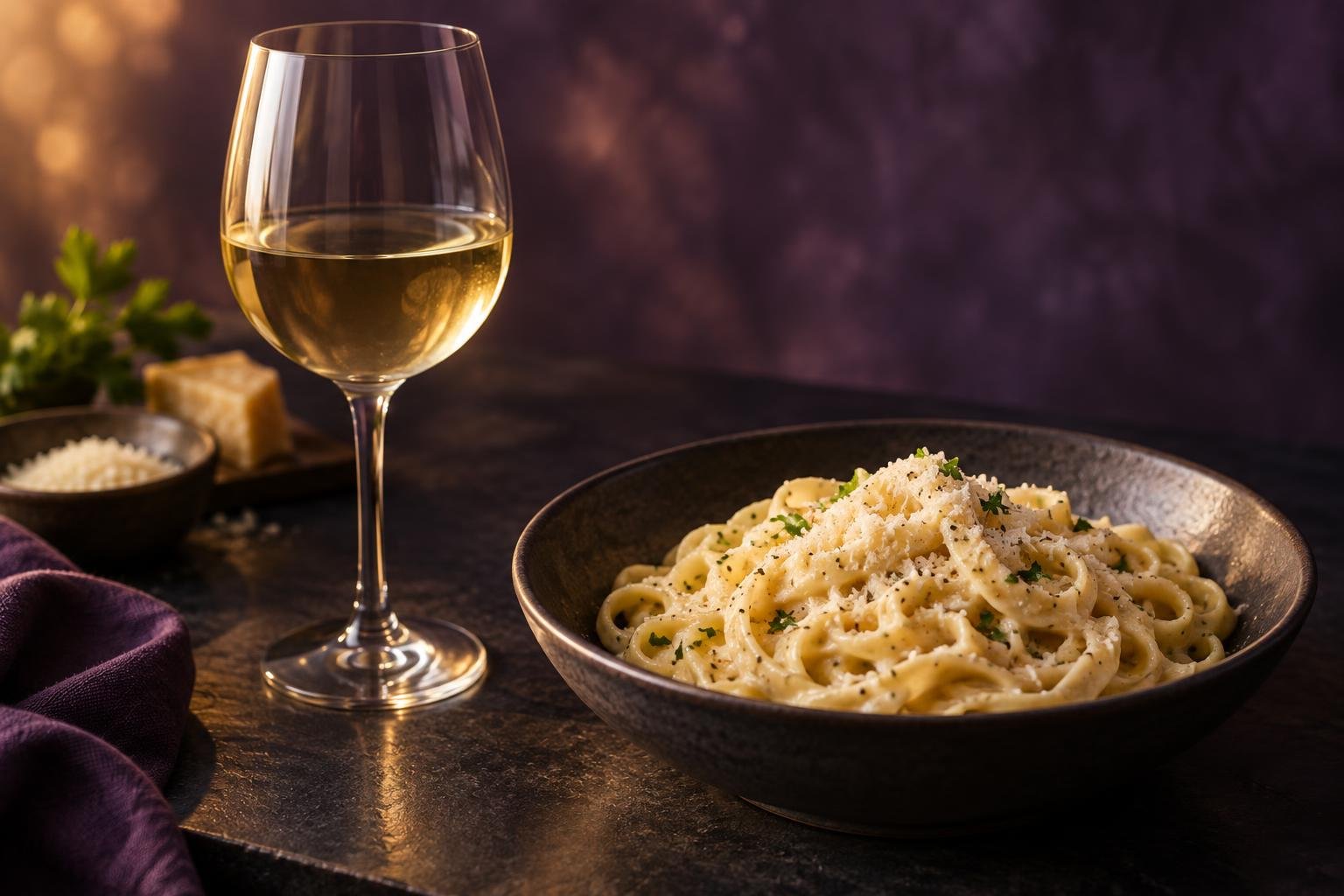
The best wine for Alfredo sauce is a dry white with high acid and light or no oak: unoaked Chardonnay, Pinot Grigio or a Vermentino. Alfredo is one of the fattiest, saltiest things you can put on pasta, and acid is the only tool that cuts through it.
There is a second problem nobody mentions. The Alfredo most of us eat is not the dish Alfredo made. The original had no cream in it at all, and the two versions want different bottles.
Table of Contents
The Short Answer
- Unoaked or lightly oaked Chardonnay. Enough body to sit alongside the sauce, enough acid to cut it. Serve at 10 to 12 degrees.
- Pinot Grigio or Vermentino. Lean, dry and citrussy, which is exactly what a very rich plate needs. Serve at 8 to 10 degrees.
- Traditional method sparkling. Bubbles and acid do the job of a squeeze of lemon. Straight from the fridge.
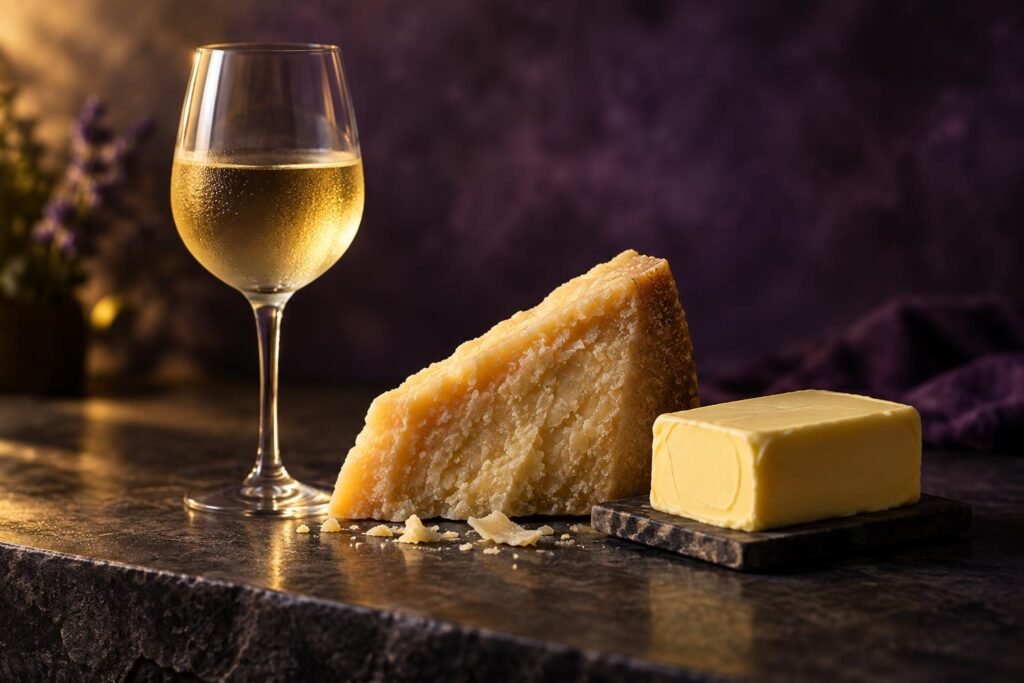
What Alfredo Does to Wine
The numbers make the case better than adjectives. A single cup of Alfredo sauce carries about 39 grams of fat, of which nearly 25 grams is saturated, and 1,404 milligrams of sodium. Ninety per cent of its calories come from fat. That is before the pasta, the extra parmesan and the chicken. Wine Australia lists chicken and pork as chardonnay’s home ground, and notes that extended time on lees adds the texture that stands up to a cream sauce.
Fat coats your tongue and mutes everything that follows it, so a soft, low acid wine simply disappears. Acid strips that coating away and resets your mouth for the next forkful. Salt does something else again: it sharpens tannin into bitterness, which is why a red on the table is usually a mistake here.
The other thing to notice is what the dish does not have. There is no acid in Alfredo, no tomato, no lemon, nothing sharp at all. Every bit of brightness on that table has to come out of your glass.
| Which Alfredo | What is in it | Pour this |
|---|---|---|
| The Roman original | Fresh fettuccine, butter, aged Parmigiano and pasta water | A lean dry white, or a light Italian red. It is gentler than you think |
| Cream sauce Alfredo | Cream, butter, parmesan, garlic | Unoaked Chardonnay or a crisp Pinot Grigio |
| Chicken Alfredo | All of the above plus roast or grilled chicken | Lightly oaked Chardonnay, which handles both |
| Prawn Alfredo | Sweeter, more delicate protein | Vermentino, dry Riesling or a sparkling |
| With bacon or pancetta | Salt and smoke on top of salt and fat | Sparkling wine, or a very light red served cool |
The Original Had No Cream
Alfredo di Lelio made the dish in Rome in the early 1900s for his wife Ines, who was struggling to eat after giving birth. It was fresh fettuccine, a great deal of good butter, a great deal of aged Parmigiano Reggiano and a splash of the pasta water, tossed until the starch pulled it into a sauce. That is the whole recipe.
It travelled because the film stars Mary Pickford and Douglas Fairbanks ate it on honeymoon in Rome and took the idea home. Somewhere on the way across the Atlantic it picked up cream, then garlic, then chicken. In Rome you still get the original.
This matters for the wine. The butter and cheese version is salty and rich but light on its feet, and it suits a lean white or even a light Italian red. The cream version is heavier and flatter, and it needs more acid to rescue it.
Best Wines for Alfredo
Unoaked Chardonnay, the safest good answer
Tastes of green apple, white peach, citrus and wet stone. It works because it has the body to stand next to a rich sauce without needing oak to get there, and the acid does the cutting. Chablis is the model. In Australia, cooler sites in the Adelaide Hills, Tasmania and Coonawarra make the style.
Pinot Grigio, the one that gets underrated
Tastes of pear, lemon and almond, bone dry and light. It works precisely because it is plain. Against a sauce this rich, a simple sharp white is a relief rather than a compromise. Just buy a decent one, because the cheapest bottles taste of not much at all.
Vermentino, the Italian answer
Tastes of lemon peel, green herbs and a faintly salty, bitter finish. It works because that bitter twist at the end scrubs cream off your palate better than sweetness ever could. Sardinia is the home. In Australia, the Riverland and McLaren Vale have taken to it.
Sparkling wine, the reset button
Tastes of apple, citrus and bread with a fine bead of bubbles. It works for the same reason a squeeze of lemon works on fried food. If you are eating chicken Alfredo and bacon on the same plate, this is the only thing that will keep up.
A light Italian red, if you must have red
Barbera and lighter Sangiovese have high acid and moderate tannin, which is the combination that survives here. Serve it cool. Anything bigger, and the salt will turn it bitter in one mouthful.
What to Avoid
- Big oaky, buttery Chardonnay. Butter on butter. The wine and the sauce cancel each other out and you taste neither.
- Tannic reds. Cabernet and full bodied Shiraz meet 1,400 milligrams of sodium and turn bitter.
- Sweet wines. There is no sweetness in the dish for them to meet, so they just sit there being sugary.
- Very old, delicate wines. This is not a subtle plate of food and it will trample anything fragile.
Drink One Tonight
Coonawarra is better known for Cabernet, but the same cool nights that keep its reds fresh do good things for Chardonnay. This is the restrained, citrussy style rather than the buttery one, which is exactly what a cream sauce needs.

Wynns The Siding Coonawarra Chardonnay 2025
undefined
- Grapefruit and white peach with a clean, dry finish and light oak
- Coonawarra fruit from a producer that has been there since 1891
- Under seventeen dollars, which is remarkable for the name on the label
- Not a big rich Chardonnay. If that is what you want, this is the wrong bottle
- Young, so it is at its best cold and fresh rather than cellared
If You Are Cooking It
Two changes make the wine work harder for you. Finish the sauce with a squeeze of lemon or a grating of zest, which puts acid on the plate and lets a softer wine keep up. And go easy on the salt, because the parmesan is already bringing plenty and the sauce reduces.
If you want to try the Roman version, keep the pasta water. Butter and cheese will not turn into a sauce on their own; it is the starch in that cloudy water, whisked in off the heat, that binds them. Get that right and you will not miss the cream, and your wine will thank you.
Frequently Asked Questions
What is the best wine for chicken Alfredo?
A lightly oaked Chardonnay. It has enough weight to meet the roast chicken and enough acid to handle the cream. Our roast chicken pairing guide goes deeper on the chicken side of that equation.
Can you drink red wine with Alfredo?
You can, but keep it light and high in acid. Barbera, a lighter Sangiovese or a cool climate Pinot Noir will survive. A big Cabernet will not, because the salt in the sauce turns its tannin bitter.
Is Pinot Grigio good with Alfredo?
Yes, and it is the most reliable cheap answer. It is dry, sharp and gets out of the way, which is what a very rich sauce needs. Spend fifteen dollars rather than eight and it improves noticeably.
What wine goes with the original butter and parmesan version?
Something Italian and dry. Vermentino, a Soave or a light Sangiovese all work, because the original is salty and nutty rather than heavy. It is a more forgiving dish than the cream version.
Should the wine be sweet or dry?
Dry. There is no sweetness in Alfredo for a sweet wine to balance against, so sugar in the glass just tastes out of place. What the dish needs is acid.
Does Sauvignon Blanc work with Alfredo?
It can, though it is not the first choice. Very grassy, aggressive Sauvignon Blanc can taste sharp and green against cream. A rounder, riper style handles it better, and a Chardonnay handles it better still.
Nutrition figures are from the United States Department of Agriculture entry for Alfredo sauce, listing 39 grams of fat and 1,404 milligrams of sodium per 260 gram cup.
This post contains affiliate links. If you buy through them we earn a small commission at no extra cost to you. It keeps the wine flowing and the reviews honest.