Heads up: this guide contains an affiliate link. If you buy through it we earn a small commission at no extra cost to you.
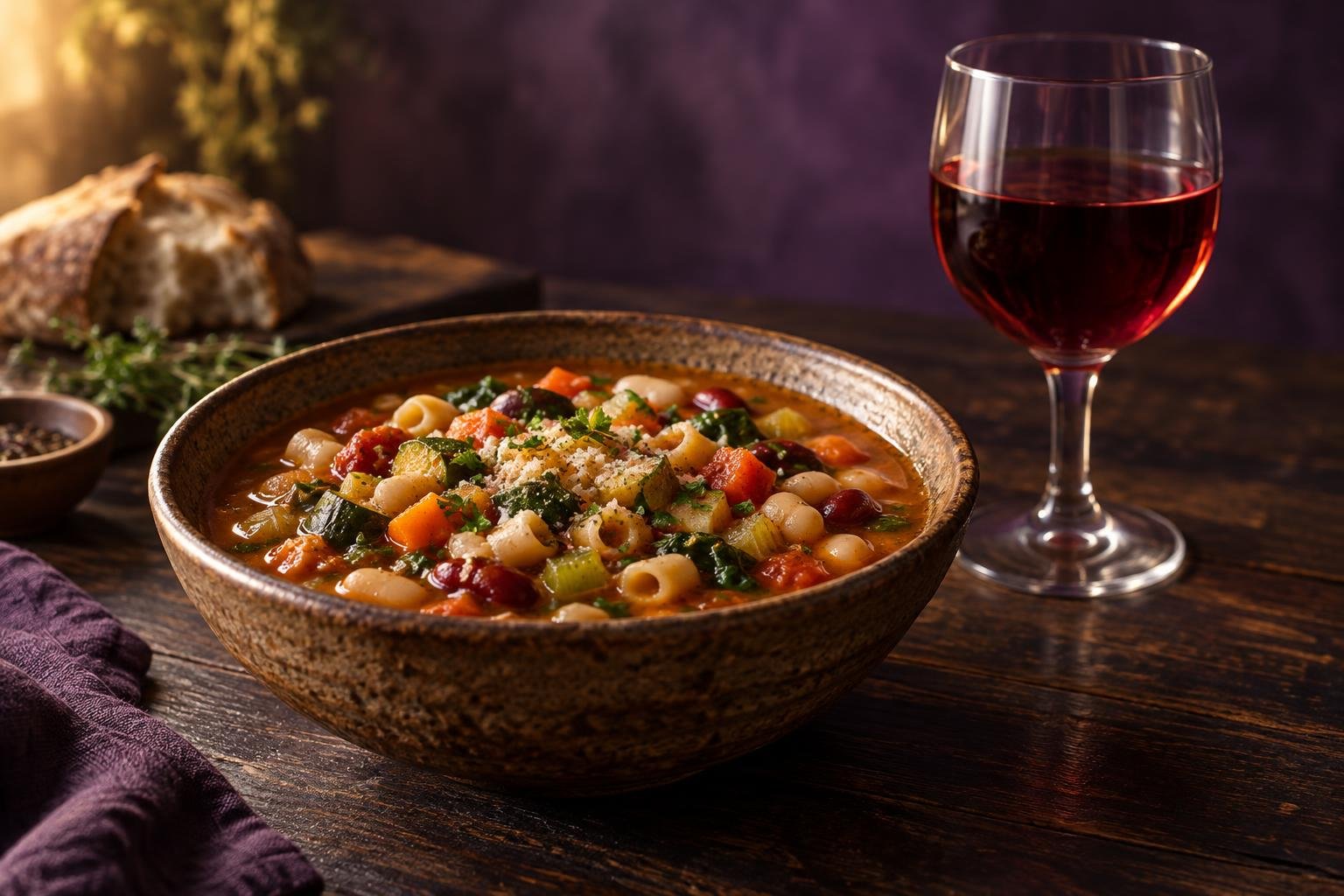
Minestrone wants a light to medium bodied red with fresh acidity and soft tannin. Sangiovese is the classic answer, pinot noir is the easy one to find, and vermentino is the white that works if red is not your thing.
It looks like a simple bowl of vegetables. It is not. Minestrone is tomato, beans, pasta, winter veg, a parmesan rind and often a bit of bacon, all arguing at once. Get the wine wrong and the soup tastes thin while the wine tastes like a wet teabag.
Table of Contents
The Short Answer
- Sangiovese. High acid, savoury, cherry fruit. It meets the tomato head on. Serve it at about 16C, cool enough to feel fresh.
- Pinot noir. Soft tannin and earthy fruit that sits with the beans and root vegetables. Serve cool, around 14C to 16C.
- Vermentino. The white option. Salty, citrusy, with enough texture to handle a chunky bowl. Serve properly chilled.
No decanting needed for any of them. This is a Tuesday night soup, not a cellar occasion.
What Minestrone Does to Wine
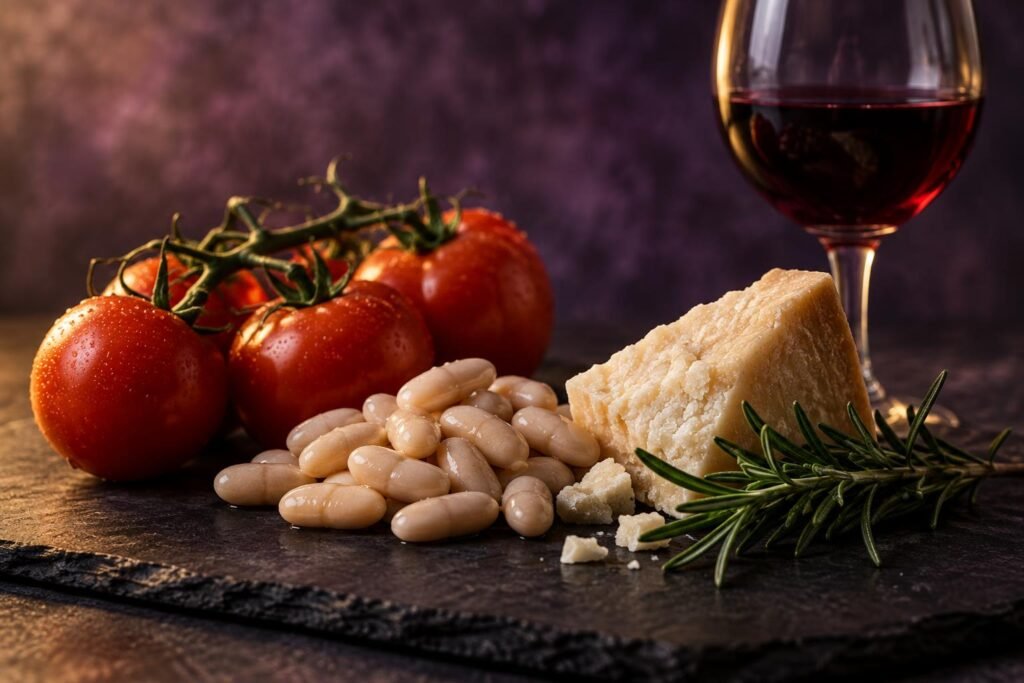
Four things in the bowl decide the wine.
- Tomato acid. Tomatoes are naturally high in acid. Any wine softer than the soup will taste flat and stewed next to it, so the wine needs acidity of its own.
- Tannin clash. Acidic food makes tannin taste harder and more drying. That is why a big cabernet turns bitter over a bowl of minestrone.
- Beans and root veg. These are earthy and starchy, and they pull towards savoury, earthy wines rather than fruity ones.
- Salt from the parmesan and bacon. Salt is actually helpful. It softens acidity in wine and makes fruit taste sweeter, which is why a sharp Italian red suddenly seems generous once the cheese goes on.
Put those together and the brief is simple: high acid, low to medium tannin, savoury rather than jammy.
Best Wines for Minestrone Soup
Sangiovese
Sour cherry, tomato leaf, dried herbs and a grippy, refreshing finish. It is the grape behind Chianti, and it grew up next to this soup. Australian versions from the King Valley, Heathcote and McLaren Vale are excellent and usually cheaper than the Tuscan originals. Our sangiovese guide has more on the style.
Pinot Noir
The safest choice if you are buying at the last minute. Light body, gentle tannin, red berry fruit with a mushroomy edge that suits the vegetables. Look to the Yarra Valley, Mornington Peninsula or Tasmania. Start with our pinot noir guide if you are new to it.
Barbera
Piedmont in a glass: bright acid, deep colour and very little tannin. That combination is almost purpose built for tomato. The King Valley grows good ones here.
Grenache
A little rounder and more generous than the others, with raspberry fruit and soft tannin. It works best with a minestrone that has bacon or pancetta in it, because there is more fat to soften.
Vermentino
If you want white, this is the one. Lemon, green almond and a faintly salty finish, with more body than a sauvignon blanc. Riverland and McLaren Vale plantings are well worth a look. A decent all purpose glass makes more of its aromatics than a tumbler will.
What to Avoid
- Big tannic reds. Cabernet sauvignon, young shiraz and anything heavily oaked will turn metallic against the tomato.
- Oaky chardonnay. The butter and vanilla fight the vegetables instead of helping them.
- Anything sweet. Off-dry whites make a savoury soup taste odd. Save the sugar for the curry.
- Very light, low acid whites. A soft pinot grigio simply disappears under the bowl.
Drink One Tonight

Minimum Central Victoria Organic Red Sangiovese Syrah 2022
A Central Victorian blend that leads with sangiovese and rounds it out with syrah. It is fresh, savoury and light on its feet, which is exactly what a bowl of tomato and beans asks for. Serve it slightly cool.
- Sangiovese led, so the acid lines up with the tomato
- Organic and wild fermented, with real savoury character
- A splash of syrah adds weight for a chunky bowl
- Under $25
- The natural style is a bit funkier than a supermarket red
- Small production, so it moves quickly
If You Are Cooking It
Drop a parmesan rind into the pot while the soup simmers and take it out before serving. It adds savoury depth without more salt, and that depth is what lets a light red hold its own. Finish the bowl with a little olive oil rather than extra cheese, because the oil softens the tomato acid and makes the wine taste rounder.
One more thing. Serve the red cooler than room temperature. Twenty minutes in the fridge before pouring keeps it fresh alongside a hot bowl. Room temperature in an Australian kitchen is not the room temperature the old rule was written for.
Frequently Asked Questions
What is the best wine with minestrone soup?
Sangiovese. It has the acidity to match the tomato, soft enough tannin to stay friendly, and a savoury, herbal character that suits the vegetables and beans. Pinot noir is the easiest substitute if sangiovese is hard to find.
Can you drink red wine with soup?
Yes, as long as the red is light to medium bodied with fresh acidity. Heavy, tannic reds are the problem, not red wine itself. A chilled sangiovese or pinot noir is a better match for minestrone than most whites.
Does white wine go with minestrone?
Vermentino does, and so does a dry Italian style white with some texture. Avoid soft, low acid whites, because the tomato will flatten them. A high acid white is the rule.
Should the wine be chilled?
Give the red about twenty minutes in the fridge before serving. Around 16C keeps it fresh next to a hot bowl. Whites go in the fridge as normal.
What about minestrone with bacon or pancetta?
The extra fat and salt make a slightly rounder red work better. Grenache or a GSM blend is a good call, and the salt will soften the wine and make the fruit taste sweeter.
How many standard drinks is a glass of this?
A 150ml glass of a 13.5% red is about 1.6 standard drinks in Australia. Our wine calorie and standard drinks calculator will do the sums for the bottle in front of you.
This post contains affiliate links. If you buy through them we earn a small commission at no extra cost to you. It keeps the wine flowing and the reviews honest.