Heads up: this guide contains an affiliate link. If you buy through it we earn a small commission at no extra cost to you.
Cabernet Sauvignon is the king of reds, and like most royalty it did not earn the title by being relaxed. This is the world’s most planted red grape: structured, serious and built to age, the wine equivalent of a perfectly tailored suit that gets better every year you own it.
The origin story is a good one. Sometime in the 17th century, in a French vineyard, Cabernet Franc and Sauvignon Blanc had an unplanned romance. The result conquered the planet. Not bad for an accident.
Table of Contents
What Does Cabernet Sauvignon Taste Like?
Blackcurrant is the calling card, backed by dark cherry, cedar and, in cooler years, a whisper of mint or capsicum. The tannins are firm and confident, which is why this grape loves both food and time in the cellar.
| Aspect | Rating out of 5 | Characteristic |
|---|---|---|
| Sweetness | 🍷 | Predominantly dry, with a depth like a philosopher’s tome |
| Body | 🍷🍷🍷🍷🍷 | Full-bodied, as commanding as a king in his court |
| Tannins | 🍷🍷🍷🍷🍷 | Robust and bold, like a knight in shining armour |
| Acidity | 🍷🍷🍷🍷 | Balanced, adding a lively edge to its character |
| Alcohol by Volume | 🍷🍷🍷🍷 | Typically around 13–15%, as warming as an evening by the fire |
Each wine glass icon is one point on a 5-point scale: one glass is low, five is high, based on the grape’s typical style.
Where It Grows
Bordeaux is the ancestral throne, Napa Valley the flashy new palace. But Australia holds two cards the world envies: Coonawarra, whose famous red terra rossa soil produces Cabernet with a signature eucalyptus-mint lift, and Margaret River, whose maritime climate makes wines so polished they barely need a decade to charm you.
How to Serve It
Temperature: 16–18°C. Too warm and the alcohol shouts; slightly cool and the structure shines.
Glass: a tall, generous bowl gives those firm tannins room to soften. See our glasses roundup for shapes that earn their keep.
Decanting: this is the grape decanters were born for. An hour of air transforms a young Cabernet; our Riedel Cabernet decanter review covers the one literally named after it.
Ageing: the king’s superpower. Good Cabernet improves for ten to thirty years, trading fruit for cedar, tobacco and quiet wisdom.
What to Eat With It
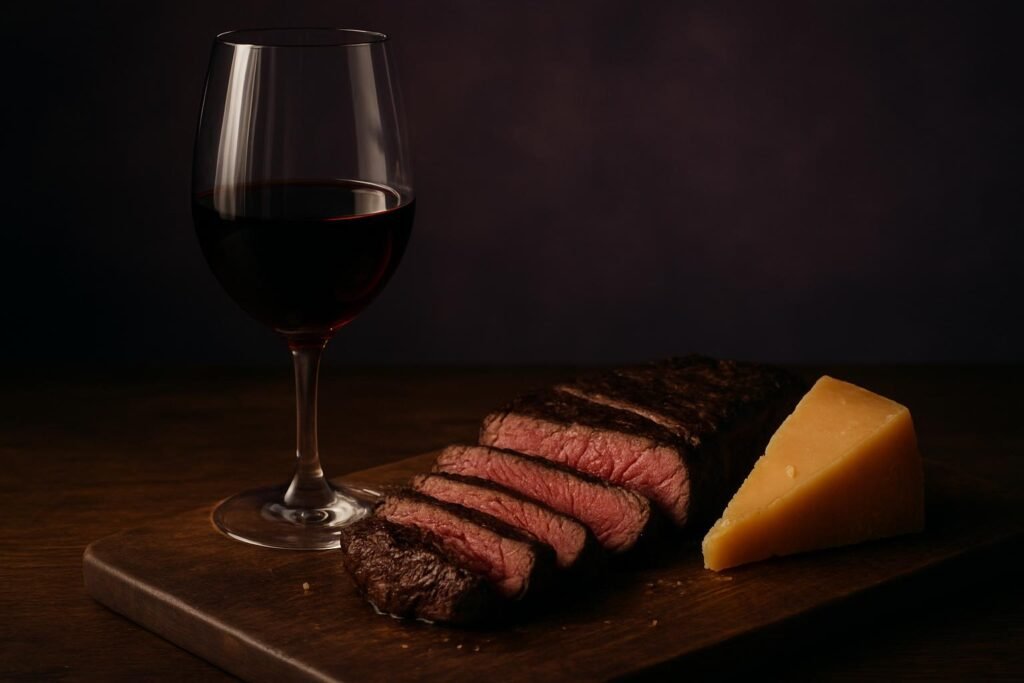
Steak is the marriage everyone approves of: the tannins and the protein were made for each other. Roast lamb, aged cheddar and anything involving a char-grill all work beautifully. Avoid delicate dishes; the king does not do subtle. Our pairing guides have the full matchmaking service.
Celebrated Wine Labels
| Wine Label | Country | Style |
|---|---|---|
| Château Mouton Rothschild | France | Bordeaux Cabernet Sauvignon: rich, complex |
| Screaming Eagle | USA | Napa Valley Cabernet Sauvignon: opulent, cult |
| Concha y Toro Don Melchor | Chile | Elegant, robust |
| Penfolds Bin 707 | Australia | Powerful, balanced |
| Meerlust Rubicon | South Africa | Structured, refined |
Drink One Tonight

Voyager Coastal Margaret River Organic Cabernet Sauvignon 2024
Margaret River makes some of the best Cabernet on the planet, and this is the affordable back gate into the estate. Pour it with a steak and toast the happy accident of 17th-century France.
- Straight Margaret River Cabernet from an estate that has been at it since 1978
- Certified organic fruit off gravelly, sea-cooled vineyards
- Firm but friendly tannin, so a steak night is sorted
- Well under thirty dollars for a serious address
- Younger and fresher than a cellared Cabernet, so give it ten minutes in the glass
New to Just Wines? The code FIRST20 takes $20 off a first order over $99, so it is worth building a mixed six rather than buying the one bottle. New customers only, and the offer can change without notice.
Frequently Asked Questions
Where does the name Cabernet Sauvignon come from?
Straight from its parents. The grape is a natural cross between Cabernet Franc and Sauvignon Blanc, so the name is essentially a double-barrelled surname. “Sauvignon” likely stems from the French sauvage, meaning wild.
What is Cabernet Sauvignon similar to?
Merlot is the softer sibling, Malbec the sun-loving cousin. Closest in spirit is Tempranillo, another structured red that rewards patience. If you find Cabernet too firm, Shiraz offers similar power with rounder edges.
Should Cabernet Sauvignon be decanted?
Almost always, if it is young. An hour in a decanter rounds off the tannic edges and opens the blackcurrant heart. Old bottles still benefit, but pour gently and serve promptly.
Which country produces the most Cabernet Sauvignon?
It is the most planted red grape on Earth, and France and Chile lead the hectares. Australia sits comfortably in the top handful, with Coonawarra and Margaret River as our flagship regions.
What are some interesting facts about Cabernet Sauvignon?
Its parentage went unproven until DNA testing in 1996, meaning the world’s most famous red spent centuries with a mystery birth certificate. The thick skins that give it those tannins also make it one of the most weather-hardy grapes a grower can plant.
Curious about its parent grape? Read our Cabernet Franc guide.
For the only grape more tannic than Cabernet, read our Tannat guide.
Hungry now? Our Cabernet Sauvignon food pairing guide covers the dinners, the snack platter and the cheese.
Cabernet is also the backbone of the Bordeaux left bank, which is where our guide to fifth growth Bordeaux picks up the story.
Cabernet earns its keep at the Sunday table, and our guide to which wine pairs with lamb works through every cut from a roast leg to a slow-cooked shank.
The Australian benchmark for this grape is the far south-west, and our guide to the Margaret River wine region explains why two oceans make such a difference.
If the grip on your gums is the bit you are still puzzling over, our guide to what tannins in wine actually are explains it in plain English.
This post contains affiliate links. If you buy through them we earn a small commission at no extra cost to you. It keeps the wine flowing and the reviews honest.