Heads up: this guide contains an affiliate link. If you buy through it we earn a small commission at no extra cost to you.
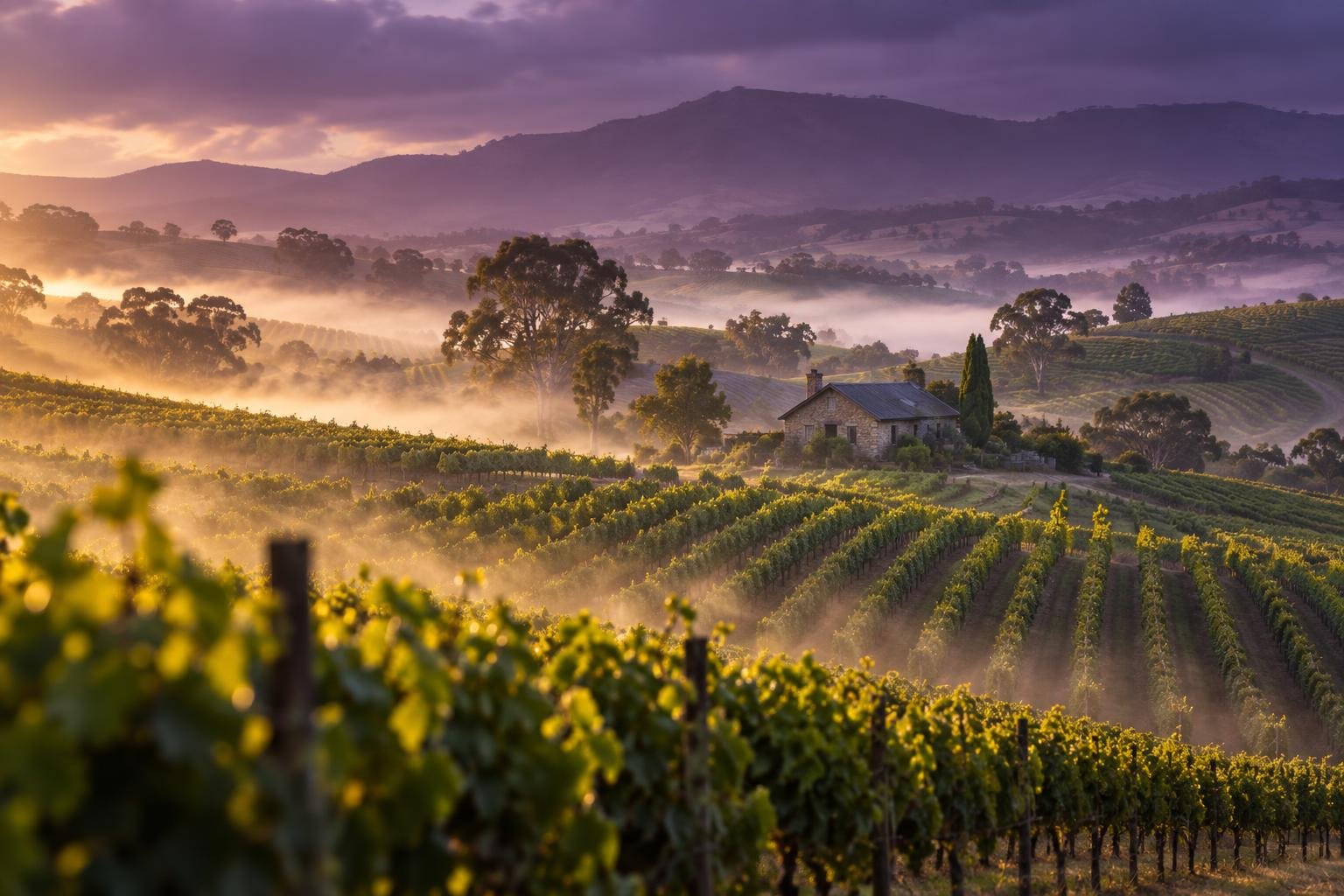
The Clare Valley sits about two hours north of Adelaide, and it is the best Riesling country in Australia. It is also smaller and quieter than the Barossa, which is half the appeal. Wine Australia records 5,093 hectares under vine across a 680 square kilometre region, at heights between 190 and 609 metres.
Go for the Riesling. Stay because the valley has a thirty-five kilometre walking and cycling trail running down an old railway line, with cellar doors along most of it. Very few wine regions let you do the whole thing on a bike.
Table of Contents
What the Region Tastes Like
The numbers here are misleading and Wine Australia says so plainly. The January average is 22.3 degrees, which sounds warm, but the swing between day and night is enormous. Drops from 40 degrees in the afternoon to 1 degree overnight are normal during ripening. That is what keeps the acid in the fruit and gives Clare wines their backbone.
| Grape | What you get | Worth knowing |
|---|---|---|
| Riesling | Restrained and austere young, lime and mineral | About a fifth of all Riesling crushed in Australia each year comes from here. |
| Shiraz | Full flavoured, ripe blackberry, spice and a mint edge | The mint note is a Clare signature and you either love it or you do not. |
| Cabernet Sauvignon | Dark rich black fruit, firm but plush tannins | Often blended with Shiraz, and sometimes a little Malbec. |
| Grenache and Malbec | Smaller plantings, mostly for blending | Worth trying at a cellar door, rarely worth hunting for. |
There are eleven recognised soil types in the valley, and two names do most of the work on labels. Watervale has limestone under the topsoil and gives the rounder, more generous Riesling. Polish Hill sits on broken slate and gives the tighter, more austere one. Our Riesling guide and the Australian Riesling explainer both go further on this.
The Screwcap Revolution Started Here
This is the Clare Valley fact worth knowing, and almost nobody outside the trade does. If you have ever twisted the cap off a bottle of good white wine, you have this valley to thank.
In 2000 a group of Clare Valley winemakers, led by Jeffrey Grosset, got fed up with cork taint ruining their Riesling and agreed to bottle a share of their top wines under screwcap together. Reports put the group at thirteen or fourteen producers. At the time it was a commercially risky thing to do, because screwcaps were widely read as a sign of cheap wine.
It worked. The wines kept their freshness, they aged properly, and within a few years the Australian industry had moved across almost entirely. The closure itself was not new, since Yalumba had been trialling it on Pewsey Vale Riesling back in the 1970s, but the Clare Valley is where it stopped being an experiment and became the norm. One small valley changed how the world seals white wine.
Five Cellar Doors Worth the Drive
Hours were not confirmed for these on the day this guide was updated, so check the regional tourism site or ring ahead before you set off. clarevalley.com.au keeps the current listings.
Sevenhill Cellars
The first winery in the valley, founded by Jesuits in 1851 to make sacramental wine, and still going. There is an underground cellar, St Aloysius Church and a crypt on the site, and some of the oldest vineyards in the region around it. If you visit one place here, make it this one.
Grosset
Jeffrey Grosset made Polish Hill and Springvale two of the most respected Riesling names in the country, and led the screwcap move described above. Opening times are limited and seasonal, so check before you go.
Pikes
A family operation at Polish Hill River with a brewery on the same site, which solves the problem of what the non-drinker in the car does all afternoon.
Jim Barry
Another family name, best known for The Armagh Shiraz, with a Riesling range that is far better value than the reds it sits next to.
Skillogalee
A small producer in a stone cottage with a restaurant attached, on the slopes above Sevenhill. Book the table before you book anything else.
When to Go and How to Get There
It is roughly two hours by car from Adelaide, about 140 kilometres north. There is no train and no useful bus, so drive, and work out who is not drinking before you leave.
The Riesling Trail is the reason to plan a full weekend. It runs 35 kilometres from Auburn to Clare along a disused railway line, through Leasingham, Watervale, Penwortham and Sevenhill, and continues another 8 kilometres north of Clare to Barinia. It is flat, sealed and gentle, and you can hire a bike at either end. Cellar doors sit within a short ride of most of it.
Autumn is the prettiest time and spring is the greenest. Harvest runs from roughly February to April. Winter is cold at this altitude, which suits a region built on stone cottages and open fires. If you are working through several tastings in a day, the wine calorie calculator is worth a look, and our glasses roundup covers what to pour the Riesling into once you get home.
A Bottle to Try at Home
Honesty corner. There is no Clare Valley Riesling in the Just Wines range at the moment, which is a genuine shame on an article like this one. So the pick is a Clare Valley red instead. It is from the right place, and the Shiraz Cabernet blend is a real regional style rather than a consolation prize, but it is not the wine this valley is famous for. Buy a Watervale or Polish Hill Riesling from your local bottle shop as well.

GCV Celtic Farm Clare Valley Shiraz Cabernet 2021
A straightforward Clare Valley red at a price that makes it easy to try the region. Blackberry and dark plum from the Shiraz, a firmer tannin line from the Cabernet, and the cool-night acidity that stops Clare reds tasting heavy. Good with a roast, a pie or a Tuesday.
- Genuine Clare Valley fruit
- Shiraz Cabernet is a traditional blend for the region
- Five years old already, so it is drinking now
- Around fourteen dollars
- Not Riesling, which is what Clare is known for
- A simple weeknight red, not a cellaring wine
Frequently Asked Questions
What is the Clare Valley known for?
Riesling above all. About a fifth of all the Riesling crushed in Australia each year comes from the Clare Valley. Shiraz and Cabernet Sauvignon are the main reds.
How far is the Clare Valley from Adelaide?
Around 140 kilometres north, roughly a two hour drive. There is no practical public transport, so you will need a car.
What is the difference between Watervale and Polish Hill?
Soil. Watervale has limestone under the topsoil and makes rounder, more generous Riesling. Polish Hill sits on broken slate and makes a tighter, more austere style.
What is the Riesling Trail?
A 35 kilometre walking and cycling trail on a disused railway line between Auburn and Clare, with a further 8 kilometres north to Barinia. It is flat and sealed, and bikes can be hired at either end.
Why is the Clare Valley important to screwcaps?
In 2000 a group of Clare winemakers led by Jeffrey Grosset agreed to bottle their top Rieslings under screwcap together. It worked, and the Australian industry followed.
How is the Clare Valley different from the Barossa?
Clare is higher, cooler at night, smaller and built around Riesling. The Barossa is warmer and built around Shiraz and very old vines.
This post contains affiliate links. If you buy through them we earn a small commission at no extra cost to you. It keeps the wine flowing and the reviews honest.