Heads up: this guide contains an affiliate link. If you buy through it we earn a small commission at no extra cost to you.
Agiorgitiko is Greece’s most-planted red grape and its most useful one. Say it “a-yor-YEE-tee-ko”, or just say “Saint George’s grape”, which is what the name means. It grows in Nemea, a valley in the Peloponnese where legend says Hercules strangled a lion, and locals still call the wine “the blood of Hercules”.
The grape itself is far friendlier than the legend. It makes soft, plummy, spice-scented reds that go with almost anything, from a Tuesday moussaka to a Sunday lamb. Think of it as Greece’s answer to Merlot, with a Mediterranean tan.
Table of Contents
What Does Agiorgitiko Taste Like?
Red plum, black cherry, raspberry and sweet spice, with dried herbs, a little cocoa and, in oaked versions, vanilla and cedar. The body is medium to full, the tannins are soft and velvety, and the acidity is moderate. Rosé and light styles are juicy and fresh; serious hillside reds are deep and age-worthy.
| Aspect | Rating out of 5 | Characteristic |
|---|---|---|
| Sweetness | 🍷 | Dry, with fruit so ripe it nearly fools you |
| Body | 🍷🍷🍷🍷 | Medium to full, generous without being heavy |
| Tannins | 🍷🍷🍷 | Soft and velvety, a friendly handshake |
| Acidity | 🍷🍷🍷 | Moderate, enough to keep the plum fresh |
| Alcohol by Volume | 🍷🍷🍷🍷 | Typically 13–14.5%, warmed by Greek sun |
Each wine glass icon is one point on a 5-point scale: one glass is low, five is high, based on the grape’s typical style.
Where It Grows
Nemea in the north-east Peloponnese is the heartland and Greece’s largest red-wine appellation. The valley floor makes soft, easy wines; the higher slopes around Asprokambos, up to 900 metres, make the structured, cellar-worthy versions. Agiorgitiko is also grown across the rest of the Peloponnese and in Attica near Athens.
Australia has almost no Agiorgitiko yet, though a few growers with Greek roots have planted small plots in South Australia and Victoria. What we do have in abundance is a similar spirit in our soft, sun-ripened Merlots and Grenaches, which is why we point you at one below. If you spot an Australian Agiorgitiko, buy it and tell us.
How to Serve It
Temperature: 15–17°C. Slightly cool, especially for the lighter styles, which can even take a proper chill on a hot day.
Glass: a medium red bowl; a Merlot or Pinot glass suits it. See the glasses roundup.
Decanting: not usually. Oaked hillside Nemea benefits from half an hour in a decanter.
Ageing: everyday bottles drink well for three to five years. Top Nemea reserves age for a decade, softening into dried fruit, leather and spice.
What to Eat With It
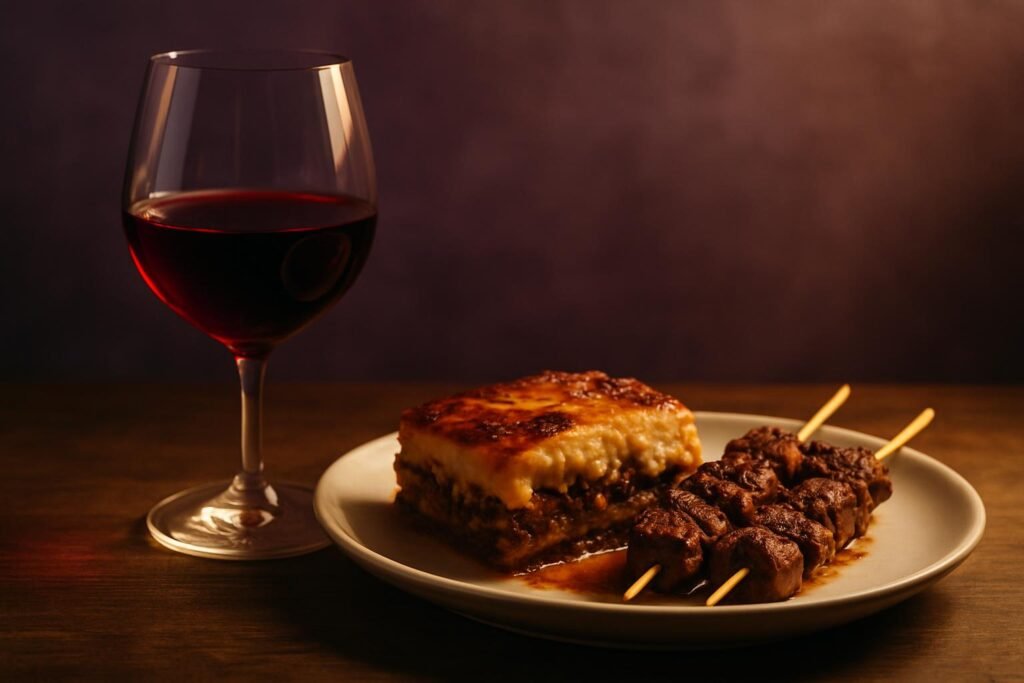
Greek food first: moussaka, lamb souvlaki, slow-roasted goat, stuffed peppers and grilled halloumi. Its soft tannins also make it a great match for eggplant lasagne, ratatouille and rotisserie chicken. More in the pairing guides.
Celebrated Wine Labels
| Wine Label | Country | Style |
|---|---|---|
| Gaia Estate | Greece | Modern Nemea benchmark, polished and precise |
| Domaine Skouras | Greece | The producer that put Nemea on the world map |
| Palivou Estate | Greece | Family estate, rich and characterful |
| Ktima Papaioannou | Greece | Old vines, traditional and age-worthy |
| Domaine Tselepos | Greece | Elegant Peloponnese style |
Can’t Find One? Drink This Instead
Honesty corner: our partner shop had no Agiorgitiko in stock when we checked. The closest match in style is a soft, plummy Merlot: the same velvety tannin, the same red-fruit friendliness, the same knack for going with almost any dinner.

Angove Organic South Australia Merlot 2024
Not Agiorgitiko, but a soft organic Merlot brings the same easy generosity to a Greek-style dinner. When a Nemea bottle lands in stock, it takes this spot.
- Soft, plummy and spicy, the same job Agiorgitiko does at the table
- Certified organic from one of Australia's oldest family wineries
- Moussaka, lamb and roast chicken all work
- Around fifteen dollars
- A little rounder and less herbal than a Nemea red
New to Just Wines? The code FIRST20 takes $20 off a first order over $99, so it is worth building a mixed six rather than buying the one bottle. New customers only, and the offer can change without notice.
Frequently Asked Questions
Is Agiorgitiko a red or white wine?
Red, though it is versatile enough to make everything from pale rosé to deep, oaked reserves. There is no white Agiorgitiko.
Where does the name Agiorgitiko originate from?
It means “Saint George’s grape” in Greek, most likely after the village of Agios Georgios in Nemea, which was the valley’s old name. The nickname “blood of Hercules” comes from the myth of the Nemean lion.
What wine is Agiorgitiko similar to?
Merlot is the usual comparison for its soft, plummy character. Sangiovese and Grenache share its red fruit and spice, and Zinfandel its ripe generosity. Read our Merlot guide for the comparison.
Is Agiorgitiko known by any other names?
You may see it written as Aghiorghitiko, Agiorgitico or St George, and wines from the appellation are often simply labelled Nemea. Same grape in every case.
What are some interesting facts about Agiorgitiko?
Nemea is one of the oldest wine regions in Europe, with vines grown there since ancient times. Agiorgitiko is one of the few grapes that makes convincing wine in every style, from rosé to dessert wine. And it is the most-planted red grape in Greece, ahead of the better-known Xinomavro.
This post contains affiliate links. If you buy through them we earn a small commission at no extra cost to you. It keeps the wine flowing and the reviews honest.