Heads up: this guide contains an affiliate link. If you buy through it we earn a small commission at no extra cost to you.
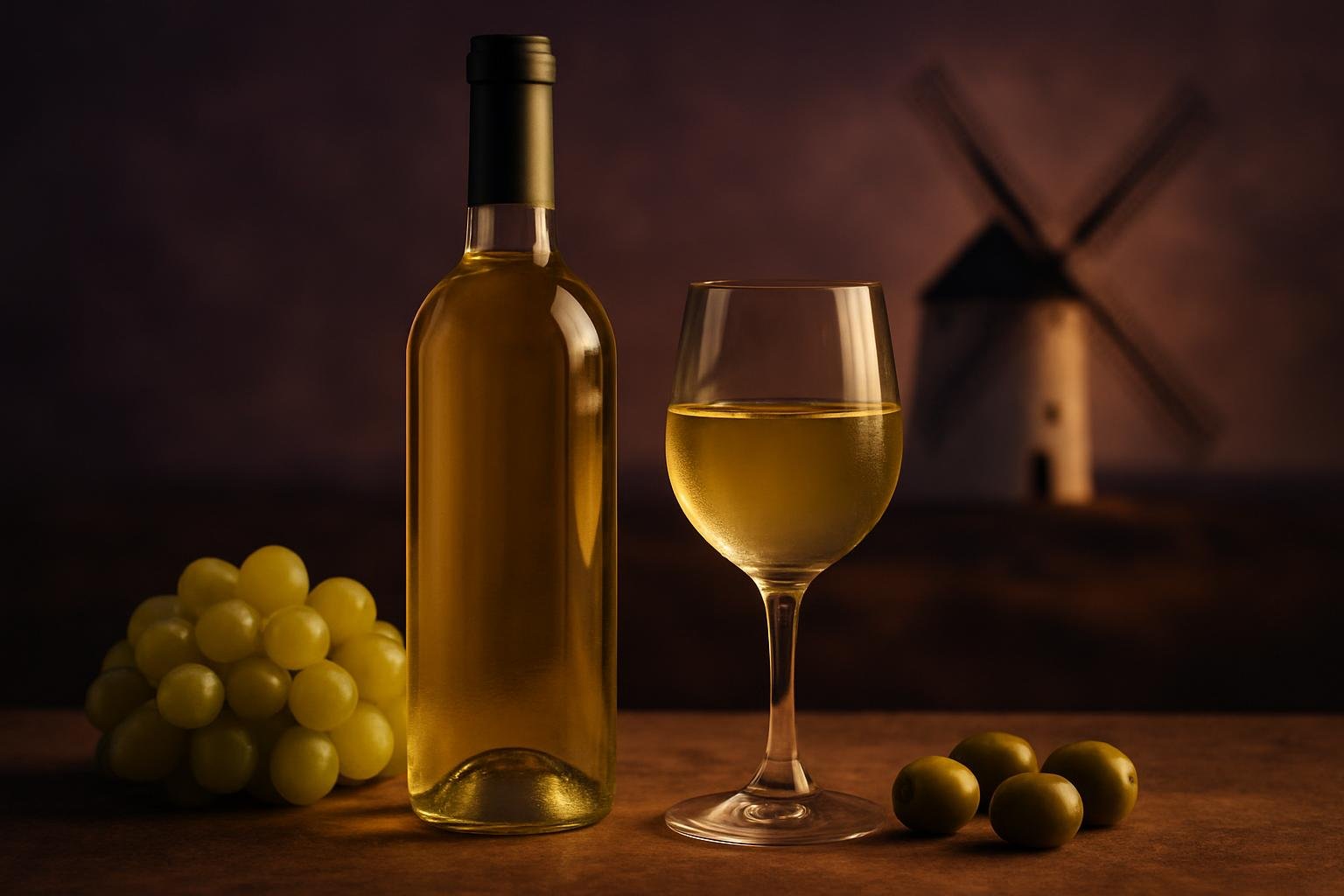
Airén is the most-planted white grape in the world that you have never ordered. For most of the last century it covered more vineyard land than any other variety on Earth, a vast sea of bush vines across the scorched plains of La Mancha in central Spain, where Don Quixote tilted at windmills and Airén quietly got on with surviving the heat.
Almost none of it ends up in a bottle with its name on the front. Most Airén is distilled into brandy or blended into cheap, neutral white. That makes it the unsung hero: the grape that keeps half of Spain’s wine economy running without ever asking for credit. And in the right hands, from old vines and picked early, it can be surprisingly good.
Table of Contents
What Does Airén Taste Like?
Light, dry and neutral: green apple, pear, a little citrus and white flowers, with a soft texture and gentle acidity. It will never be a wine of great intensity. What it offers is clean, easy refreshment, ideally very cold, on a very hot day, with a plate of something salty.
| Aspect | Rating out of 5 | Characteristic |
|---|---|---|
| Sweetness | 🍷 | Dry, plain-spoken and honest |
| Body | 🍷🍷 | Light, an easy afternoon wine |
| Tannins | – | None; nothing to catch on the way down |
| Acidity | 🍷🍷🍷 | Moderate, softer than most whites |
| Alcohol by Volume | 🍷🍷🍷 | Moderate, usually 12–13% |
Each wine glass icon is one point on a 5-point scale: one glass is low, five is high, based on the grape’s typical style.
Where It Grows
La Mancha and Valdepeñas in central Spain, on a scale that is hard to picture: hundreds of thousands of hectares of low, widely spaced bush vines planted to survive with almost no water. Airén’s drought resistance is the whole reason it exists in such numbers. Plantings are slowly shrinking as growers switch to Tempranillo and international grapes, but it remains one of the world’s top ten varieties by area.
Australia grows no Airén to speak of, and honestly has no need to; our neutral, heat-loving white slots are already filled by Semillon, Colombard and Muscat Gordo. If you want to taste it, look for a cheap La Mancha white in a Spanish deli, or a Spanish brandy, which is probably Airén in its most common disguise.
How to Serve It
Temperature: 6–8°C. As cold as you can get it.
Glass: anything clean. A standard white wine glass from the glasses roundup is more than it expects.
Decanting: no.
Ageing: none. Drink it within a year of the vintage.
What to Eat With It
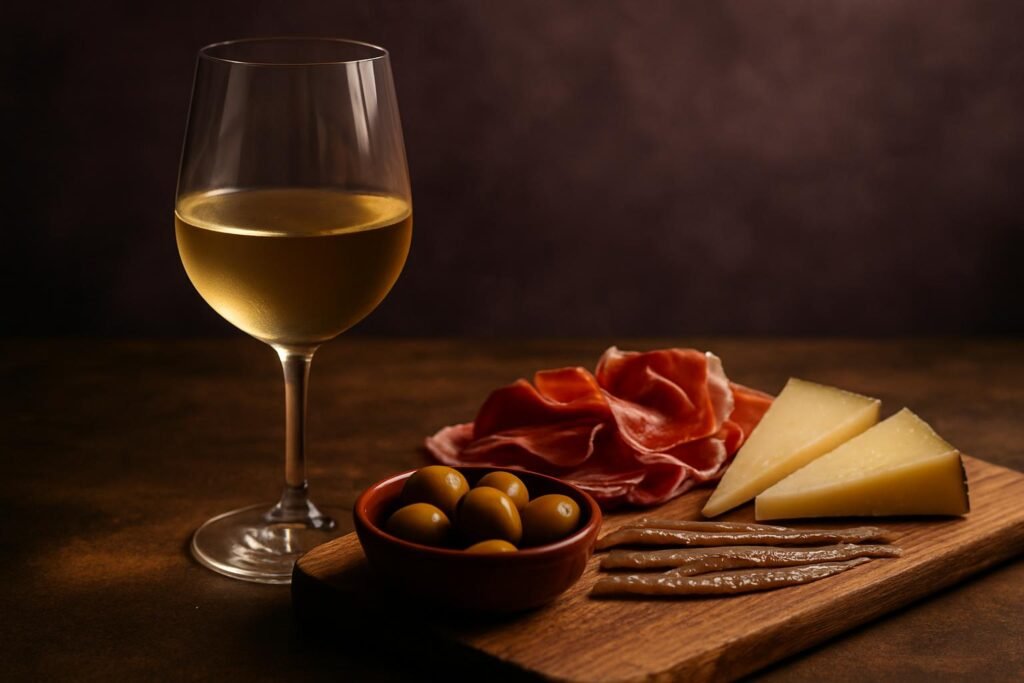
Tapas: olives, jamón, manchego, anchovies, fried fish and patatas bravas. It also suits simple grilled seafood, fish and chips and light salads. Think of it as a very cold, very easy lunch wine. More in the pairing guides.
Celebrated Wine Labels
| Wine Label | Country | Style |
|---|---|---|
| Félix Solís | Spain | Valdepeñas giant, the biggest name in Airén |
| Don Simón | Spain | Supermarket staple across Spain |
| Pata Negra | Spain | Well-priced La Mancha whites |
| Marqués de Toledo | Spain | La Mancha, clean and simple |
| Viña Albali | Spain | Félix Solís’s better-known label |
Can’t Find One? Drink This Instead
Honesty corner: no Airén is stocked at our partner shop, and it almost never leaves Spain with its name on the label. The closest match is a light, dry Pinot Gris: the same easy, neutral refreshment, and the same happiness with a plate of tapas.

Gapsted Buffalo King Valley Pinot Gris 2024
Not Airén, but a cheap, cold, easy Pinot Gris delivers the same afternoon-in-Spain feeling. If a La Mancha white ever lands in stock, it takes this spot.
- Light, dry and easy, the same job Airén does with tapas
- King Valley fruit at a very friendly price
- Olives, jamón and fried fish all work
- Barely over ten dollars
- A touch more pear-and-spice character than Airén's plain style, which is no bad thing
Frequently Asked Questions
Should you drink Airén now or age it?
Now, always. Airén is made for immediate drinking and gains nothing from a cellar. Buy the youngest vintage you can find and keep it cold.
What are some interesting facts about Airén?
It was the most-planted grape variety in the world by area for much of the twentieth century, ahead of even Cabernet Sauvignon. Most of it becomes Spanish brandy rather than wine. And its vines are planted so far apart on the dry La Mancha plains that a hectare holds only a fraction of the vines you would find in France.
Where does the name Airén originate from?
It is a Castilian name of unclear origin, recorded in La Mancha since at least the 1600s. The grape is also called Lairén in some parts of Andalusia and Valdepeñera around Valdepeñas.
To which wines is Airén similar?
Pinot Grigio, Colombard and basic Trebbiano share its light, neutral, easy style. If you like Airén you will probably like an unoaked Verdejo, which is what most La Mancha growers are planting instead. Read our Pinot Grigio guide for the nearest cousin.
Which country produces the most Airén?
Spain, almost exclusively, in La Mancha and Valdepeñas. There are tiny plantings elsewhere, but Airén without Spain would barely exist.
This post contains affiliate links. If you buy through them we earn a small commission at no extra cost to you. It keeps the wine flowing and the reviews honest.
User Review
( votes)
Sip smarter, subscribe now!
One short, useful email a week: pairings that actually work, honest reviews, and your free Food Pairing e-book the moment you join. No spam, no snobbery, and your inbox stays classy.