Heads up: this guide contains an affiliate link. If you buy through it we earn a small commission at no extra cost to you.
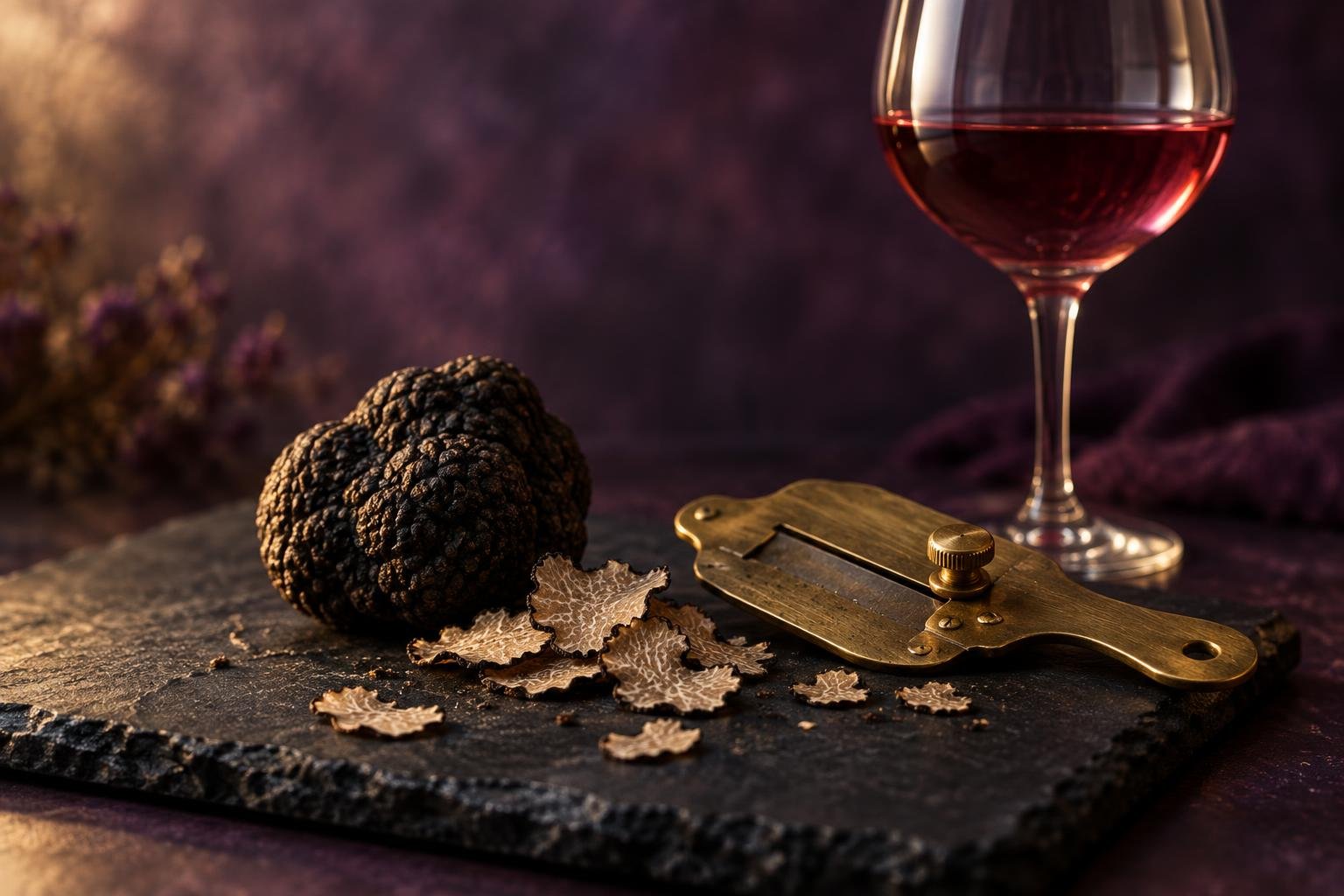
If you are eating fresh black truffle, pour an older Pinot Noir or a Nebbiolo. If it is white truffle, pour a barrel-aged Chardonnay or an aged Semillon. That is the whole answer, and the reason is simpler than the price tag suggests.
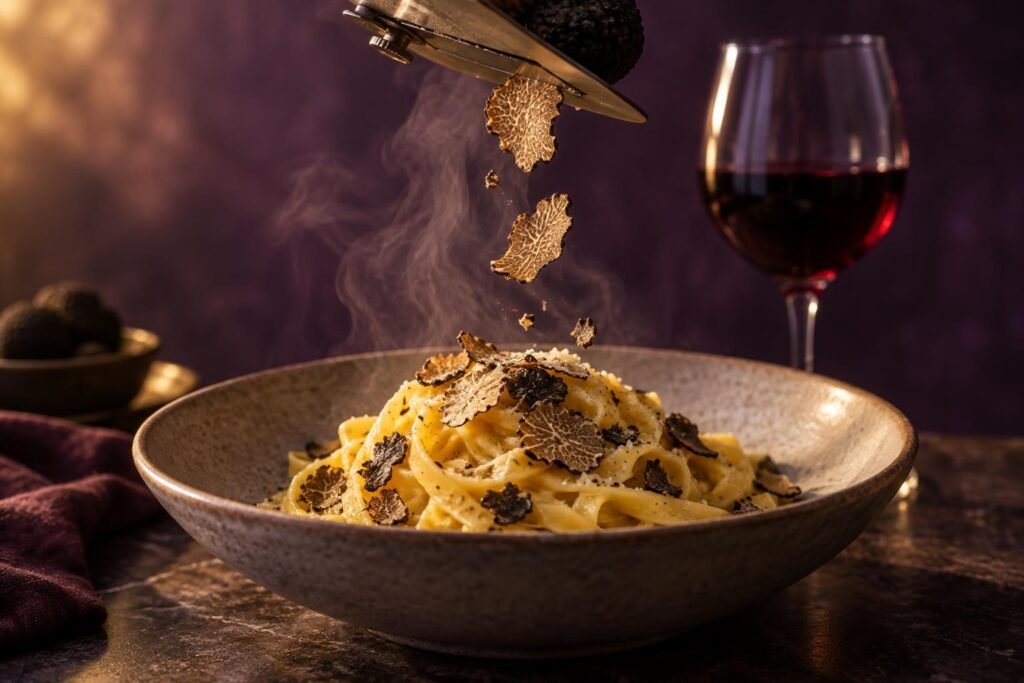
Truffle is not really a flavour. It is a smell, and a fragile one. Real truffle aroma comes from dozens of volatile compounds working together, and those compounds are light, reactive and quick to vanish, which is why chefs shave truffle over warm food at the last second rather than cooking it. Your wine has one job here: get out of the way of that smell while still keeping up with the butter, egg or cream that is carrying it.
Table of Contents
The Short Answer
Three styles do the work. Pick by whether your truffle is black or white, and by how much fat is on the plate.
- Older Pinot Noir. Light colour, gentle tannin, forest-floor smell of its own. Serve it at about 16 degrees, cooler than room temperature, and do not decant an older bottle.
- Nebbiolo. Pale, perfumed and firm. The classic partner for white truffle in Piedmont, where both grow in the same hills. Decant a young one for an hour.
- Barrel-aged Chardonnay or aged Semillon. The white answer, especially with truffled eggs, risotto or pasta. Serve at about 12 degrees, not fridge cold.
What Truffle Does to Wine
Almost every truffle article talks about the truffle. The useful question is what the truffle is sitting on, because that is what your wine actually has to handle.
| On the plate | What it does | What the wine needs |
|---|---|---|
| Truffle aroma itself | Dozens of light, fast-fading smells | Low oak, low sweetness, nothing loud |
| Butter, cream or egg yolk | Carries the aroma and coats the mouth | Fresh acidity to cut through |
| Parmesan or aged cheese | Adds salt and savoury depth | Soft tannin, because salt makes tannin taste bitter |
| Pasta, risotto or potato | Starch dulls everything | A wine with real perfume, not just fruit |
| Beef or veal underneath | Adds weight and a little chew | A red with structure, but a gentle one |
| Truffle oil, if that is what you have | One sharp sulfur note, not a bouquet | Something plain and crisp, and lower expectations |
Best Wines for Truffle
Pinot Noir, the safest bet in the room
Pinot Noir smells of mushroom, damp earth and dried cherry as it ages, which means it is already speaking the same language as truffle. It has almost no tannin to fight the parmesan and enough acidity to handle butter. Look for Tasmania, the Yarra Valley or the Mornington Peninsula, and buy a bottle with a few years on it if you can. Our Pinot Noir guide covers what to expect from each region.
Nebbiolo, the Piedmont answer
In Alba they eat white truffle and drink Nebbiolo, and they have had a few hundred years to test it. Nebbiolo is pale enough to look harmless and firm enough to surprise you. Its rose and tar perfume sits under truffle instead of over it. Australian Nebbiolo from the King Valley or the Adelaide Hills is worth a look and costs a lot less than Barolo. If the grip feels hard, that is tannin doing its thing, so give it air.
Barrel-aged Chardonnay, for anything with egg in it
Truffled scrambled eggs, truffle risotto and truffle pasta are all fat and starch. A Chardonnay with some barrel age has the texture to match that and the acidity to reset your mouth between bites. Keep the oak modest. A big buttery style will simply talk over the truffle.
Aged Semillon, the local sleeper
Hunter Valley Semillon at seven or eight years old goes toasty and lanolin-soft without any oak at all. It is one of the few whites in the world that gains savoury depth while keeping razor acidity, which is exactly the brief. It is also usually cheaper than the Chardonnay sitting next to it.
Vintage sparkling, if there is egg and salt
Bubbles and truffled eggs is a genuinely good trick. The bubbles scrub the fat and an older vintage sparkling has the same bready, nutty notes that truffle likes. Prosecco and Cava are not the ones for this job. You want a traditional-method wine with some age.
What to Avoid
- Young Cabernet Sauvignon. High tannin plus salty parmesan tastes metallic, and blackcurrant fruit walks straight over the truffle.
- Heavily oaked anything. Vanilla and toast are loud. Truffle is quiet. Guess who wins.
- Sauvignon Blanc. Passionfruit and cut grass point in completely the wrong direction.
- Anything sweet. Sugar makes a savoury dish taste odd and flattens the earthiness.
- Ice-cold white wine. Cold hides aroma, and aroma is the entire point tonight.
Drink One Tonight
Tasmania is cold, which is why it grows Pinot Noir properly, and it is also truffle country. Pouring a Tasmanian Pinot with truffle is about as close to a local pairing as Australia gets.

42 Degrees South Pinot Noir
A cool-climate Tasmanian Pinot with the damp-forest edge that truffle loves. Serve it at about 16 degrees. Stock checked on the day this guide went live.
- Light tannin, so parmesan and salt stay friendly
- Earthy and red-fruited, right next to truffle
- Tasmanian fruit, cool climate acidity
- Better with a year or two more in the bottle
- Too delicate for a heavy meat sauce
If You Are Cooking It
Shave it, do not cook it. Heat destroys the aroma compounds you paid for, so the truffle goes on at the very end, over something warm and fatty enough to carry it. Butter, egg yolk, cream and good olive oil all work as a vehicle. If you only have truffle oil, be honest with yourself about what is in the bottle: most commercial truffle oils are flavoured with a synthetic compound rather than truffle, and the North American Truffle Growers Association is blunt about it. The molecule usually doing the work is 2,4-dithiapentane, which the American Chemical Society describes as the odour principle of white truffle and notes is mostly synthetic in commercial products. One note instead of a chorus. Pair a plain crisp white to it and save the good bottle for the real thing.
Frequently Asked Questions
What wine goes with black truffle?
An older Pinot Noir is the easiest answer, because it has the earthy perfume and almost no tannin. Nebbiolo works too if the dish has meat in it. Serve either a touch cooler than room temperature.
What wine goes with white truffle?
Nebbiolo is the traditional match, since both come from the same corner of Piedmont. A barrel-aged Chardonnay is the white option, especially with eggs, risotto or fresh pasta.
Does truffle oil pair the same way?
No. Most truffle oil carries one synthetic aroma compound rather than the dozens in a real truffle, so it hits harder and flatter. Pour something simple and crisp and do not open your best bottle for it.
Can I drink white wine with truffle pasta?
Yes, and often it is better. Truffle pasta is usually butter, cheese and starch, and a white with good acidity cuts that better than a red does.
Should I decant a wine for truffle?
Decant a young Nebbiolo for about an hour. Do not decant an older Pinot Noir, because the perfume you want can blow off within minutes.
When is truffle season in Australia?
Australian black truffles are harvested in winter, roughly June to August, which is the opposite of the European season. That is why Australian growers export while the northern hemisphere has none.
This post contains affiliate links. If you buy through them we earn a small commission at no extra cost to you. It keeps the wine flowing and the reviews honest.