Heads up: this guide contains an affiliate link. If you buy through it we earn a small commission at no extra cost to you.
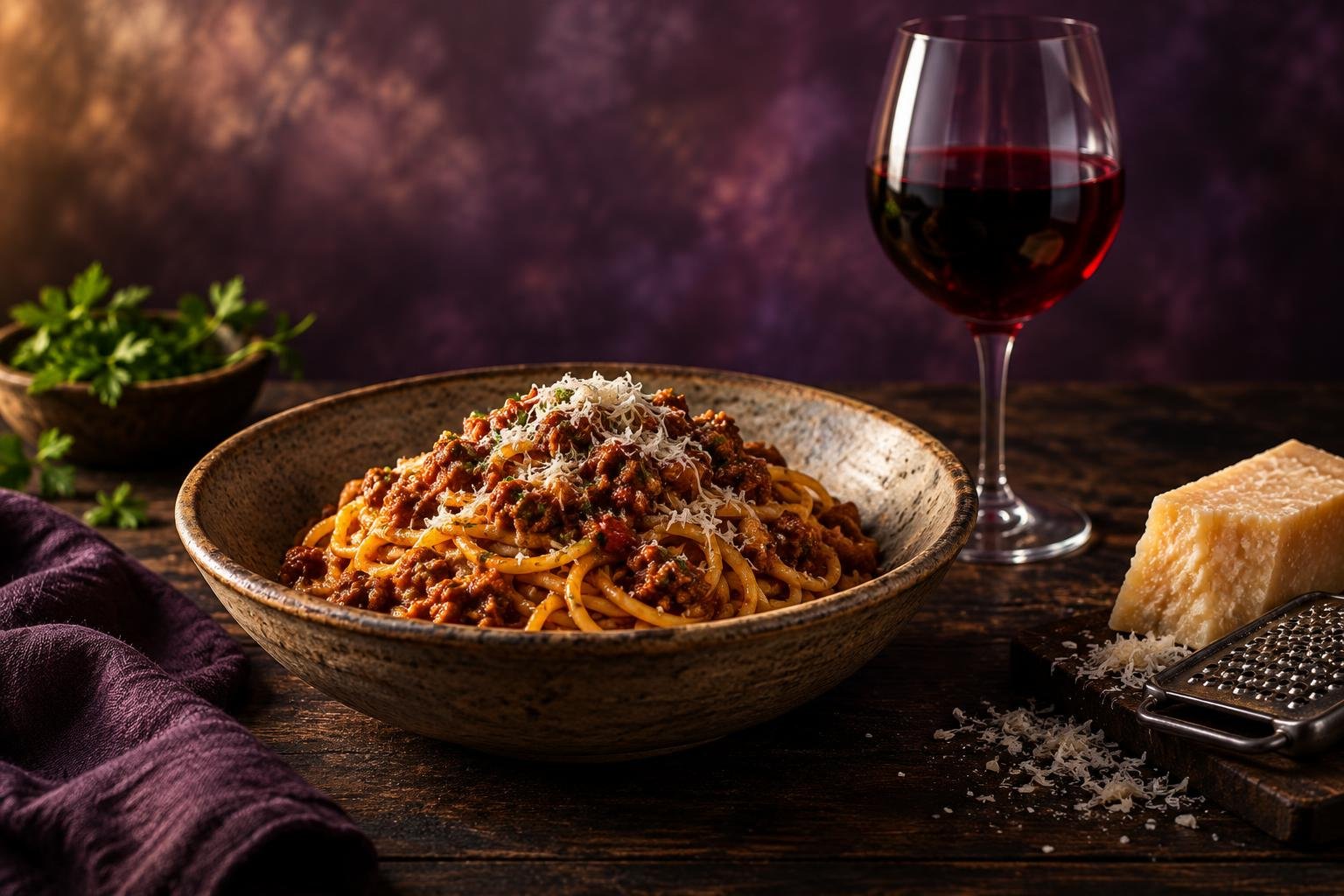
Sangiovese, Barbera and Montepulciano d’Abruzzo are the three safest bottles for spaghetti bolognese. All three carry bright acidity, and acidity is the thing tomato sauce demands before anything else. If your red tastes flat and a bit metallic next to the sauce, that is almost always what is missing.
Bolognese looks like an easy match because it is brown, beefy and comforting. It is trickier than it looks. There is a small tug of war in the bowl between tomato acid, meat fat and salty cheese, and the wine has to deal with all three in the same mouthful.
Table of Contents
The Short Answer
- Sangiovese, the grape behind Chianti. Sour cherry fruit, firm acid, gentle grip. It mirrors the tomato instead of fighting it.
- Barbera from Piedmont. Very high acid, very light tannin, juicy dark fruit. The friendliest choice if your sauce is tomato heavy.
- Montepulciano d’Abruzzo. Softer and plummier, usually cheap, and forgiving if the kids helped with the seasoning.
Serve all three cool, around 15 to 16 degrees. Twenty minutes in the fridge door before dinner is enough. A warm red next to a hot bowl of pasta tastes like syrup, and you can read more about why in our guide to wine glasses.
What Spaghetti Bolognese Does to Wine
Five things are happening on that fork at once. Each one asks the wine for something different.
| What is in the bowl | What it does to wine | What the wine needs |
|---|---|---|
| Tomato acid | Makes a soft wine taste dull and hollow | Acidity of its own, at least as high |
| Beef and pancetta fat | Coats the tongue and mutes flavour | Acid and a little tannin to scrub it off |
| Salt from stock and cheese | Sharpens tannin into bitterness | Modest tannin, not a big structured red |
| Two hours of simmering | Concentrates savoury depth and a little sweetness | Ripe fruit, so the wine does not taste thin |
| Parmesan on top | Adds salt, fat and umami together | Freshness more than power |
That list explains why the usual advice to reach for a big Cabernet goes wrong. Salt and tannin are not friends. The bigger the red, the more the cheese turns its grip into something bitter, and you can read what tannin actually is in our plain guide to tannins.
How Much Tomato Is Actually In It
Here is the part that changes your bottle choice, and almost nobody mentions it. The official recipe for ragu alla bolognese was lodged with the Bologna Chamber of Commerce on 17 October 1982 and updated on 20 April 2023 by the Italian Academy of Cuisine. It serves six.
That recipe uses 400 grams of coarsely ground beef and 150 grams of fresh pork pancetta, against 200 grams of strained tomatoes and one tablespoon of tomato paste. So the real thing is a meat sauce with a splash of tomato in it. Garlic, rosemary and parsley are all on its list of variants that are not allowed.
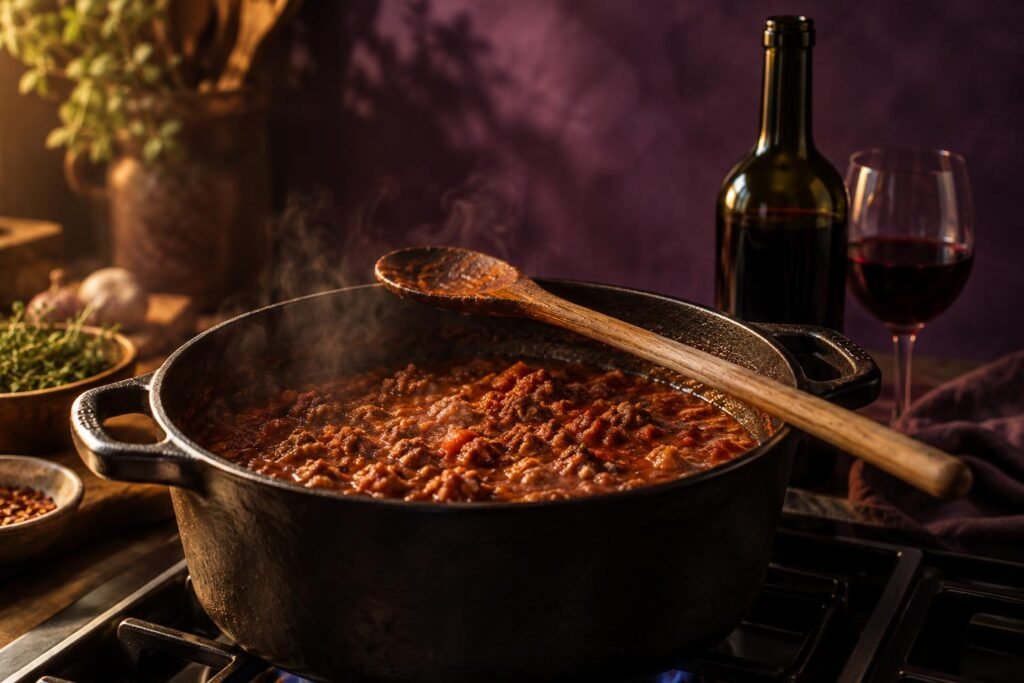
Most of us cook the other version: a tin of tomatoes, a squeeze of paste, garlic, herbs and whatever mince was on special. That is a tomato sauce with meat in it, and it is a different pairing problem. The more tomato in your pot, the more acid your wine needs. The more meat and pancetta, the more you can get away with something rounder.
Best Wines for Spaghetti Bolognese
Sangiovese, the safe bet
Tastes like sour cherry, dried herbs and a little tea leaf, with acid that keeps going after you swallow. It works because its acid sits level with the tomato, so neither one wins. Look for Chianti Classico or Rosso di Montalcino from Italy. In Australia, Heathcote and the Adelaide Hills both do it well. Full detail in our Sangiovese guide.
Barbera, for a tomato heavy sauce
Bright red fruit, almost no grip, and acidity that could strip paint in the best way. Barbera is the grape to choose when your sauce leans sharp and tinny, because it never gets bitter against salt. Piedmont is home, and King Valley in Victoria makes good ones. More in our Barbera guide.
Montepulciano d’Abruzzo, the cheap hero
Plum, black cherry and a soft, dusty finish. It has less acid than the other two but plenty of ripe fruit, which suits a sauce that has been sweetened by long cooking or a spoon of sugar. It is also the best value red on this list. See our Montepulciano guide.
A cool climate Australian red
You do not have to buy Italian. A Yarra Valley or Adelaide Hills Shiraz, a Tasmanian Pinot Noir or a lighter Grenache all have the freshness the dish wants. Skip anything labelled as a big warm climate blockbuster, however good it is on its own.
If you would rather drink white
It can be done. Pick a white with real acid and some texture, such as a Fiano, a Vermentino or a dry Riesling. Serve it properly cold. It will taste better with a bolognese than a heavy oaked Chardonnay ever does.
What to Avoid
- Big, tannic Cabernet Sauvignon. The Parmesan turns its grip bitter and the tomato strips out its fruit.
- Jammy, high alcohol reds above about 15 per cent. They taste sweet and hot next to a savoury sauce, and they make the salt stand out.
- Heavily oaked reds or whites. Vanilla and toast have nothing to say to tomato.
- Anything sweet. A sweet red makes the sauce taste sour, which is the opposite of the goal.
Drink One Tonight

Minimum Central Victoria Organic Red Sangiovese Syrah 2022
Sangiovese gives the sour cherry bite the tomato needs, and the splash of Syrah rounds out the middle so it does not feel skinny next to the mince. Central Victoria has the cooler nights that keep the acid honest. Serve it at about 16 degrees, which means a short spell in the fridge first. Stock checked and available at the time of writing, at just under twenty three dollars.
- Sangiovese acid does the heavy lifting
- Organically grown in Central Victoria
- Light enough for a weeknight, serious enough for guests
- The Syrah makes it a touch riper than a straight Chianti
- One vineyard, so it comes and goes
If You Are Cooking It
One change makes the wine taste better with almost no effort. Save a ladle of the starchy pasta water and stir it into the sauce with the drained spaghetti, off the heat, for a minute. The starch binds the fat to the pasta instead of leaving it sitting on top, and less loose fat in each bite means the wine keeps its shape.
The other trick is salt. Taste the sauce before you serve it and stop just short of where you would normally stop, because the Parmesan is still coming. Oversalted bolognese is the single fastest way to make a decent red taste harsh. If you are watching what the evening adds up to, our wine calorie calculator will tell you what the glass costs.
Frequently Asked Questions
What red wine goes best with spaghetti bolognese?
Sangiovese is the safest choice. It has the acidity to match the tomato and only gentle tannin, so the Parmesan cannot turn it bitter. Barbera is the better pick if your sauce is very tomato heavy, and Montepulciano d’Abruzzo is the best value of the three.
Can you drink white wine with spaghetti bolognese?
Yes, as long as it has real acidity. Fiano, Vermentino and dry Riesling all work. Avoid heavily oaked whites, because oak and tomato do not get along. Serve it properly chilled so the freshness comes through.
Does Chianti go with bolognese?
It does, and it is close to the classic answer. Chianti is made mostly from Sangiovese, which is exactly the profile the dish wants. Chianti Classico is a step up in concentration if you have cooked the sauce for a long time.
Is Cabernet Sauvignon good with bolognese?
Usually not. Cabernet carries firm tannin, and the salt in the stock and the Parmesan sharpens tannin into bitterness. If Cabernet is all you have, serve it cool and go easy on the cheese.
What wine should I cook bolognese with?
Whatever you plan to drink with it, within reason. The official recipe allows either red or white wine, added after the meat browns and cooked off completely. There is no need to open anything expensive, but do not use something you would not drink.
Should bolognese wine be served chilled?
Lightly, yes. Around 15 to 16 degrees suits all three of the reds above. Twenty minutes in the fridge before you sit down is usually enough in an Australian kitchen.
Cooking the beef as a steak instead? Our guide to the best wine with steak explains why the fat left on the plate matters more than the name of the cut.
This post contains affiliate links. If you buy through them we earn a small commission at no extra cost to you. It keeps the wine flowing and the reviews honest.