Heads up: this guide contains an affiliate link. If you buy through it we earn a small commission at no extra cost to you.
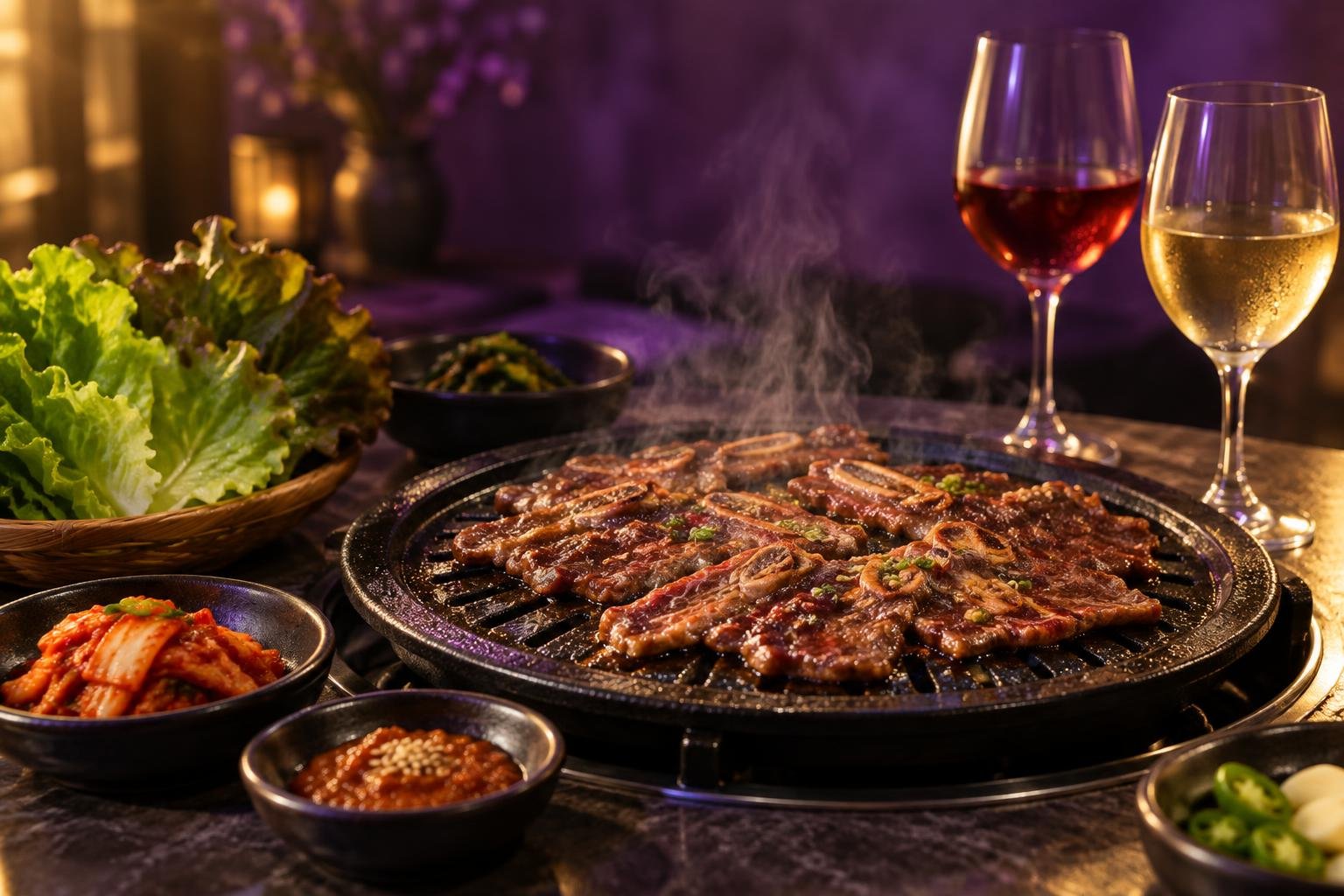
Pour a chilled, juicy red such as Gamay, or a crisp Riesling with a whisper of sweetness. Both can handle Korean barbecue, which throws sweet marinade, smoky char and a chilli kick at your glass all at once.
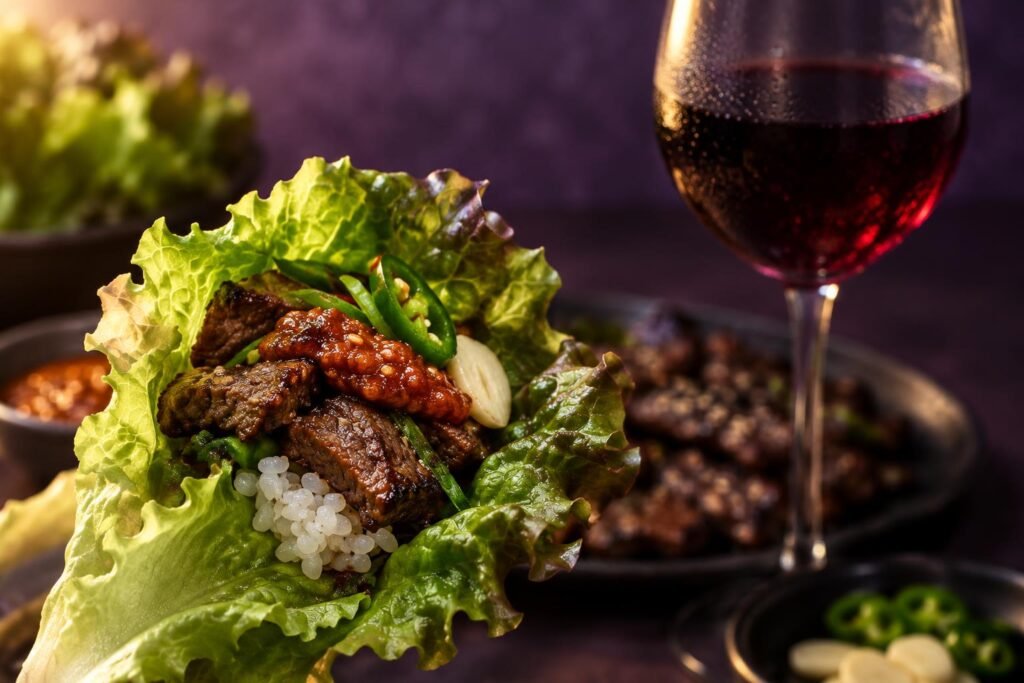
Korean barbecue is a table full of small jobs. You grill the meat, wrap it in lettuce, dab on sauce and add kimchi. The wine has to keep up with every bite. Pick a big tannic red and it will fight the chilli like a toddler fighting a bedtime.
Table of Contents
The Short Answer
- Gamay: light, fruity and low in tannin, so it ignores the heat. Chill it for 15 minutes first.
- Riesling with a little sweetness: the sugar calms the chilli and the acidity cuts the fat.
- Pinot Noir: earthy and medium-bodied, a good fit for the sweet, soy-marinated meats.
Serve the reds slightly cool and the white properly cold. Our serving temperature chart has the numbers.
What Korean BBQ Does to Wine
Think of the table in five parts. The marinade for galbi (short rib) and bulgogi (thin beef) is sweet, with soy, sugar, garlic and sesame oil. The grill adds smoke and char. The meat is rich and fatty. The sauces, such as gochujang and ssamjang, bring salt and heat. The kimchi adds sour fire.
Sweetness in the food makes dry wine taste thin and sour. Heat makes high-alcohol wine feel hotter. Tannin, the drying grip in red wine, clashes with chilli. Decanter’s guide to spicy food says off-dry whites can help reduce the heat, and it calls too much tannin the worst enemy of spice.
There is a catch. The same guide says sweetness in the wine only works when the food has some sweetness too. Luckily, Korean marinades have plenty.
Best Wines for Korean BBQ
Gamay
Gamay is the grape of Beaujolais. It is bright, red-berry fruity and light on tannin, which is exactly what chilli wants. Chill it lightly and it tastes fresh against the char. Read our Gamay guide for the full story.
Riesling with a hint of sweetness
This is the safe bet for spicy dishes and sweet marinades. Wine Australia describes Australian Riesling as light to medium-bodied with typically high acidity and vibrant citrus fruit. That acidity slices through fatty pork belly and rich short rib. Most Australian Riesling is dry, so look for a label that says off-dry, or read what off-dry means to spot one.
Pinot Noir
For milder dishes like bulgogi, a red with some earthiness works well. Decanter’s guide to Korean food quotes a sommelier who suggests earthy, medium-bodied reds such as Burgundy for sweeter meat dishes like bulgogi. Burgundy is Pinot Noir, so an Australian or New Zealand Pinot is a fair stand-in. Keep it away from the very hot sauces.
Grenache, for mild dishes only
Grenache brings ripe red fruit and a soft texture, and our Grenache guide explains why it is so friendly. The warm alcohol can make chilli feel stronger, so save it for plain galbi with the sauces on the side.
What to Avoid
- Big tannic reds like young Cabernet. They turn bitter next to chilli and kimchi.
- Very delicate whites. The Decanter piece warns that sesame can overpower subtle white wines, so skip the shy ones.
- Very dry, very oaky whites. The sweet marinade makes them taste sour and thin.
- High-alcohol reds. They add heat on top of heat.
Drink One Tonight
Honesty corner: the partner shop had no off-dry Riesling or Beaujolais-style Gamay in stock when we checked, so this is the closest sensible pick. It is a Riesling from the Byrne family’s Scotts Creek vineyard, where the first vines went in back in 1968. Australian Riesling usually leans dry, so lean on the sweet marinade and the chilled glass to do the balancing.

Byrne Single Vineyard South Australia Riesling 2025
A cheap, cheerful Riesling that keeps its zing next to smoke and soy. Chill it hard and pour it with the pork belly.
- Around $10 a bottle
- Old vines from 1968
- Crisp acidity for fatty meat
- Leans dry, not sweet
- Pair it with a sweet marinade
If You Are Cooking It
Keep the sauces on the side. That lets each person set their own heat level, and it lets you match the wine to the plain meat first. A squeeze of lime on pork belly also helps a crisp white. Our pork belly pairing guide goes deeper on the fatty cuts.
Frequently Asked Questions
What is the best wine with Korean BBQ?
A chilled, fruity Gamay or a Riesling with a touch of sweetness is the safest choice. Both handle sweet marinades, smoke and chilli without a fight.
Can I drink red wine with Korean barbecue?
Yes, if it is light and low in tannin. Gamay and Pinot Noir work well. Big tannic reds tend to clash with chilli and kimchi.
Does sweet wine go with spicy Korean food?
A little sweetness helps. Decanter notes it only works if the food also has some sweetness, which most Korean marinades do.
What about soju or beer instead?
Both are classic and fine. Soju is strong, so pace yourself. A standard drink in Australia holds 10 grams of alcohol, and a wine serve is 100 mL, so check the Australian standard drinks guide if you are counting.
Should I serve the wine cold?
Yes, a bit colder than usual. Chill whites well and give light reds about 15 minutes in the fridge. The cool temperature calms the heat.
This post contains affiliate links. If you buy through them we earn a small commission at no extra cost to you. It keeps the wine flowing and the reviews honest.