Heads up: this guide contains an affiliate link. If you buy through it we earn a small commission at no extra cost to you.
The YouYah wine decanter is a 1.4 litre hand-blown crystal carafe with a stainless steel stopper that doubles as an aerator and a sediment filter. Pour the bottle through the stopper and the wine fans out in a thin sheet down the inside of the glass, which is the “waterfall” in the name. It is a lot of decanter for the money, and it is the one we reach for most often at home.
It also makes a claim we need to talk about. The maker says three to five minutes in this decanter does what half an hour does in a normal one. Half of that is true and half of it is marketing, and knowing which half is which will save you from being disappointed by a very good product.
Table of Contents
What It Is
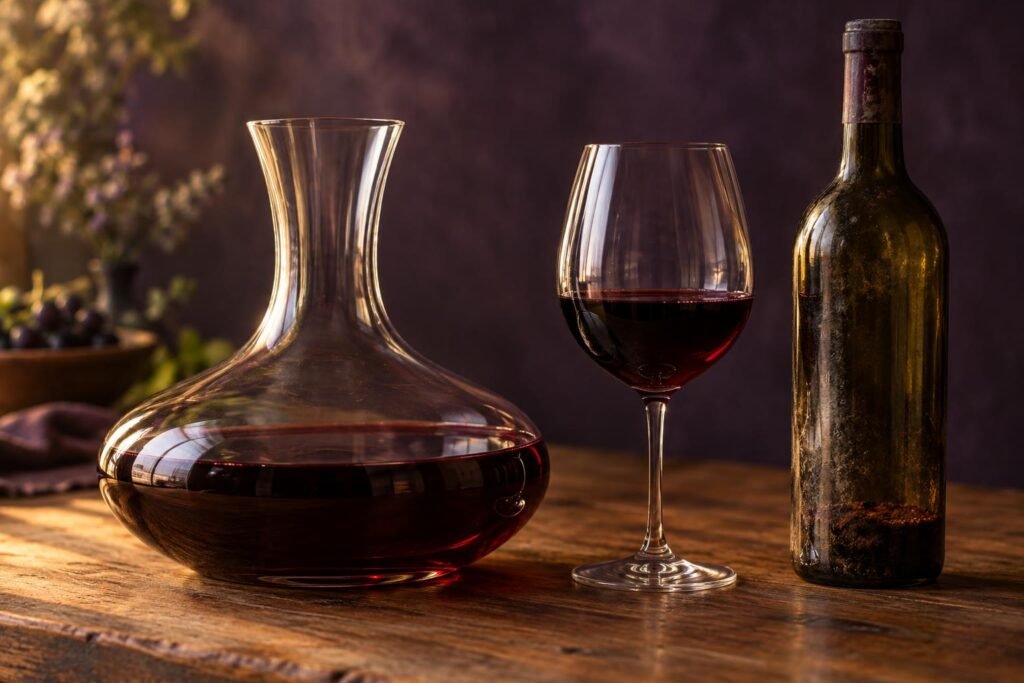
The body is a wide, low carafe in lead-free crystal, hand blown, so no two are quite the same. It holds 1.4 litres, which is nearly two bottles, and the broad base gives the wine a lot of surface area. The stopper is the clever bit: food-grade stainless steel with a silicone seal, a fine mesh filter inside, and a spout that spreads the wine around the neck instead of dumping it in a single stream.
At the time of writing the Amazon Australia listing shows it in stock at just over a hundred dollars, shipped from Amazon UK, with a 4.7-star rating from more than 1,400 reviews. Check the seller before you order, because the price and shipping time move around depending on who has stock.
Who It Is For
This is for the person who drinks mostly red, opens a decent bottle a couple of times a week, and does not want a separate aerator, funnel and filter cluttering the drawer. It is also a handsome thing to put on the table, which matters if you entertain. If you drink mostly white, or you only decant a few times a year, a simple glass decanter at half the price does the job.
How We Tested It
We used it over a good many bottles of the kinds of wine most Australians actually open: young Barossa Shiraz, McLaren Vale Cabernet blends, a couple of older bottles with sediment, and one Pinot Noir that probably did not need it. We compared the same wine three ways: straight from the bottle, poured through the stopper, and left in the decanter for an hour. We also lived with it, which means we washed it, dried it, knocked it and stored it. No lab kit was involved; these are one household’s notes.
What We Liked
- The waterfall pour. It really does spread the wine into a thin sheet, and on a young red that smells closed or a bit sulphury, the change on the nose is quick and obvious.
- The filter. On an older Cabernet with a fair bit of crust in the bottle, the mesh caught almost all of it. That alone replaces the tea strainer we used to use.
- The shape. The wide base means even half a bottle spreads out and gets air. Tall, narrow decanters do not do this.
- The stopper as a stopper. Take the aerator insert out and it seals the carafe for the next day. Handy when you open a bottle on a Tuesday.
- The look. Clear crystal, a bit of a curve to it, and steel on top. It looks more expensive than it is.
What We Did Not
- Cleaning the mesh. The filter clogs with fine sediment and needs a rinse under a hard tap after every older bottle. It is not difficult, just tedious.
- Drying. Like every wide decanter, it holds a puddle at the bottom. Stand it on a drying rack or a rolled tea towel at an angle, and never put it in the dishwasher.
- The claim. Three to five minutes does not equal thirty. It equals the first few seconds of a normal decant, done more thoroughly. More on that below.
- Instructions. The box does not explain that the stopper comes apart. It does, and the mesh filter sits inside the steel spout. If yours arrived and you were puzzled, that is why.
Does the Built-In Aerator Actually Work?
Yes, for the job an aerator can do. Splashing wine through air does two things fast: it blows off the volatile, smelly compounds that make a young red seem closed, and it dissolves a small amount of oxygen into the wine. The first part happens in seconds, and the waterfall spout does it well. That is the real benefit, and it is worth having.
What it cannot do is soften tannin in minutes. A study on Chianti published in the journal Molecules measured how long the tannins in red wine took to use up dissolved oxygen, and the answer was seven to fourteen days for the first dose. Nothing that happens in a decanter in five minutes, or thirty, changes tannin much. What the extra time in a decanter does give you is more of the aroma opening up and the sharp edges settling, which is why a big Cabernet still tastes better after an hour in this one than after five minutes. The spout gets you a good start. The decanter is still doing the rest of the work, and it needs time to do it.
Alternatives
If you already own a decanter you like, a pour-through aerator such as the ones in our aerator roundup gives you the same quick fix for under thirty dollars. If you want the prettiest possible object, the Wine Savant bulb aerator sits in the bottle and looks the part, though it does less. If you want a serious decanter for serious Cabernet, the Riedel Cabernet decanter is the benchmark, at a price to match. The YouYah sits in the middle: better than a plain carafe, cheaper than the crystal brands, with the filter thrown in.
What to Pour in It
This decanter earns its keep on two kinds of wine: a young red that needs waking up, and an older one with sediment. A Coonawarra Cabernet with real bottle age is both a treat and a test of that filter.

Secret Drop Exclusive Coonawarra Cabernet Sauvignon 2015
Pour it through the stopper, let it sit for half an hour, and taste it against the last glass from the bottle. Blackcurrant, mint, a bit of cedar, and softer than any young Cabernet will be at this price.
- Genuine bottle age from one of the best Cabernet regions in the country
- Likely to throw a little sediment, which is exactly what the filter is for
- Thirty dollars at the time of writing for a wine of this age
- A cleanskin-style label, so you are trusting the region more than the name
- Drink soon; it is at the point where age helps rather than hurts
Verdict
The YouYah wine decanter is the best-value decanter we have used. The waterfall spout does the quick job an aerator does, the filter deals with sediment, the wide bowl gives wine the air it needs, and it looks good doing all three. The three-to-five-minutes claim oversells it, but the product underneath the claim is sound. If you drink red regularly and want one object instead of three, this is the one. The Amazon Australia listing was in stock when we checked.
Frequently Asked Questions
How do I use the YouYah wine decanter?
Fit the stopper with the mesh filter inside the steel spout, push it into the neck of the decanter, and pour the bottle slowly through it. The wine spreads down the inside of the glass. Let it sit for thirty minutes or more for a young red, then pour, or remove the aerator insert and use the stopper as a seal.
How do I clean the YouYah decanter?
Rinse the carafe with warm water straight after use and stand it upside down at an angle to drain. Pull the stopper apart and rinse the mesh under a strong tap. Do not put any of it in the dishwasher, and avoid soap in the crystal unless you rinse it very well.
Is there any advantage to a decanter with a built-in aerator?
Yes: it does the quick aeration job as you pour, so a closed young red smells better sooner. It does not remove the need for time in the decanter if you want the wine to soften and open fully.
Does the YouYah decanter remove sediment?
The mesh in the spout catches most of it. On a very old wine with fine, silty sediment a little may get through, so pour slowly and stop before the last few centimetres of the bottle.
Can I use it for white wine?
You can, though most whites do not need air and lose their chill sitting in a decanter. It is built for reds.
How much does the YouYah decanter hold?
1.4 litres, which is nearly two standard bottles. In practice one bottle spreads across the wide base and gets plenty of air.
This post contains affiliate links. If you buy through them we earn a small commission at no extra cost to you. It keeps the wine flowing and the reviews honest.