What Is a Fifth Growth Wine? The 1855 Bordeaux Ranking Explained
A fifth growth is a Bordeaux château in the bottom band of the 1855 classification. There are 18, twelve of them in Pauillac, and the label says more about 1855 prices than today’s wine.
Read morePinot Gris vs Pinot Grigio: What Is the Difference?

Same grape, two names, two styles. Grigio is crisp and citrusy, Gris is fuller and rounder. How to tell which is in the bottle before you buy it.
Read moreDoes Vermouth Have Sugar? The Numbers, by Style

Every vermouth has sugar, but the amount is set by law. The five label terms, what they mean in grams, and how much lands in a Negroni or a Martini.
Read moreWhat Is Verjus? The Kitchen Acid That Does Not Fight Your Wine
Verjus is the juice of unripe grapes, pressed before it can ferment. It is sour without the sting of vinegar, and it is the one acid that leaves your wine alone.
Read moreWhat Is Vermouth? Wine, Wormwood and Why Yours Tastes Flat
Vermouth is wine flavoured with herbs, sweetened and fortified, and it must contain wormwood. Here are the styles, the history, and the storage mistake ruining your Martini.
Read moreDoes All Champagne Taste the Same? No, and Here Is What Changes It

Two bottles both labelled Champagne can taste nothing alike. The four things that change it: the grapes, the dosage, the time on lees and the maker.
Read moreIs Prosecco the Same as Champagne? No, and Here Is Why

Different country, different grapes, different bubbles. How Prosecco and Champagne actually differ, which to buy for what, and what Australian Prosecco is.
Read moreWhat Is a Riddling Rack? The Champagne Tool Explained
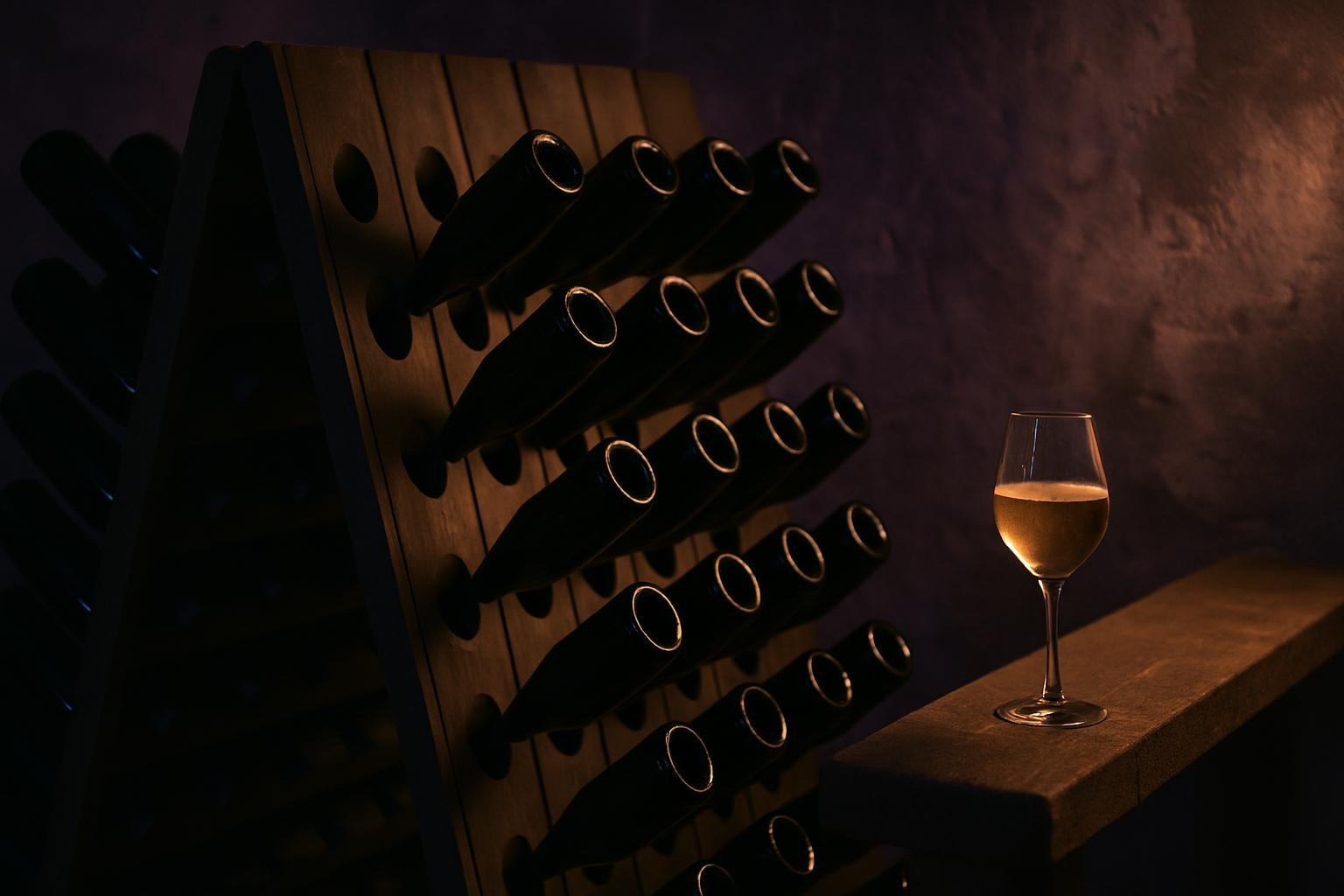
A riddling rack holds 120 bottles neck-down so the yeast slides into the neck. Here is how it works, who invented it, and why machines replaced it.
Read moreVintage vs Non-Vintage Champagne: The Difference Explained

Non-vintage is a blend of years made for consistency; vintage is one great year aged longer. How each is made, how they taste, what they cost and which to buy.
Read moreMCC vs Champagne: The Difference, and Which One to Buy

Same method, different place, very different price. What Méthode Cap Classique is, how the rules compare to Champagne, and when each one is the right bottle.
Read more