Heads up: this guide contains an affiliate link. If you buy through it we earn a small commission at no extra cost to you.
Roussanne is the difficult, beautiful one of the Rhône white pair. Marsanne is reliable, generous and easy to grow; Roussanne ripens unevenly, rots if you look at it wrong, and yields a fraction of the crop. Growers have been ripping it out for two centuries. They keep replanting it, because when it works, it makes one of the most aromatic and elegant whites in France.
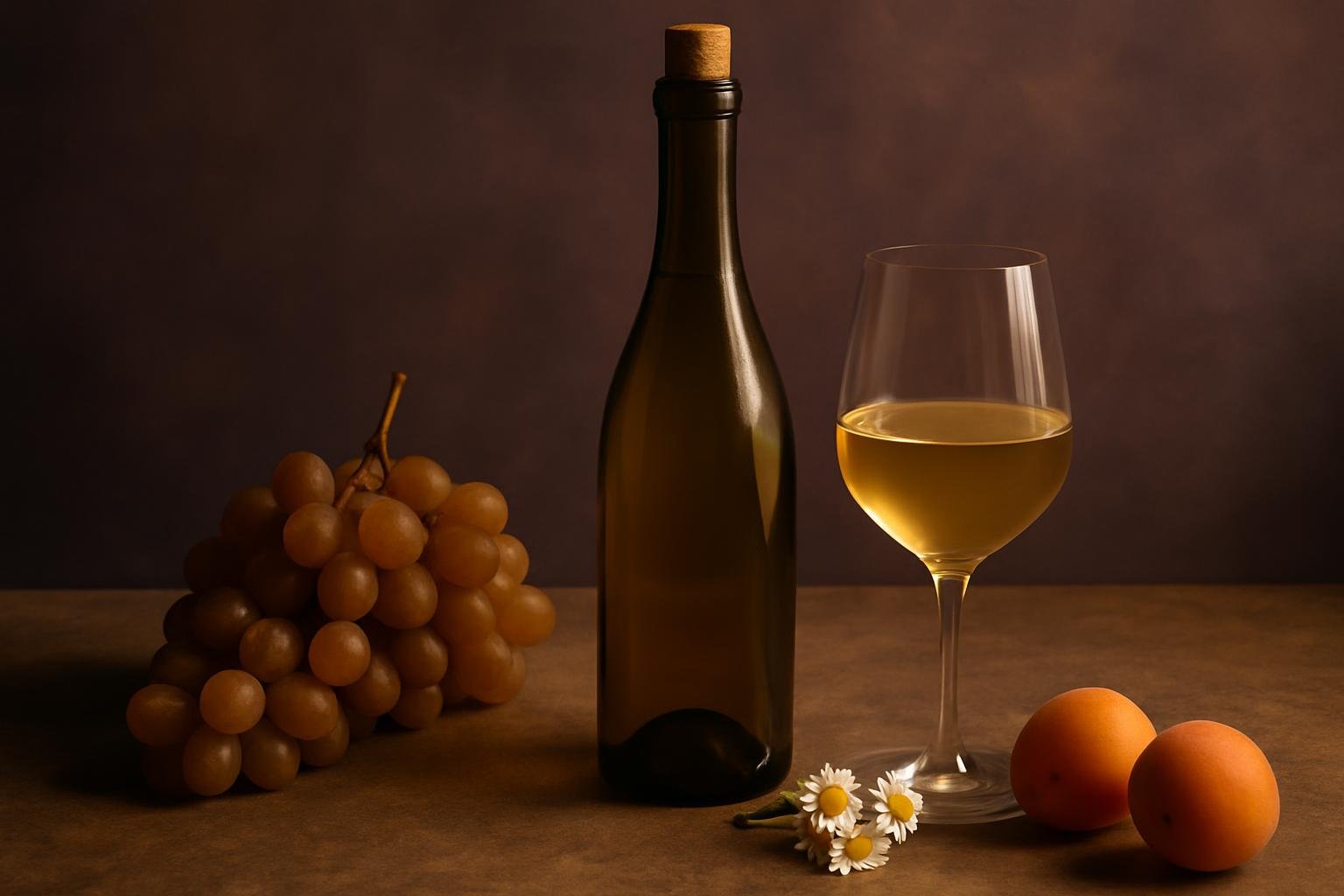
The name comes from “roux”, the French for russet, after the reddish-gold skins the grapes develop when ripe. The wine smells of herbal tea, apricot and honeysuckle, and it has become the darling of Australia’s Rhône-obsessed winemakers from the Barossa to the Yarra.
Table of Contents
What Does Roussanne Taste Like?
Apricot, pear and quince, with chamomile, honeysuckle, lime blossom and a distinctive herbal-tea note, sometimes with a hint of beeswax and almond. It is medium to full in body, with brighter acidity than Marsanne and a silky, slightly oily texture. Oak suits it, and aged versions turn nutty and honeyed.
| Aspect | Rating out of 5 | Characteristic |
|---|---|---|
| Sweetness | 🍷 | Dry, with an apricot perfume that suggests otherwise |
| Body | 🍷🍷🍷🍷 | Medium to full, silky rather than heavy |
| Tannins | – | None; smooth as a cup of chamomile |
| Acidity | 🍷🍷🍷 | Fresher than Marsanne, the reason blends work |
| Alcohol by Volume | 🍷🍷🍷🍷 | Typically 13–14.5% |
Each wine glass icon is one point on a 5-point scale: one glass is low, five is high, based on the grape’s typical style.
Where It Grows
The northern Rhône, alongside Marsanne, in Hermitage, Saint-Joseph and Crozes-Hermitage, and on its own in the tiny Saint-Péray appellation. It is one of the permitted white grapes in Châteauneuf-du-Pape, where Château de Beaucastel makes a legendary old-vine version. Savoie calls it Bergeron. California’s Rhône Rangers and a few Italian and Spanish growers have adopted it.
Australia planted Roussanne in the 1990s as the Rhône-blend craze took hold, and it now grows in the Barossa, McLaren Vale, the Yarra Valley, Heathcote, the Adelaide Hills and Nagambie. Most goes into Marsanne Roussanne Viognier blends, but a few makers, Yeringberg and Torbreck among them, bottle it solo, and the results are some of our most interesting whites.
How to Serve It
Temperature: 9–11°C.
Glass: a Chardonnay bowl to let the perfume out; see the glasses roundup.
Decanting: older or oaked Roussanne benefits from twenty minutes of air.
Ageing: good Roussanne ages for five to ten years, sometimes closing up in the middle before emerging nutty and honeyed.
What to Eat With It
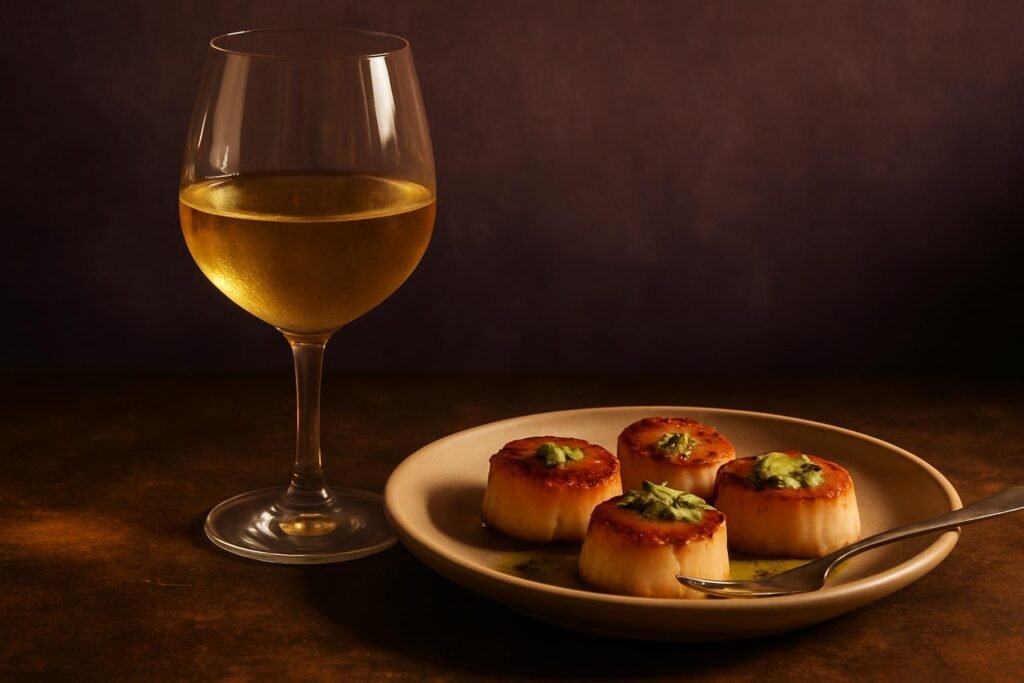
Roast chicken with herbs, pork, salmon, scallops, lentil dishes, mild Thai and Moroccan food, and soft, washed-rind cheeses. Its herbal notes suit anything with thyme or tarragon. More in the pairing guides.
Celebrated Wine Labels
| Wine Label | Country | Style |
|---|---|---|
| Château de Beaucastel | France | Châteauneuf Roussanne Vieilles Vignes, the benchmark |
| Yves Cuilleron | France | Saint-Joseph and Saint-Péray, elegant |
| Tablas Creek Vineyard | USA | Paso Robles, Beaucastel’s American cousin |
| Yeringberg | Australia | Yarra Valley, Marsanne Roussanne of real class |
| Torbreck | Australia | Barossa Roussanne, rich and textural |
Can’t Find One? Drink This Instead
Honesty corner: our partner shop had no Roussanne in stock when we checked. The closest match on the shelf is a textural, aromatic Pinot Gris: the same pear-and-apricot fruit, the same silky weight, the same happiness with a roast chicken.

Stoneleigh Marlborough Pinot Gris 2024
Not Roussanne, but an aromatic Pinot Gris is the nearest thing on the shelf. When a Barossa or Yarra Roussanne lands in stock, it takes this spot.
- Pear, apricot and a silky texture, the same job Roussanne does at the table
- Marlborough cool-climate fruit from a reliable name
- Chicken, salmon and mild spice all work
- Under seventeen dollars
- Misses Roussanne's herbal-tea perfume and ageing potential
New to Just Wines? The code FIRST20 takes $20 off a first order over $99, so it is worth building a mixed six rather than buying the one bottle. New customers only, and the offer can change without notice.
Frequently Asked Questions
What does Roussanne taste like?
Apricot, pear and honeysuckle with a signature herbal-tea note, silky in texture and fresher than its partner Marsanne. It is dry and medium to full in body.
What is the difference between Roussanne and Marsanne?
Marsanne is richer, waxier and lower in acid; Roussanne is more aromatic and brighter. They are nearly always blended in the Rhône because each fixes the other’s weakness. See our Marsanne guide.
Is Roussanne similar to Viognier?
Both are perfumed Rhône whites with apricot notes. Viognier is heavier, lower in acid and more floral; Roussanne is more herbal and fresher. Read our Viognier guide for the comparison.
How do you pronounce Roussanne?
Roo-SAHN.
Does Australia grow Roussanne?
Yes, since the 1990s, in the Barossa, McLaren Vale, the Yarra Valley, Heathcote, the Adelaide Hills and Nagambie. Most goes into Rhône-style white blends, with a few excellent solo bottlings.
This post contains affiliate links. If you buy through them we earn a small commission at no extra cost to you. It keeps the wine flowing and the reviews honest.