Heads up: this guide contains an affiliate link. If you buy through it we earn a small commission at no extra cost to you.
Alicante Bouschet has a party trick almost no other wine grape can do: its flesh is red. Nearly every red grape has clear juice and gets its colour from the skins, but Alicante Bouschet bleeds crimson the moment you cut it. It was bred in France in 1866 by Henri Bouschet, a man on a mission to make wine darker, and he succeeded beyond his wildest dreams.
For a century it was the workhorse that deepened the colour of thin wines and, during American Prohibition, survived long train journeys to home winemakers. Then Portugal’s Alentejo took it seriously, and it turned out the workhorse could be a thoroughbred.
Table of Contents
What Does Alicante Bouschet Taste Like?
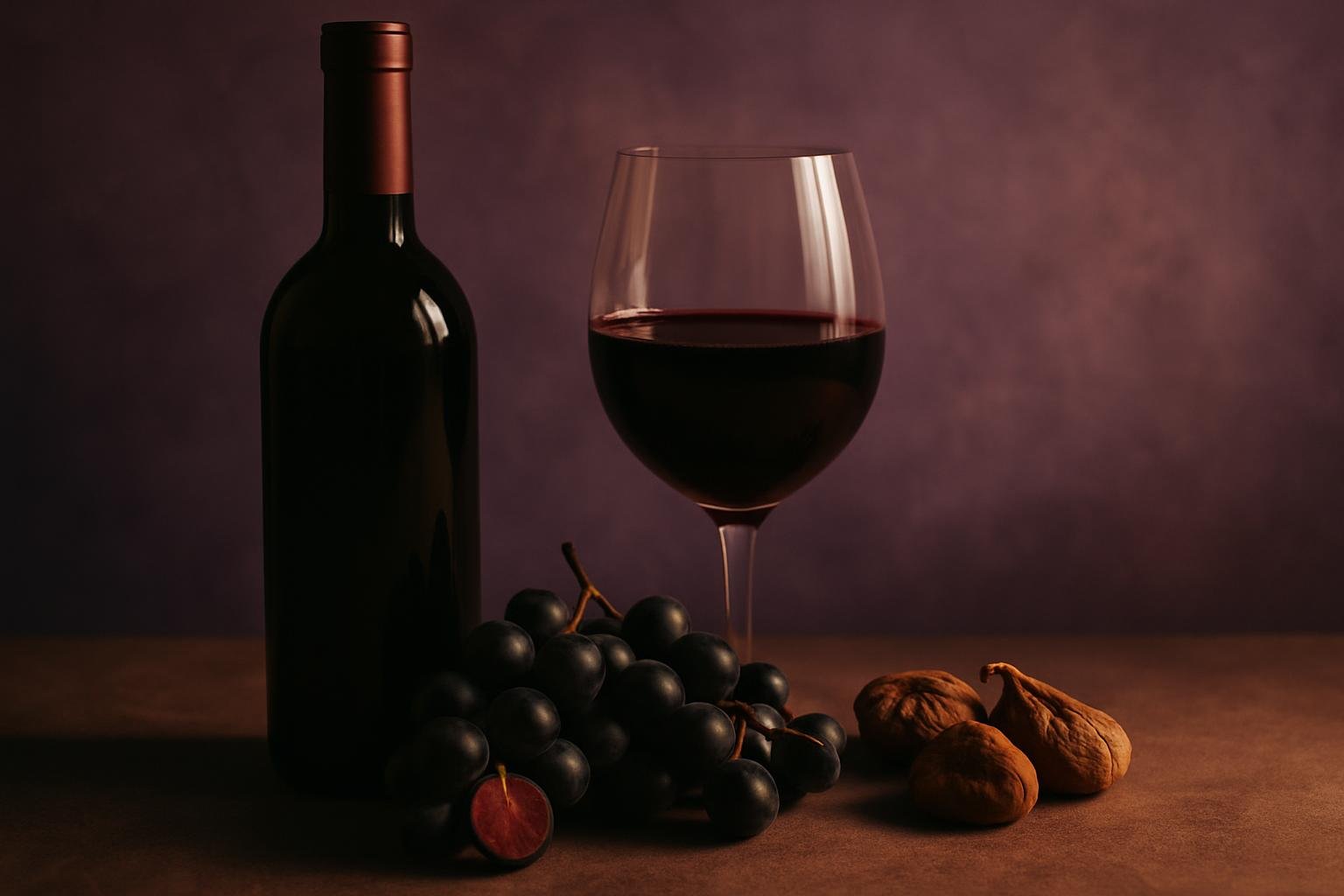
Blackberry, black cherry, plum and fig, with dark chocolate, sweet spice, dried herbs and an earthy, meaty edge. It is inky purple-black, full-bodied and plush, with moderate acidity and tannins that are firm but rounder than Cabernet’s. Good versions are rich without being jammy.
| Aspect | Rating out of 5 | Characteristic |
|---|---|---|
| Sweetness | 🍷 | Dry, a shapeshifter that never shows a sweet side |
| Body | 🍷🍷🍷🍷🍷 | Full and dense, like a velvet curtain |
| Tannins | 🍷🍷🍷🍷 | Firm but rounded, a strong handshake rather than a grip |
| Acidity | 🍷🍷🍷 | Moderate, enough lift to keep the fruit honest |
| Alcohol by Volume | 🍷🍷🍷🍷 | Typically 13.5–15% |
Each wine glass icon is one point on a 5-point scale: one glass is low, five is high, based on the grape’s typical style.
Where It Grows
Portugal’s Alentejo is where Alicante Bouschet became a star, and the best examples in the world come from there. Spain grows a great deal of it under the name Garnacha Tintorera, mostly in Almansa and Galicia. France still has old vines in the Languedoc, and California’s Central Valley has plots that date back to Prohibition.
Australia’s Alicante Bouschet is rare but real. A few McLaren Vale and Barossa growers have planted it for its colour and heat tolerance, and it occasionally turns up in “Portuguese-style” blends alongside Touriga Nacional. Most Australian bottles are cellar-door finds, which makes tracking one down a small adventure.
How to Serve It
Temperature: 16–18°C.
Glass: a large-bowled red glass to let the dark fruit breathe; the glasses roundup covers the options.
Decanting: yes, an hour in a decanter helps young bottles loosen up.
Ageing: everyday bottles are best within five years. Serious Alentejo versions age for a decade or more and gain leather, tobacco and dried fruit.
What to Eat With It
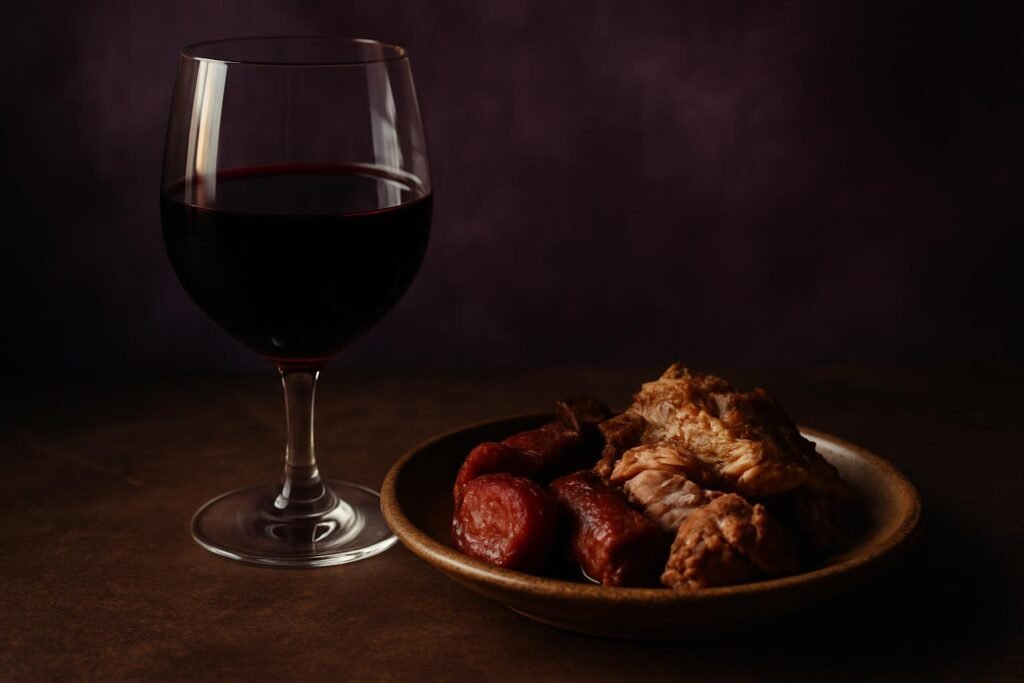
Hearty, rustic food: slow-cooked pork, lamb stew, chorizo, salami boards, barbecued beef and pork chops. Portuguese and Spanish dishes are the natural fit, and it handles smoky, spicy flavours well, including Mexican food. More in the pairing guides.
Celebrated Wine Labels
| Wine Label | Country | Style |
|---|---|---|
| Herdade do Esporão | Portugal | Alentejo leader, rich and polished |
| Domaine du Grand Chemin | France | Languedoc old vines, rustic and honest |
| Tablas Creek Vineyard | USA | Paso Robles, Rhône specialists with a soft spot for it |
| Bodegas Juan Gil | Spain | Garnacha Tintorera with modern flair |
| Fattoria Aldobrandesca | Italy | Tuscan Maremma, a surprising Italian home |
Can’t Find One? Drink This Instead
Honesty corner: our partner shop had no Alicante Bouschet in stock when we checked. The nearest match is a ripe Spanish Tempranillo: the same dark fruit, sweet spice and plush texture, from the same corner of the world.

Bodegas Finca Enguera Spanish Organic Tempranillo 2023
Not Alicante Bouschet, but a ripe organic Tempranillo from the same coast does the job at a Spanish-style dinner. When an Alentejo bottle lands in stock, it takes this spot.
- Dark, plush and spicy, the same Iberian job as Alicante Bouschet
- Certified organic, from Valencia, next door to Alicante itself
- Chorizo, lamb and slow-cooked pork all work
- Under twenty dollars
- Lighter in colour and a little less dense than the real thing
New to Just Wines? The code FIRST20 takes $20 off a first order over $99, so it is worth building a mixed six rather than buying the one bottle. New customers only, and the offer can change without notice.
Frequently Asked Questions
Is Alicante Bouschet a red or white wine?
Red, through and through. It is one of the rare “teinturier” grapes, meaning even the flesh and juice are red, so the wine is as dark as red wine gets.
What are some interesting facts about Alicante Bouschet?
It was deliberately bred in 1866 by crossing Petit Bouschet with Grenache. During American Prohibition it was the most-planted grape in California because its thick skins survived shipping to home winemakers. And it was once so widely used to darken pale wines that some countries banned it from quality appellations.
Where does the name Alicante Bouschet originate from?
Bouschet is the family name of the French breeders who created it. Alicante refers to the Spanish city and region on the Mediterranean coast, where Grenache, one of its parents, was thought to have come from.
To which wines is Alicante Bouschet similar?
Its parent Grenache shares the ripe, spicy fruit. Tempranillo, Touriga Nacional and Petite Sirah share the dark colour and plush weight. Read our Grenache guide and Tempranillo guide for the family resemblance.
Which country produces the most Alicante Bouschet?
Spain has the most vines, where it is called Garnacha Tintorera. Portugal makes the most celebrated wines from it, in the Alentejo. France, the USA and Chile grow smaller amounts.
This post contains affiliate links. If you buy through them we earn a small commission at no extra cost to you. It keeps the wine flowing and the reviews honest.