Heads up: this guide contains an affiliate link. If you buy through it we earn a small commission at no extra cost to you.
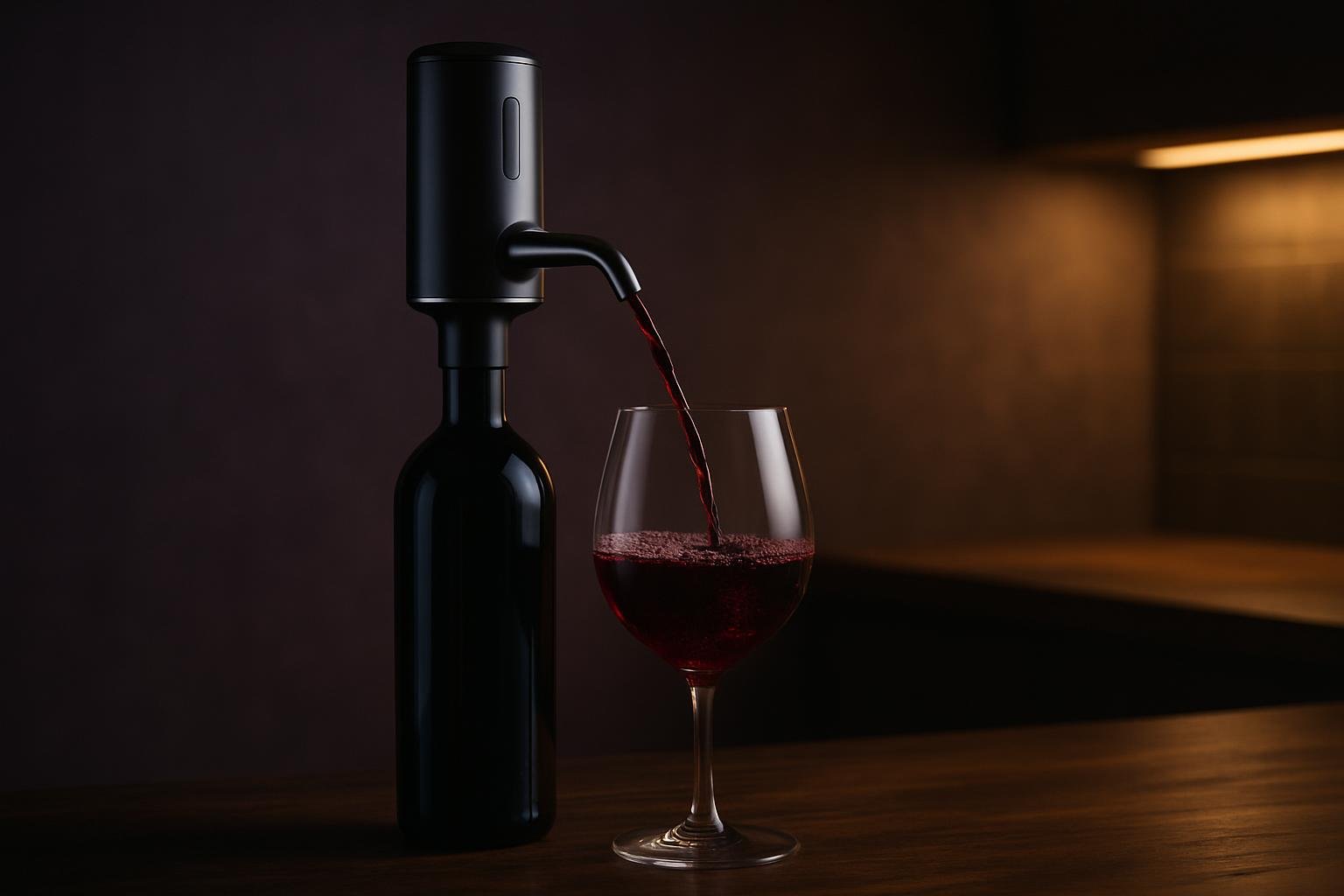
The JOQINEER electric wine aerator is two gadgets in one: a battery pump that lifts wine out of the bottle through a tube, and an aerator that sprays it into your glass on the way. Press a button, wait a few seconds, and a glass of aerated red appears without you tilting anything.
That is a neat trick. Whether it is a useful trick depends on what you want an aerator to do, and on one awkward fact we will get to: at the time of writing, Amazon Australia lists this exact model as currently unavailable. So this review is as much about whether an electric aerator is worth owning as about this one.
Table of Contents
What It Is
It is a small plastic and stainless unit that sits on top of the bottle, with a retractable tube that reaches down into the wine. Two AA batteries drive a pump. The wine goes up the tube, through an aeration chamber, and out of a spout into your glass. The maker claims the chamber pushes about 30 bubbles a second through the wine and that a glass takes around six seconds to pour. It comes with a stand so it does not drip on the bench between pours.
It is aimed at people who like the idea of a decanter but not the washing up, and at anyone who finds pouring a heavy bottle a nuisance. As a gift for a wine-curious friend it is the kind of thing that gets used a lot for a fortnight.
How We Tested It
We set it up on a kitchen bench with a young McLaren Vale Cabernet blend, the sort of firm, closed red that aerators are sold for. We poured one glass through the pump and one straight from the bottle, smelled and tasted both, then left the second glass sitting for half an hour and tasted again. We also timed a pour, washed the parts, and tried it on a nearly empty bottle to see where the tube gives up.
What We Liked
- It fixes a closed nose fast. The pumped glass smelled brighter and fruitier straight away. That matches what wine science says: spraying wine through air lets the smelly sulfur compounds evaporate instantly, and evaporation is the part of aeration that happens in seconds rather than hours.
- No drips, no tilt. Set the bottle down, press the button, and the wine arrives. With a full bottle of heavy glass that is more pleasant than it sounds, and the stand keeps the spout off the bench.
- Set-up takes a minute. Batteries in, tube pulled to length, unit pushed into the neck. There is nothing to calibrate.
- Easy to rinse. Warm water through the tube and spout after use and it is done. Do not put the motor housing in the dishwasher.
What We Did Not
- It cannot soften tannin. The wine spends a second or two in the chamber. Real softening comes from oxidation, and oxygen works on wine over hours and days, not seconds, according to Maurizio Ugliano of the University of Verona, who studies oxygen in wine. The pumped glass was fresher on the nose but every bit as grippy in the mouth. If you want a firm young Shiraz to relax, you still need a decanter and time.
- The last quarter of the bottle is a struggle. Once the level drops below the end of the tube you are back to pouring by hand, which rather defeats the point.
- Batteries and plastic. A pour-through aerator has no moving parts and no batteries. This one has both, and a motor is one more thing to fail in a drawer full of gadgets.
- It is a talking point, not a quiet tool. The pump hums. At a dinner table that is either charming or annoying depending on the company.
Electric Pump or Pour-Through Aerator?
The honest answer is that they do the same job to the wine. Both spray it through air for about a second, both blow off a stale or eggy note, and neither changes tannin. The difference is the delivery. A pour-through like the ones in our Luxury 2018 review or the Vintorio review costs less and never needs batteries; the electric pump saves you lifting the bottle and looks like a party trick. Pick the one that matches how you drink, then read our aerator roundup for the current options.
Alternatives
For a fraction of the price, a plain pour-through aerator does the same thing to the wine without a motor. For actual softening, any wide-based decanter beats every aerator on the market because it gives the wine the one thing an aerator cannot: an hour. And if you drink mostly whites and lighter reds, you do not need either.
What to Pour Through It
An aerator earns its keep on young, firm reds with a bit of funk on opening. We used a McLaren Vale Cabernet blend from Just Wines, which was in stock when we checked and which showed the effect clearly: a brighter nose after the pump, and the same solid grip in the mouth either way.

Fox Creek Jim’s Script McLaren Vale Cabernet Blend 2022
A proper Cabernet blend with a bit of attitude on day one. Aerate it for the aroma, decant it for the texture.
- Closed on opening, so an aerator has something to do
- Blackcurrant and cedar once it wakes up
- McLaren Vale ripeness keeps it friendly
- Still grippy after aerating; give it a decanter if you want soft
- A touch pricey for a weeknight
Verdict
The JOQINEER does what an aerator can do, which is wake up the smell of a young red in a second or two, and it does it without you lifting the bottle. It does not do what the packaging implies, which is replace a decanter. If that trade-off suits you and you can find one, it is fun and it works. At the time of writing the Amazon Australia listing shows it as currently unavailable, so check before you get attached, and look at the roundup for a pour-through that does the same job for less.
Frequently Asked Questions
Does an electric wine aerator actually work?
Yes, for aroma. Spraying wine through air lets the smelly sulfur compounds evaporate instantly, so a closed young red smells brighter at once. It does not soften tannin, because that needs hours of oxygen contact.
Is an electric aerator better than a pour-through one?
Not for the wine. Both aerate for about a second and both have the same effect. The electric version pumps the wine for you and saves lifting the bottle; the pour-through is cheaper and has no batteries.
Can I use it with white wine?
You can, but there is little point. Most whites and light reds do not need aerating and can lose delicate aromas if you fuss with them. Save it for young, firm reds.
How do I clean it?
Run warm water through the tube and spout after each use and let it dry on the stand. Keep the motor housing away from water and out of the dishwasher.
Does it replace a decanter?
No. A decanter gives the wine time in contact with air, which is the only thing that softens tannin. An aerator gives it a second. Use the aerator for a quick fix of the nose and a decanter when you want the texture to change.
This post contains affiliate links. If you buy through them we earn a small commission at no extra cost to you. It keeps the wine flowing and the reviews honest.