Heads up: this guide contains an affiliate link. If you buy through it we earn a small commission at no extra cost to you.
The Riedel Cabernet Decanter is the one you have seen on a hundred restaurant tables: a wide, angular crystal shape that looks like it costs a fortune. It does not. It sells for about $73 in Australia, it holds a standard bottle, and it goes in the dishwasher.
It is also machine-made, which surprises people who assume every Riedel is mouth-blown by a man in a leather apron. Riedel says so plainly on its own product page, and that is exactly why this one is affordable and survivable. Here is what it does well, what it does not, and whether you need a decanter at all.
Table of Contents
The Short Answer
- Model: Riedel Cabernet Decanter, article number 1440/13.
- Price: about $73 on Amazon Australia, checked 7 September 2026. Riedel’s own US list price is $70 before tax, so that is a fair local number rather than a markup.
- Capacity: built around one standard 750 ml bottle, with room above it to swirl.
- Size: 23 cm tall and 12.4 cm at its widest point.
- Made: machine-made crystal glass, and dishwasher safe.
- Buy it if: you drink young, firm reds and want them open faster.
- Skip it if: you mostly drink whites, or you know you will never wash it.
What a Decanter Actually Does
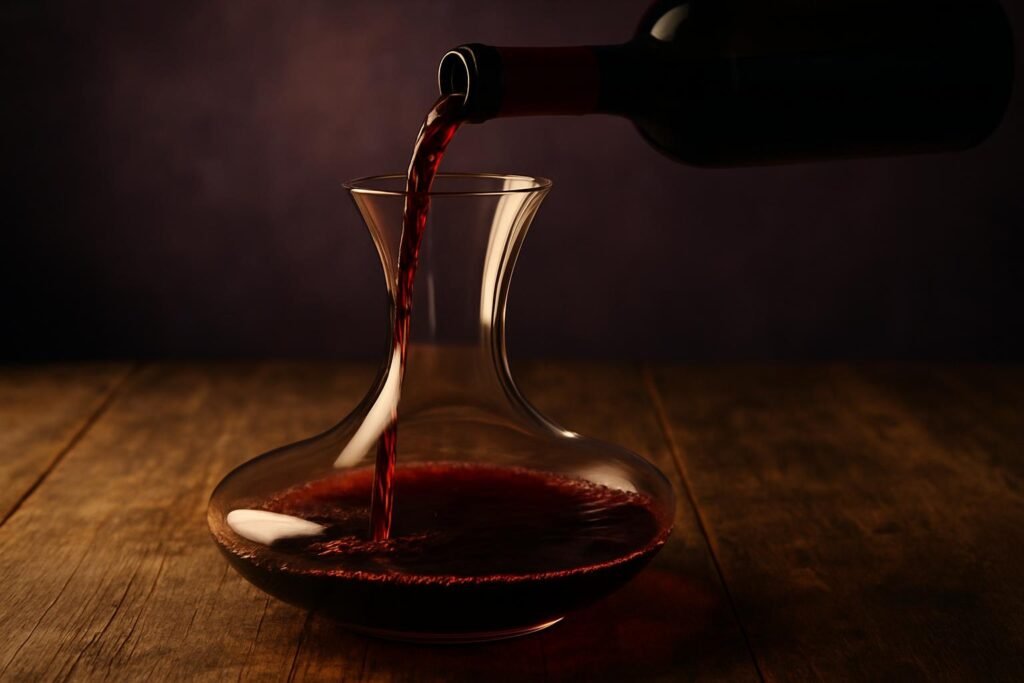
Two jobs, and they are not the same job. The first is aeration: air gets at the wine, the harsh edges soften, and closed aromas open up. The second is separating sediment, which matters for older reds and vintage Port and not at all for anything you bought this year.
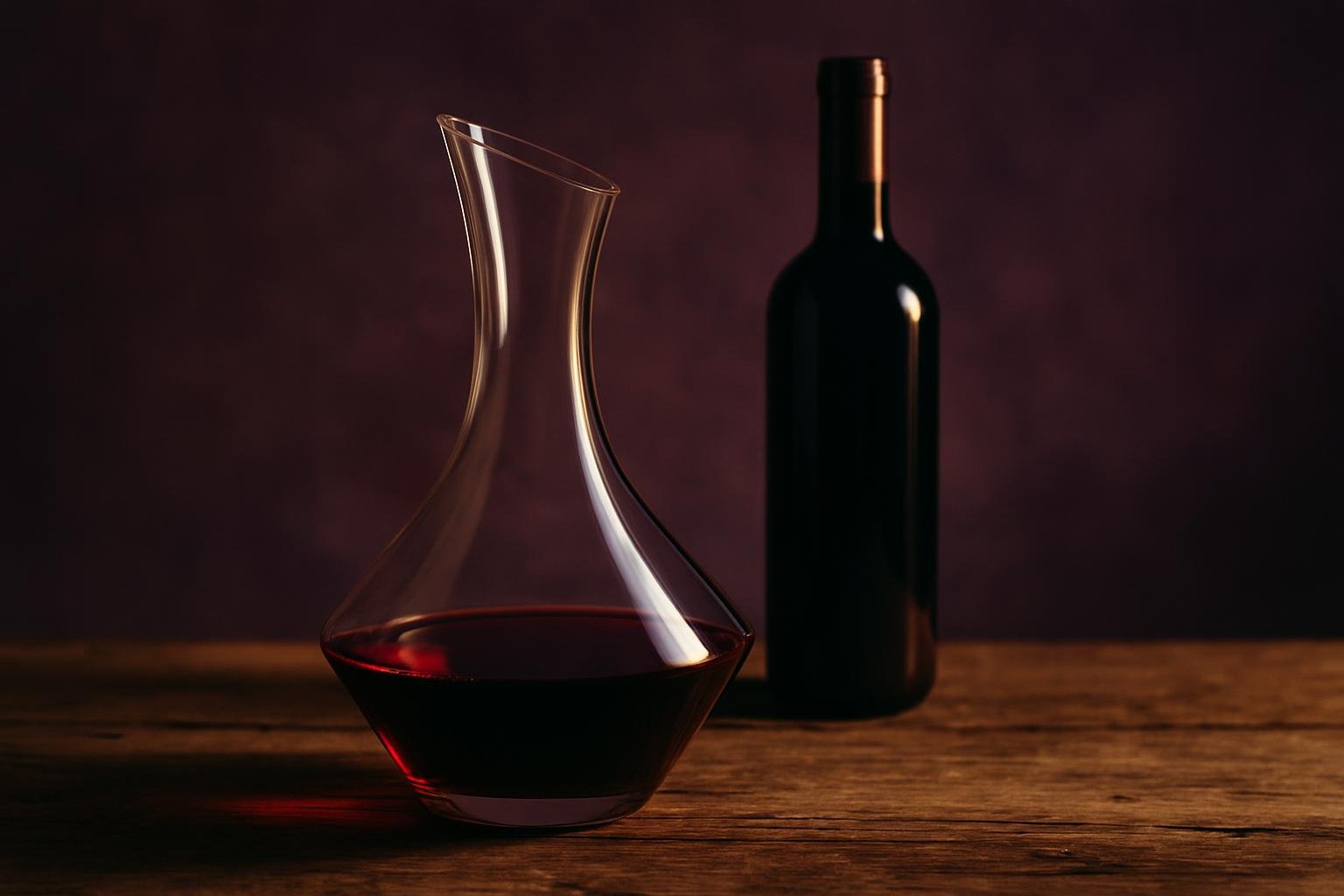
The Cabernet shape is built for the first job. It is wide and angular, so a bottle poured into it spreads into a shallow pool with a lot of surface area touching the air. That is the whole trick. A tall, narrow carafe looks elegant and does almost nothing.
Riedel describes the shape as supporting controlled aeration and says it suits wines of all ages. That is marketing language for a wide base and a narrow neck, which is the right combination: the base does the work and the neck keeps the aromas in when you pour.
Design and Build
It is clear crystal glass, machine-made, 23 cm tall, 12.4 cm across at the widest point, and it arrives in a Riedel gift box. The angular profile is the point: it looks deliberate on a table in a way a plain jug does not, and it photographs well, which is not nothing if you are buying it as a present.
The machine-made part is worth dwelling on. Riedel’s hand-made decanters run into the hundreds of dollars and are frighteningly thin. This one is made on a machine to a consistent thickness, which is why it costs about seventy dollars and why you can put it in the dishwasher without your hands shaking. If you want art, buy the hand-made one. If you want to use it every Friday, buy this one.
The width is the practical catch. At 12.4 cm across the base it will not sit politely in a crowded cupboard, and it does not fit most dish racks. Ours lives on the bench, which is either charming or clutter depending on who you ask.
Cleaning It, Which Is the Real Test
Decanters are bought with enthusiasm and abandoned over washing up. Riedel says this one is dishwasher safe, and that single line is the strongest argument for buying it over a hand-blown alternative. Red wine stains crystal quickly, and a machine-safe decanter gets used while a precious one gets admired.
Drying is still the fiddly part, because water spots inside a decanter are almost impossible to reach and they look terrible in the light. We wrote a whole piece on how to dry a wine decanter because it genuinely is the step most people get wrong.
How We Assessed It
We did not get a review sample for this update, so nothing here pretends to be a stopwatch test. Every figure below can be checked against a page you can open yourself.
- Dimensions, capacity, material, fabrication and dishwasher guidance come from Riedel’s own product page for article 1440/13.
- The Australian price was checked live on Amazon Australia on 7 September 2026, and Riedel’s own list price on the same day.
- Comparison prices for the other machine-made Riedel decanters come from Riedel’s own shop.
- Where a claim is Riedel’s marketing wording rather than a measurement, we have said which is which.
Pros and Cons
What we liked
- The wide base does real work on young, tannic reds. This is the shape that matters.
- Dishwasher safe, which is the difference between a decanter you use and a decanter you own.
- Around seventy dollars for a piece that looks like it cost three times that.
- Holds exactly one bottle, so there is no guessing and no awkward half pour.
- Arrives in a gift box, which makes it an easy present for someone who likes red wine.
What we did not
- It is wide. Storage and drying are both more annoying than you expect.
- Machine-made, so it lacks the paper-thin feel of the hand-blown Riedels. That is a fair trade at this price, but it is a real difference.
- The narrow neck that keeps aromas in also makes it harder to get a brush inside.
- No stopper, so it is not for keeping wine overnight. If that is what you want, you want a preservation system instead.
- Riedel makes several decanters at $60 that will aerate almost as well, so you are paying a small premium for the shape and the name.
How It Compares to the Other Riedel Decanters
| Decanter | Riedel list price (USD) | Best for |
|---|---|---|
| Cabernet 1440/13 | $70 | Young, firm reds that need air |
| Merlot 1440/14 | $60 | Softer reds, similar shape |
| Performance 1490/13 | $60 | Everyday use, more compact |
| Wine Friendly 1422/03 | $60 | One decanter for reds and whites |
| Cabernet Magnum 1440/26 | $99 | Magnums and long dinners |
If you want one decanter for everything, the Wine Friendly is the sensible answer. If you mostly drink Shiraz and Cabernet, the extra ten dollars for the Cabernet shape buys you more surface area, and surface area is the entire mechanism. Our decanter roundup puts it against the non-Riedel options, and the Riedel Ultra is the step up if you want something more sculptural.
The Verdict
For about seventy dollars this is the easiest recommendation in the decanter aisle. The shape does the job it claims, the crystal looks far more expensive than it is, and being dishwasher safe means it will still be in use in five years rather than sitting in a cupboard with a red ring inside it.
It is not magic. A decanter cannot rescue a bad bottle, and it does nothing much for a delicate old wine except let it fade faster. Use it on young reds with firm tannin, give them thirty to sixty minutes, and you will taste the difference. That is a good return on seventy dollars.
Our verdict (for people who scrolled straight here)
✨ Our verdict: Riedel Cabernet Decanter. The wide-based classic that actually aerates, and it goes in the dishwasher. About $73 in Australia. Check today's price →
What to Pour Into It
A decanter earns its keep on a young red with tannin that has not settled down yet. Pour something ten years old into it and you are mostly airing out a wine that was fine already. Pour a firm young Cabernet in and you will taste the change within half an hour.

Kalleske Merchant Barossa Valley Organic Cabernet Sauvignon 2024
This is the test case. Pour half into the decanter, leave the other half in the bottle, and taste them side by side after forty minutes. If a decanter is ever going to convince you, a young Barossa Cabernet is the wine that will do it.
- Young, firm and organic, exactly the profile a decanter helps most
- Barossa Cabernet, so there is fruit underneath the structure
- Certified organic fruit from a family name that means something in the Barossa
- Thirty-five dollars, so you can afford to experiment
- It is a 2024, so it will taste better in three years than it does tonight
Our Cabernet Sauvignon guide explains why this grape in particular responds to air, and if you would rather not wash a decanter at all, the pour-through aerators do a rougher version of the same job in ten seconds.
Frequently Asked Questions
Is the Riedel Cabernet Decanter hand-blown or machine-made?
Machine-made. Riedel lists the fabrication as machine-made on its own product page for article 1440/13. That is why it costs around seventy dollars rather than several hundred, and why it can go in the dishwasher.
Can you put the Riedel Cabernet Decanter in the dishwasher?
Yes. Riedel states that this decanter is dishwasher safe. Use the glassware setting and a good detergent, and dry it properly afterwards, because water spots inside the bowl are the part no dishwasher will fix.
How much wine does it hold?
One standard bottle, 750 ml, with room above the wine to swirl it. The decanter itself is 23 cm tall and 12.4 cm across at its widest point, so it needs more bench space than you might picture.
How long should wine sit in a decanter?
For a young, tannic red, thirty to sixty minutes is the useful window. For anything more than about fifteen years old, decant to remove sediment and then pour it fairly quickly, because old wine can fade in the glass within half an hour.
Do decanters really make a difference?
On young reds with firm tannin, yes, and the mechanism is not mysterious: a wide base gives the wine more contact with air, which softens the tannin and lets closed aromas out. On whites, rosé and delicate old reds it does much less, and on a bad bottle it does nothing at all.
Is the Cabernet decanter better than the cheaper Riedel models?
Better shaped for big reds, because it is wider. The Merlot, Performance and Wine Friendly decanters all list at $60 and will aerate perfectly well. If you drink mostly Shiraz and Cabernet the extra surface area is worth the small premium, and if you drink everything, buy the Wine Friendly instead.
If you want a decanter that aerates as you pour and catches sediment for about a hundred dollars, our YouYah decanter review covers the best-value one we have used.
This post contains affiliate links. If you buy through them we earn a small commission at no extra cost to you. It keeps the wine flowing and the reviews honest.