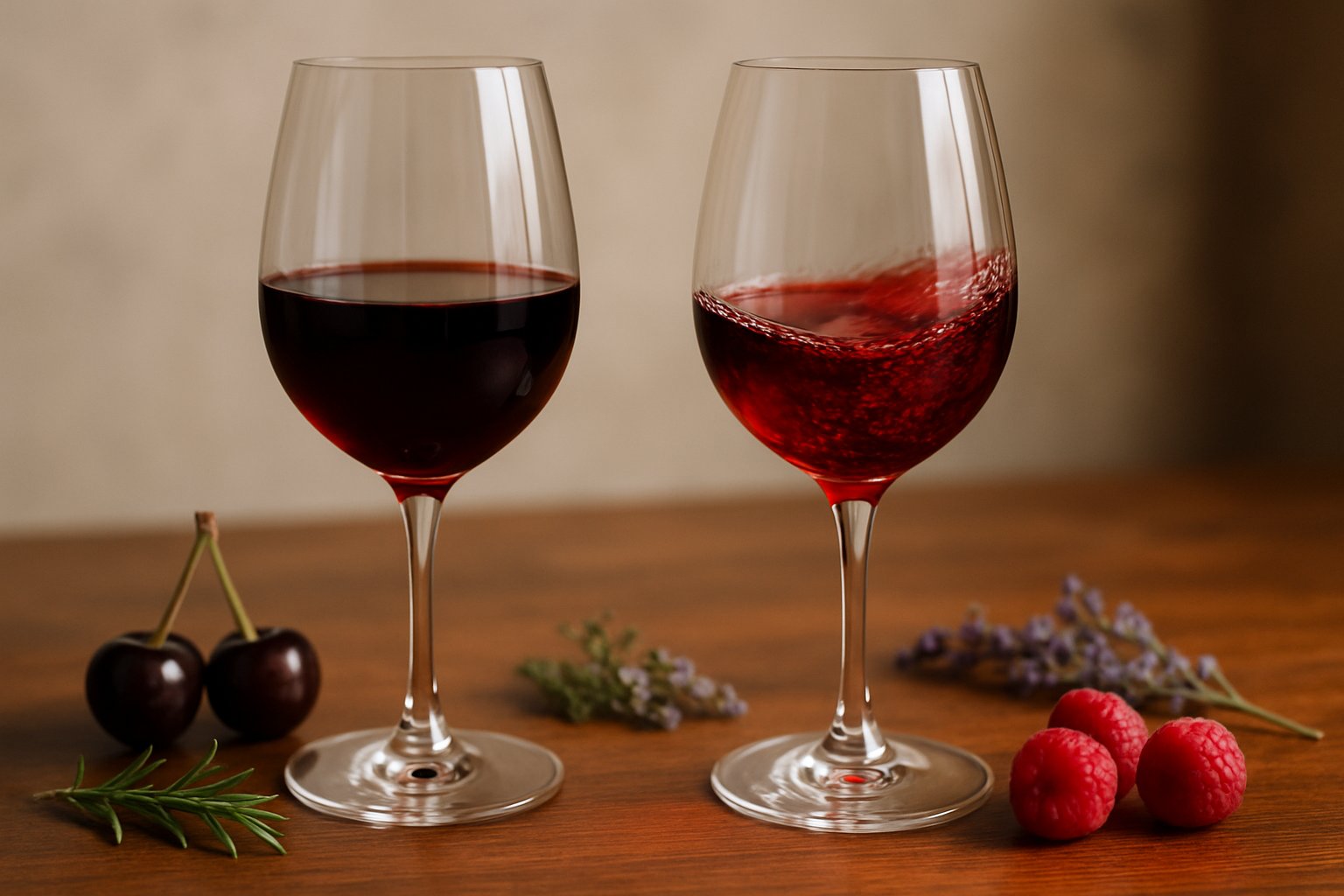
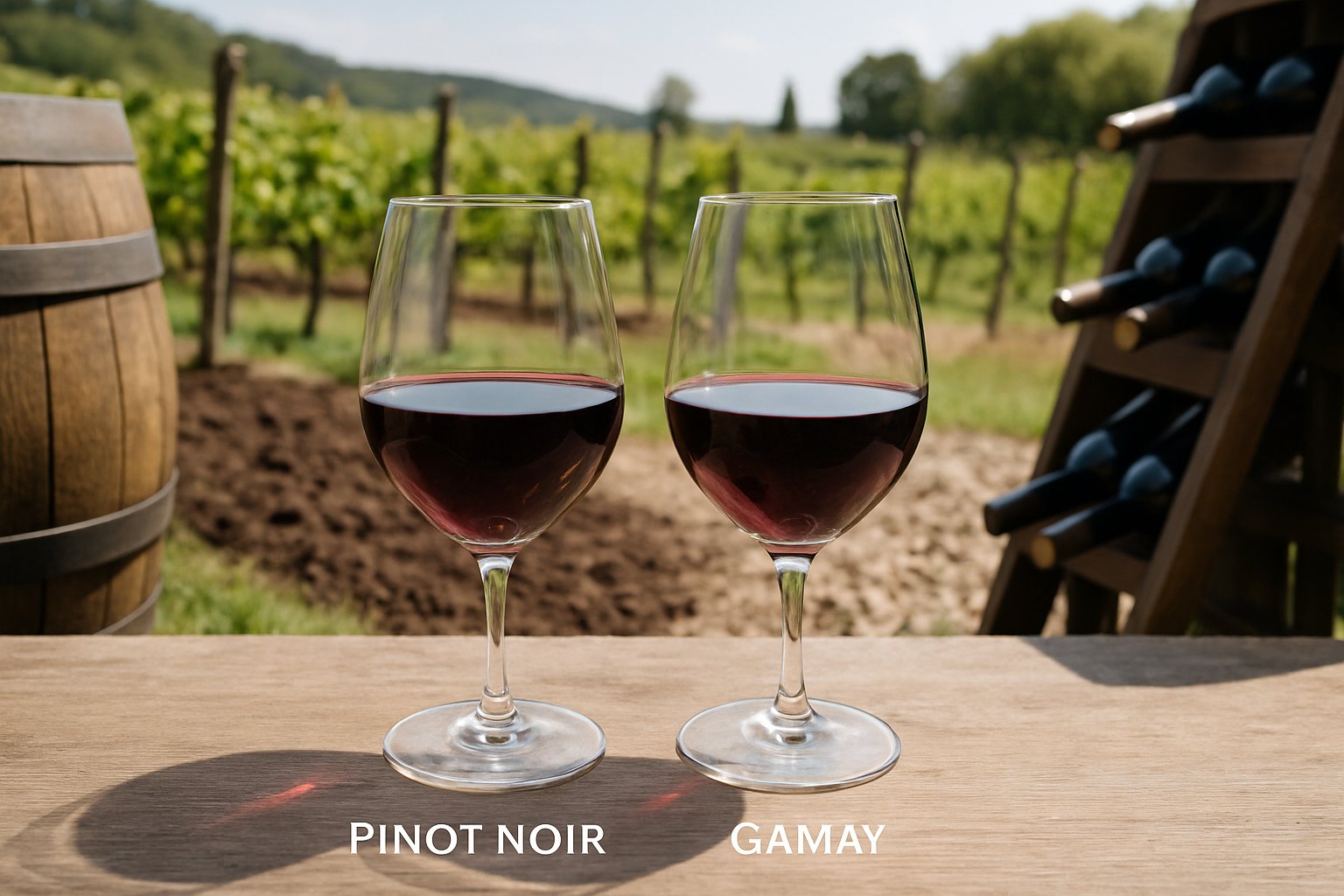
Pinot Noir and Gamay are family. Gamay is Pinot Noir’s child, from the same cross with the old white grape Gouais Blanc that also produced Chardonnay, and the two grow within an hour’s drive of each other in Burgundy and Beaujolais. Both make pale, light, fragrant reds. One costs three times the other and gets all the poetry. Here is why, and why the cheaper one is often the better buy.
Table of Contents
The short version
| Pinot Noir | Gamay | |
|---|---|---|
| Tastes of | Red cherry, raspberry, mushroom, earth, spice | Crushed strawberry, raspberry, violet, banana (when made a certain way), pepper |
| Body | Light to medium | Light |
| Tannin | Fine, silky | Very low |
| Acidity | High | High |
| Mood | Serious, layered, savoury | Cheerful, juicy, gulpable |
| Home ground | Burgundy (Côte d’Or) | Beaujolais, just south of Burgundy |
| Australia | Yarra, Mornington, Tasmania, Adelaide Hills | A handful of Yarra, Adelaide Hills and Tasmanian producers |
| Ages? | Good ones for ten years or more | Mostly drink young; the top crus keep five to ten |
| Serve at | 13 to 15°C | 12 to 14°C; properly cool |
| Price of a good bottle | $30 and up | $20 to $40 |
A family feud that lasted 600 years
In 1395 Philip the Bold, Duke of Burgundy, banned Gamay from his lands, calling it the “disloyal Gaamez” and full of “very great and horrible harshness”. His real complaint was that peasants were planting it instead of Pinot Noir because it grew easily and cropped heavily, and it was making the duchy’s wine cheaper. Gamay retreated south to the granite hills of Beaujolais, where it turned out to grow better anyway, and Burgundy kept Pinot Noir and the prestige. That is more or less still the arrangement.
Why they taste different
Pinot Noir is fussy, low-yielding and ripens slowly in cool places, and when it is grown carefully it makes a wine with layers: fruit on top, then earth, mushroom and spice underneath, with fine tannin that gives it shape. Gamay is easier to grow, crops more, and by nature makes a simpler, juicier wine with almost no tannin. Beaujolais winemakers then do something Burgundy does not: carbonic maceration, which means fermenting whole bunches in a sealed tank full of carbon dioxide before the grapes are crushed. That gives the crushed-strawberry, violet and (in the cheap versions) bubblegum-and-banana smell that is Beaujolais’s signature. Made the Burgundy way, with crushed grapes and a bit of oak, top Gamay from the Beaujolais crus can taste remarkably like a good Pinot, at a third of the price.
Beaujolais is not just Nouveau
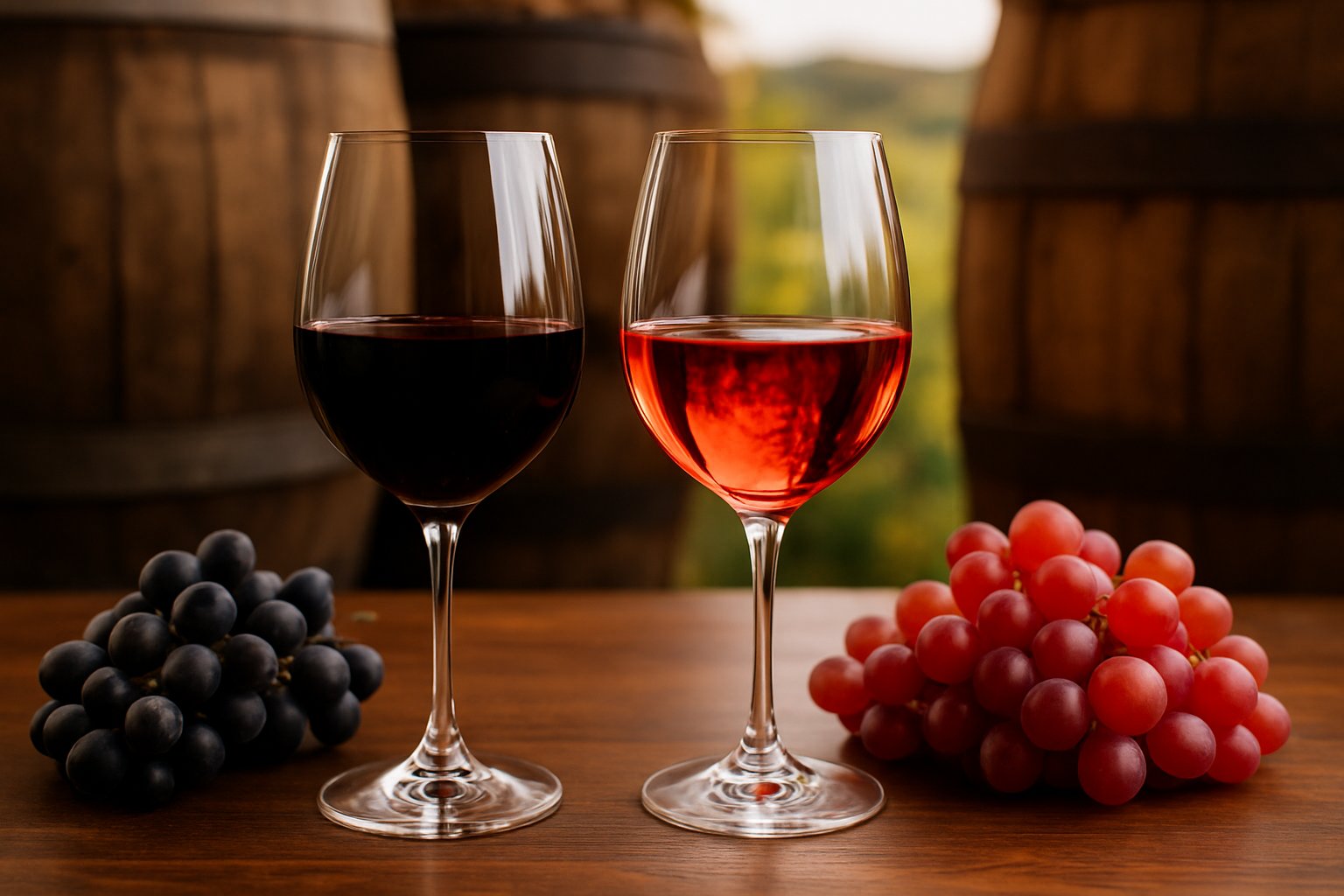
Most people’s only Gamay is Beaujolais Nouveau, the purple, banana-scented wine released on the third Thursday of November a few weeks after harvest and drunk before Christmas. It is fun and it is not the point. The point is the ten Beaujolais crus, villages on the granite hills with their own names on the label: Morgon, Fleurie, Moulin-à-Vent, Brouilly, Chiroubles, Chénas, Juliénas, Régnié, Saint-Amour and Côte de Brouilly. Morgon and Moulin-à-Vent make the most serious, Pinot-like wines and age for a decade; Fleurie and Chiroubles make the prettiest. A cru Beaujolais from a good producer is the best-value serious red in France.
The Australian angle
Australia grows plenty of Pinot Noir and very little Gamay, but the little is growing. A handful of producers in the Yarra Valley, the Adelaide Hills and Tasmania have planted it for exactly the reason Beaujolais did: it makes a bright, chillable, food-friendly red that is ready young, and it suits the same cool sites as Pinot. Sorrenberg in Beechworth, Eldridge Estate on the Mornington Peninsula and a few Yarra names are the ones to look for; expect to pay Pinot money because the volumes are tiny. Our Gamay guide lists them, and our Pinot Noir guide covers the Australian regions in full.
What to buy
Pinot prices are Dan Murphy’s shelf prices on 9 September 2026 and will move about; BWS stocks many of the same names. Gamay is named without prices because almost all of it comes through independents and the range is wide.
| Wine | Price band | Why |
|---|---|---|
| Yering Station Little Yering Pinot Noir | About $18 to $22 | Entry Yarra Pinot; cherry and spice |
| Yering Station Yarra Pinot Noir | About $25 to $30 | Where Pinot starts to show its layers |
| Josef Chromy Pinot Noir | About $38 | Tasmania; bright and fine |
| A Beaujolais-Villages (Georges Duboeuf, Louis Jadot, Joseph Drouhin) | Dan Murphy’s or an independent | The proper introduction to Gamay, one step above Nouveau |
| A cru Beaujolais: Morgon, Fleurie or Moulin-à-Vent (Château Thivin, Jean Foillard, Marcel Lapierre, Domaine Chignard) | Dan Murphy’s or an independent | The serious end; Morgon for structure, Fleurie for perfume |
| An Australian Gamay (Sorrenberg, Eldridge Estate) | Dan Murphy’s or an independent | Rare, good, and worth it once |
Heads up: the boxes below link to Just Wines, our partner shop. If you buy through them we earn a small commission at no extra cost to you. Prices were checked when this was written and move about.
Both grapes from the partner shop, which is rarer than it sounds:

See Saw Incubator Orange Organic Gamay 2024
- An Australian Gamay, organic, from See Saw in Orange, New South Wales
- Light, vibrant, soft tannin, lively acid: the Beaujolais idea done here
- About twenty-seven dollars
- Small batch from the Incubator range; stock comes and goes

Wild Folk Natural Preservative Free Yarra Valley Pinot Noir 2025
- Yarra Valley Pinot Noir, wild-fermented, preservative-free, unfined and unfiltered
- Light, fresh and cherry-scented; serve it a little cool
- About twenty-four dollars
- Natural wine; drink it young
What to eat with them
Both are the reds for food that usually gets white. Pinot Noir is the duck wine, and also salmon, mushrooms, roast chicken and pork. Gamay is the picnic and charcuterie wine: ham, salami, pâté, roast chicken, a burger, Thai food, anything on a hot day. Both should be served cool, and Gamay can go straight from the fridge for half an hour without harm. If you are having a barbecue with mixed food and mixed guests, a cru Beaujolais will please more people than almost any other red.
Frequently asked questions
Are Pinot Noir and Gamay related?
Yes. Gamay is a child of Pinot Noir and the old white grape Gouais Blanc, the same parents that produced Chardonnay, so Gamay and Chardonnay are full siblings and Pinot Noir is their parent.
Which is lighter, Pinot Noir or Gamay?
Gamay, usually. It has even less tannin than Pinot and is made to be drunk young and cool. Top cru Beaujolais can be as full as a light Pinot.
Is Beaujolais a Pinot Noir?
No. Beaujolais is made from Gamay. Red Burgundy, from just to the north, is Pinot Noir. They are neighbours and relatives, not the same wine.
Why is Gamay so much cheaper?
It crops more heavily, it is easier to grow, and it has never had Burgundy’s prestige. The quality gap at the top is far smaller than the price gap.
Should Gamay be chilled?
Yes, lightly. Twelve to fourteen degrees is ideal; twenty to thirty minutes in the fridge does it. It is the best red for an Australian summer.
What is Beaujolais Nouveau?
The first Gamay of the harvest, bottled weeks after picking and released on the third Thursday of November. Light, purple, fruity, meant to be drunk within months. Fun, but not what Gamay can do.