Heads up: this guide contains an affiliate link. If you buy through it we earn a small commission at no extra cost to you.
Carménère is the grape that went missing for a century. It was one of the original six red grapes of Bordeaux, phylloxera wiped it out in the 1870s, and everyone assumed it was gone for good. Meanwhile, in Chile, growers had been tending vines they called Merlot for decades and wondering why the wine tasted a bit green and took so long to ripen. In 1994 a French scientist tested the vines. Surprise: Carménère, alive and well, hiding in plain sight.
Chile made it the national grape on the spot, and it has become one of the best-value serious reds in the world: smooth, dark, spicy, with a green-peppercorn signature that people either love or learn to love.
Table of Contents
What Does Carménère Taste Like?
Black plum, blackberry, raspberry and red capsicum, with green peppercorn, paprika, cocoa, tobacco and soft earthy spice. It is deeply coloured, medium to full in body, with soft, velvety tannin, moderate acidity and a warm finish. Underripe versions taste of green beans; ripe ones are plush and chocolatey.
| Aspect | Rating out of 5 | Characteristic |
|---|---|---|
| Sweetness | 🍷 | Dry, with fruit ripened under Andean sun |
| Body | 🍷🍷🍷🍷 | Medium to full, plush rather than heavy |
| Tannins | 🍷🍷🍷 | Soft and velvety, the reason it was mistaken for Merlot |
| Acidity | 🍷🍷🍷 | Moderate |
| Alcohol by Volume | 🍷🍷🍷🍷 | Typically 13.5–14.5% |
Each wine glass icon is one point on a 5-point scale: one glass is low, five is high, based on the grape’s typical style.
Where It Grows
Chile has nearly all of it, in the Central Valley regions of Colchagua, Cachapoal, Maipo and Maule, where it needs a long, warm autumn to lose its green edge. It is often blended with Cabernet Sauvignon. Tiny amounts survive in Bordeaux, and Italy’s Friuli grew it for years under the mistaken name Cabernet Franc, in a rerun of Chile’s confusion. China has planted it as Cabernet Gernischt.
Australia has a few Carménère vines, mostly in Victoria, McLaren Vale and the Riverland, planted by growers who liked Chile’s story. The wines are rare and cellar-door only. For most Australians, Chilean imports are the way in, and they offer serious quality for the price.
How to Serve It
Temperature: 16–18°C.
Glass: a Bordeaux bowl; see the glasses roundup.
Decanting: half an hour in a decanter softens the green edge and lifts the fruit.
Ageing: everyday bottles within five years. Top Chilean Carménère ages for a decade or more.
What to Eat With It
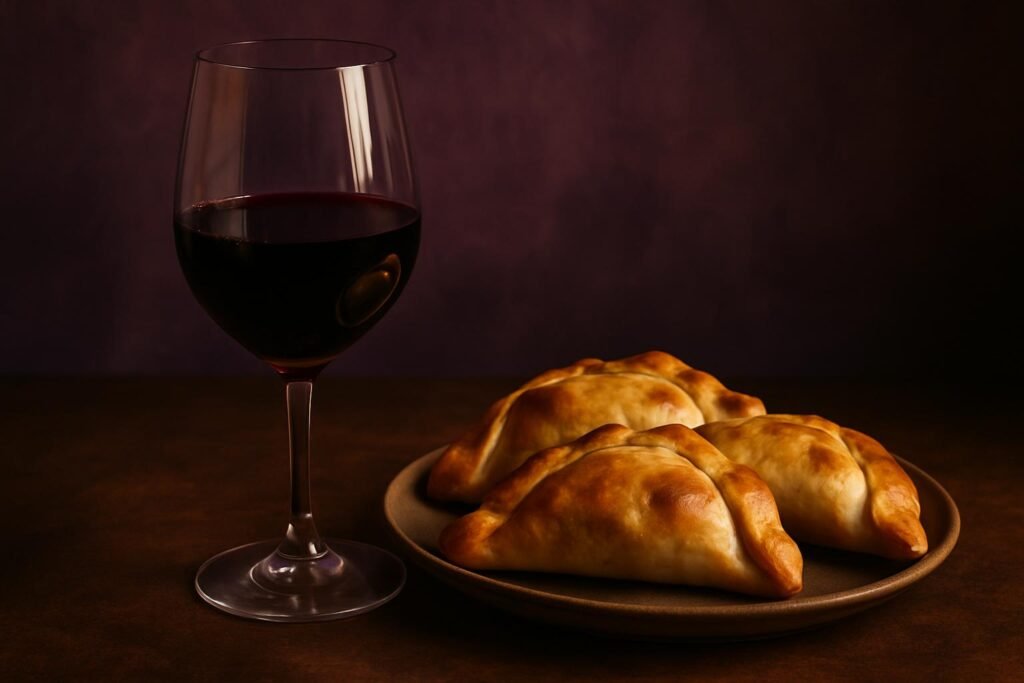
Chilean and Latin food first: empanadas, grilled beef, Mexican food and anything with smoked paprika. It also suits pork chops, ratatouille, roasted capsicum dishes and meatloaf. More in the pairing guides.
Celebrated Wine Labels
| Wine Label | Country | Style |
|---|---|---|
| Concha y Toro | Chile | Carmín de Peumo, the country’s flagship Carménère |
| Montes | Chile | Purple Angel, ripe and polished |
| Errázuriz | Chile | Aconcagua, elegant and structured |
| Viña Carmen | Chile | Made the first labelled Carménère in 1996 |
| Lapostolle | Chile | Colchagua, biodynamic and rich |
Can’t Find One? Drink This Instead
Honesty corner: our partner shop had no Carménère in stock when we checked. The closest match is, fittingly, a Merlot: the grape Carménère was mistaken for, with the same soft tannin and plush dark fruit.

Virtue Coonawarra Merlot 2021
Not Carménère, but a soft Coonawarra Merlot is the grape it spent a century impersonating. When a Chilean Carménère lands in stock, it takes this spot.
- Soft, plummy and velvety, the same job Carménère does at the table
- Coonawarra fruit, a region that knows its Bordeaux grapes
- Empanadas, pork and roasted capsicum all work
- Barely over ten dollars
- Misses Carménère's green-peppercorn and paprika signature
New to Just Wines? The code FIRST20 takes $20 off a first order over $99, so it is worth building a mixed six rather than buying the one bottle. New customers only, and the offer can change without notice.
Frequently Asked Questions
How do you pronounce Carménère?
Car-men-NAIR. The accent on the first e is a French flourish; nobody minds if you skip it.
Is Carménère similar to Merlot?
Very, which is why Chile confused them for a century. Both are soft, plummy and medium-full. Carménère is greener and spicier, with peppercorn and paprika notes. Read our Merlot guide for the comparison.
Why does Carménère taste of green pepper?
A compound called pyrazine, also found in Cabernet Sauvignon and Cabernet Franc. Carménère has a lot of it and ripens late, so if it is picked early the green notes dominate. Long, warm autumns fix it.
Is Carménère only grown in Chile?
Almost. Chile has more than 90 percent of the world’s plantings. Small amounts exist in Italy, China, Argentina, the USA and Australia, and a few rows survive in Bordeaux.
What is the story behind Carménère?
It was a major Bordeaux grape until phylloxera destroyed it in the 1870s. Chile had imported cuttings earlier and grew them as Merlot for over a century, until DNA testing in 1994 revealed the truth. Chile adopted it as a national grape.
This post contains affiliate links. If you buy through them we earn a small commission at no extra cost to you. It keeps the wine flowing and the reviews honest.