Heads up: this guide contains an affiliate link. If you buy through it we earn a small commission at no extra cost to you.
Merlot is the velvet glove of the wine world: soft where Cabernet is firm, plush where Shiraz is loud, and so easy to drink that snobs spent a decade pretending not to like it. It is the second most planted grape on the planet, which tells you what people actually reach for when nobody is watching.
The name comes from merle, French for blackbird, either because the birds adore the sweet berries or because the grapes share the bird’s blue-black sheen. Both stories are charming. Neither has been asked to prove itself.
Table of Contents
What Does Merlot Taste Like?
Plum, black cherry and a soft chocolatey warmth, with tannins that stroke rather than grip. Cooler regions add herbs and a leafy edge; warm ones pile on ripe fruit and mocha. It is Cabernet Sauvignon’s friendly sibling, and the two spend half their lives blended together in Bordeaux for exactly that reason.
| Aspect | Rating out of 5 | Characteristic |
|---|---|---|
| Sweetness | 🍷 | Dry with a playful touch of fruit, like a berry’s wink |
| Body | 🍷🍷🍷🍷 | Medium to full, as comfortable as an armchair in a library |
| Tannins | 🍷🍷🍷 | Gentle as a feather’s touch, present but never pushy |
| Acidity | 🍷🍷🍷 | As refreshing as a light breeze on a spring day |
| Alcohol by Volume | 🍷🍷🍷🍷 | Typically around 13.5–15%, like a cosy evening chat |
Each wine glass icon is one point on a 5-point scale: one glass is low, five is high, based on the grape’s typical style.
Where It Grows
Bordeaux’s Right Bank is the spiritual home, where Pomerol and Saint-Émilion make Merlot so serious it needs its own bodyguard. Chile grows oceans of it, California made it a household name, and Italy’s Super Tuscans gave it designer clothes.
In Australia, Merlot rarely gets top billing but does quiet, excellent work: Coonawarra and Margaret River produce polished versions and superb Cabernet Merlot blends, and the Yarra Valley’s cooler climate gives it a savoury, food-friendly edge. Think of it as the reliable mid-order batter who never makes the highlights reel and never gets dropped.
How to Serve It
Temperature: 15–17°C. A little cooler than the other big reds keeps that plush fruit fresh instead of jammy.
Glass: a generous bowl, the same one you would use for Cabernet. Our glasses roundup has the sensible options.
Decanting: helpful but not essential. Thirty minutes in a decanter rounds off a young one; older bottles just need a careful pour.
Ageing: everyday Merlot is built for now. Serious Right Bank and top Australian bottles age gracefully for ten to twenty years, softening into truffle and tobacco.
What to Eat With It
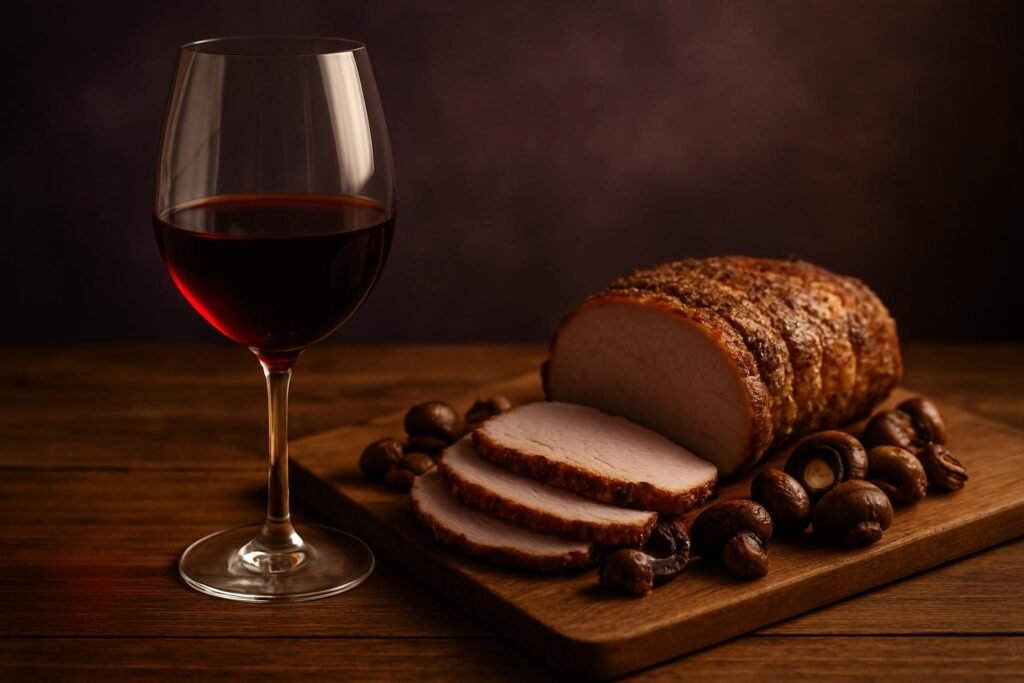
Merlot is the diplomat of the dinner table. Roast chicken, pork, mushroom dishes and a good meatloaf all get along with it, and it copes with tomato-based pasta better than most big reds. It is the safe bottle to bring when you have no idea what is being cooked. More matches in our pairing guides.
Celebrated Wine Labels
| Wine Label | Country | Style |
|---|---|---|
| Château Pétrus | France | Iconic, luxurious Pomerol |
| Duckhorn Vineyards | USA | Rich, Californian elegance |
| Ornellaia | Italy | Super Tuscan finesse |
| Concha y Toro | Chile | Vibrant, Chilean character |
| Balnaves of Coonawarra | Australia | Australian boldness, balanced complexity |
Drink One Tonight

Julia Hill Coonawarra Merlot 2021
Merlot is the friendly one of the red grapes, and this Coonawarra bottle plays that part nicely. Soft, plummy and ready for a Tuesday night.
- Proper Merlot, grown in cool, red-soil Coonawarra
- Soft, plummy and rounded, with a smooth finish
- Gentle oak, so the fruit does the talking
- Around ten dollars, which is a lot of Merlot for the money
- Not a big, brooding cellar wine, it is built for drinking now
New to Just Wines? The code FIRST20 takes $20 off a first order over $99, so it is worth building a mixed six rather than buying the one bottle. New customers only, and the offer can change without notice.
Frequently Asked Questions
Is Merlot a red or white wine?
Red, always. The grape is dark-skinned and the wine ranges from ruby to deep garnet. If someone offers you a “white Merlot”, it is a rosé made by pulling the juice off the skins early, and it is a novelty rather than a style.
Where does the name Merlot come from?
From merle, the French word for blackbird. The usual explanation is that blackbirds love eating the grapes; the prettier one is that the berries match the bird’s glossy blue-black feathers.
What is Merlot similar to?
Its closest relative in the glass is Cabernet Sauvignon, only softer and rounder. If you like Merlot’s plushness, try Malbec for more power or Grenache for more perfume.
Why did Merlot get a bad reputation?
Blame a 2004 film called Sideways, in which the lead character loudly refuses to drink it. American sales dipped for years. The joke was on him: the wine he treasures in the film is made mostly from Merlot.
What are some interesting facts about Merlot?
Château Pétrus, one of the most expensive wines on Earth, is almost pure Merlot. The grape ripens earlier than Cabernet, which is why growers plant both as insurance against a bad autumn. And DNA testing showed its mother was an obscure grape called Magdeleine Noire des Charentes, rediscovered growing up a wall in Brittany.
The grape Chile mistook for Merlot for a century has its own page: our Carménère guide.
This post contains affiliate links. If you buy through them we earn a small commission at no extra cost to you. It keeps the wine flowing and the reviews honest.