Heads up: this guide contains an affiliate link. If you buy through it we earn a small commission at no extra cost to you.
Petit Verdot is the grape Bordeaux keeps in the back room. For centuries it played a tiny supporting role in the great Médoc blends, a few percent added for colour, tannin and a whiff of violets, because in cool Bordeaux it rarely ripened properly. The name means “little green one”, which tells you how the French felt about it.
Then it moved somewhere warm. In Australia, Spain, California and Chile, Petit Verdot ripens like it never could at home, and on its own it makes a dark, muscular, violet-scented red that is a genuine underdog story. Australia, in particular, has more Petit Verdot as a straight varietal than almost anywhere else.
Table of Contents
What Does Petit Verdot Taste Like?
Blackberry, blueberry and black plum, with violets, sage, graphite and a savoury, peppery edge. It is inky dark, full-bodied, firmly tannic and higher in acid than Cabernet, which keeps it fresh despite the weight. With age it picks up leather, cedar and dried herbs. It is a serious, structured red that wants food.
| Aspect | Rating out of 5 | Characteristic |
|---|---|---|
| Sweetness | 🍷 | Dry, a serious red with no sweet talk |
| Body | 🍷🍷🍷🍷🍷 | Full and muscular, the vineyard’s quiet heavyweight |
| Tannins | 🍷🍷🍷🍷🍷 | Firm and grippy, built to age |
| Acidity | 🍷🍷🍷🍷 | Higher than most big reds, keeping it fresh |
| Alcohol by Volume | 🍷🍷🍷🍷 | Typically 13.5–15% in warm climates |
Each wine glass icon is one point on a 5-point scale: one glass is low, five is high, based on the grape’s typical style.
Where It Grows
Bordeaux still uses it as a seasoning, especially in the Médoc, where a top château might add two to five percent for structure and perfume. Spain grows it in Castilla-La Mancha, California in Napa and Lodi, and Chile and Argentina increasingly bottle it on its own.
Australia is where Petit Verdot really found its feet. The warm inland regions, especially the Riverland and Riverina, grow it in quantity because it ripens reliably and holds its acid. Margaret River and Coonawarra use it in their Cabernet blends, and McLaren Vale and the Barossa make rich straight versions. If you want to taste 100 percent Petit Verdot, Australia is one of the easiest places on Earth to do it.
How to Serve It
Temperature: 16–18°C. Slightly cool room temperature.
Glass: a large Bordeaux bowl; see the glasses roundup.
Decanting: yes. An hour in a decanter or a pass through an aerator softens the tannin and lets the violets out.
Ageing: a straight Petit Verdot improves for five to ten years, and the best go longer. Its acid and tannin are natural preservatives.
What to Eat With It
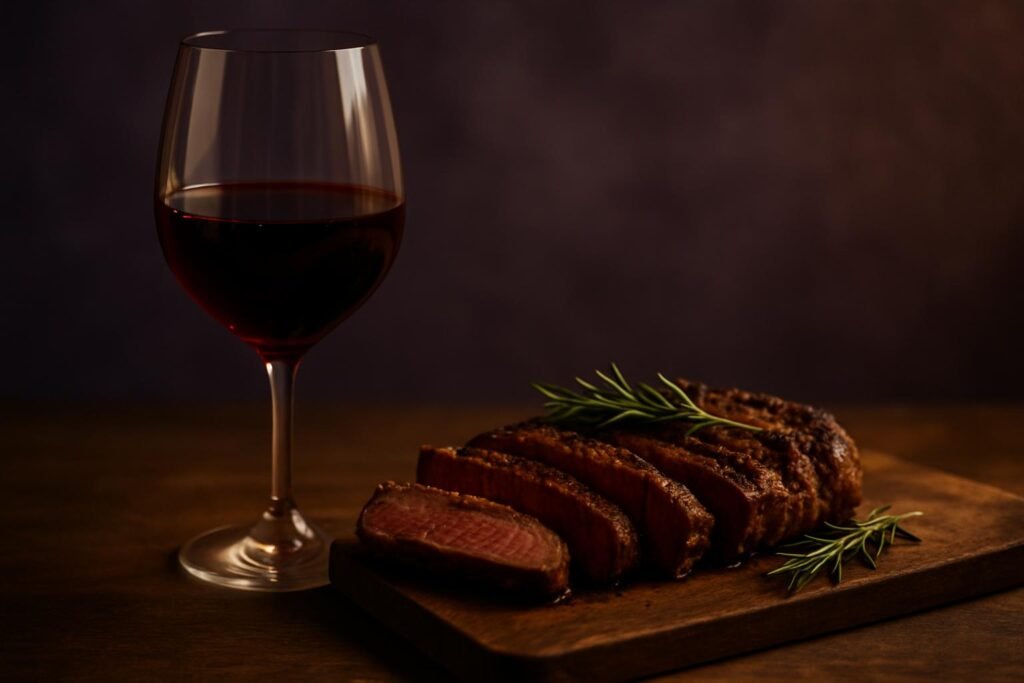
Steak, barbecued lamb, beef short ribs, venison and rich braises. It handles bacon and smoked meats well, and the acidity makes it a good match for meatloaf and tomato-based dishes. Aged hard cheeses too. Keep it away from delicate food; it will steamroll a piece of fish. More in the pairing guides.
Celebrated Wine Labels
| Wine Label | Country | Style |
|---|---|---|
| Château Margaux | France | First Growth Bordeaux that uses Petit Verdot as seasoning |
| Mollydooker | Australia | McLaren Vale, bold and unapologetic |
| Viader | USA | Napa hillside, structured and elegant |
| Montes | Chile | Ripe, polished Colchagua style |
| Fattoria dei Barbi | Italy | A Tuscan curiosity, dark and savoury |
Drink One Tonight
Full disclosure: no straight Petit Verdot was in stock at our partner shop when we checked, but this Margaret River blend is the real deal, with Petit Verdot doing exactly the job it was born for alongside its Bordeaux siblings.

Voyager Estate Margaret River Organic Cabernets 2023
The way Bordeaux uses Petit Verdot, made in Margaret River with organic fruit. When a straight Australian Petit Verdot lands in stock, it will join this one.
- A true Bordeaux-style blend: Cabernet Sauvignon, Merlot, Cabernet Franc, Malbec and Petit Verdot
- Certified organic, single estate, family-owned since 1978
- Taste what Petit Verdot adds: colour, grip and violets
- Built for steak, lamb and a decanter
- Petit Verdot is a supporting player here, not the lead
- A splurge at just over forty dollars
New to Just Wines? The code FIRST20 takes $20 off a first order over $99, so it is worth building a mixed six rather than buying the one bottle. New customers only, and the offer can change without notice.
Frequently Asked Questions
Is Petit Verdot a red or white wine?
Red, and one of the darkest you can pour. The skins are thick and packed with colour, which is exactly why Bordeaux adds a splash to its blends.
To which wines is Petit Verdot similar?
Cabernet Sauvignon is the closest relative in structure and flavour, with Petit Verdot being darker, more floral and a touch more acidic. Malbec, Tannat and Aglianico share its weight and tannin. Read our Cabernet Sauvignon guide for the comparison.
Which country produces the most Petit Verdot?
Spain has the most vines, mostly in the hot centre of the country, with Australia, the USA and Chile not far behind. France still grows it but almost never bottles it alone. As a straight varietal wine, Australia is probably the world leader.
What are some interesting facts about Petit Verdot?
It is likely older than Cabernet Sauvignon, growing in south-west France before the famous Bordeaux grapes were established. In a cool year in Bordeaux it may not ripen at all, which is why the châteaux keep it to a few percent. And in Australia it was once used mainly in cask wine for colour before winemakers realised how good it could be on its own.
Where does the name Petit Verdot originate from?
It means “little green one” in French, a reference to the small berries and their habit of staying green and unripe in cool Bordeaux vintages. In warm climates the name is a bit of a joke, because the grape ripens beautifully.
This post contains affiliate links. If you buy through them we earn a small commission at no extra cost to you. It keeps the wine flowing and the reviews honest.